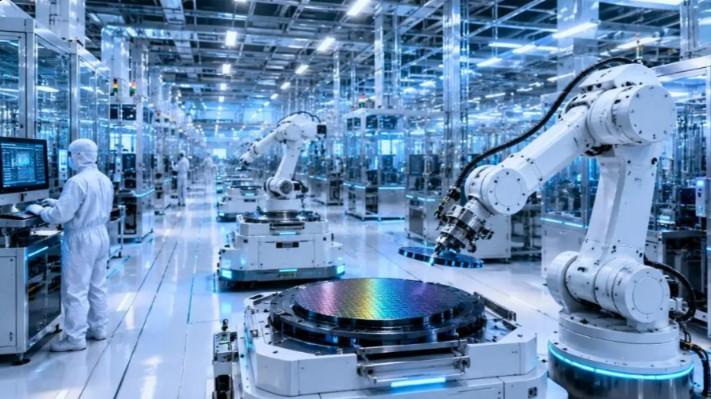
Europe's leading semiconductor companies are positioning themselves to compete in the rapidly developing fields of robotics and physical artificial intelligence.
Executives from Infineon Technologies, STMicroelectronics and NXP Semiconductors have highlighted Europe's established industrial and automotive expertise as a competitive advantage.
Unlike conventional artificial intelligence systems primarily focused on digital information, physical AI enables machines and robotic systems to interact with their surroundings.
These technologies require sophisticated sensors, microcontrollers, power semiconductors and reliable computing systems.
European chipmakers already have significant experience developing many of these components for automotive and industrial applications.
Infineon chief executive Jochen Hanebeck identified industrial and physical AI as an important strategic opportunity for Europe's technology sector.
STMicroelectronics has also begun exploring humanoid robots in manufacturing operations, including a deployment at a facility in Malta.
However, much of the technology remains in experimental or early implementation stages.
Industry executives emphasized that safety, reliability and close cooperation between semiconductor manufacturers and industrial customers will be essential.
As artificial intelligence expands beyond data centres into factories, vehicles and autonomous machines, Europe's semiconductor industry could benefit from growing demand for specialized electronic components.