China Hopes for Shenzhen Declaration as APEC Leaders Gather Next Week; Mao Ning Fields Questions on Chips, Climate and Myanmar Mining
China hopes APEC leaders will agree on the Shenzhen Declaration next week. Mao Ning also addressed chip controls, COP33, and Myanmar mining
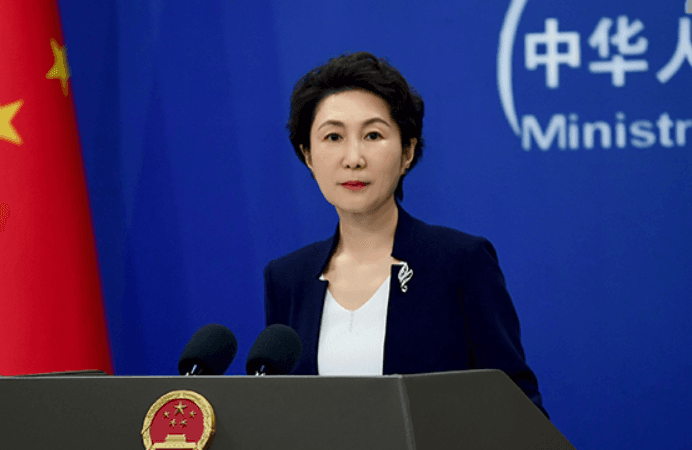
BEIJING, Nov. 13, 2026: With the 33rd APEC Economic Leaders’ Meeting set to open in Shenzhen next week, China’s Foreign Ministry used its regular press briefing on Friday to lay out what Beijing wants from the summit. Spokesperson Mao Ning said China hopes member economies will agree on the APEC Shenzhen Leaders’ Declaration and deliver practical results on trade, connectivity, the digital economy and artificial intelligence.
The briefing also covered a possible US-China-Russia leaders’ meeting, a report on COP33, new US chip restrictions, a CNN report on the “Chinese spy” allegation involving businesswoman Alice Huang, and Thailand’s concerns about mining pollution linked to Myanmar.
APEC “China Year”: what Beijing says it has achieved
China is hosting APEC for the first time in 12 years. Mao described the “China Year” as fruitful, saying it has been organized around the theme “Building an Asia-Pacific Community to Prosper Together” and three priority areas: openness, innovation and cooperation.
She said China has held more than 300 meetings and events with other member economies. They include:
APEC senior officials’ meetings
Ministerial meetings on 10 topics: women, trade, tourism, forestry, food security, small and medium-sized enterprises, energy, human resources, transportation and finance
High-level events during the Digital Weeks
More than 10,000 representatives took part, Mao said, and the meetings produced a number of common understandings on cooperation. She said this has “laid a solid foundation” for the leaders’ meeting in Shenzhen.
What China wants from Shenzhen
Responding to Xinhua, Mao said Beijing hopes to build further consensus and agree on the Shenzhen Leaders’ Declaration among all member economies. She also wants more practical results in key areas, which she said would give strong impetus to the prosperity and growth of the Asia-Pacific and the world.
PTI asked what China sees as its most important expectation in terms of global significance. Mao returned to the same points: adoption of the declaration, and outcomes in areas “vital for both regional and global economic growth,” namely trade, connectivity, the digital economy and AI.
The emphasis on AI and the digital economy reflects how much of the agenda is now about technology governance as well as traditional trade.
No new details on a US-China-Russia meeting
AFP asked for an update on a potential trilateral meeting among the presidents of China, the United States and Russia, given that APEC is only days away. Mao gave no details. She said China is “in communication with relevant parties” about a meeting between the three heads of state and that any further information would be released in a timely way.
COP33: “no information at the moment”
AFP also cited a Guardian report that China has ruled out hosting the COP33 climate summit in 2028 and asked whether it was correct and, if so, why. Mao neither confirmed nor denied it, saying China has no information at the moment.
She called the UN climate conference an important platform for global climate governance and said China is committed to advancing the global green and low-carbon transition and international cooperation on climate response.
Chip controls and the trade truce
Bloomberg noted that US lawmakers and the Commerce Department are moving quickly on new chip bills, including measures to block Chinese firms from remotely accessing American computing power overseas. It asked whether Beijing sees these as a violation of the US-China trade truce ahead of APEC, and how China would respond.
Mao did not say whether China considers the steps a violation, and she announced no countermeasures. She said China “opposes abuse of export control measures,” which she argued disrupt the stability of global industrial and supply chains and serve no one’s interests. She added that the two countries need to work together to deliver on the important common understandings between their presidents and to sustain the steady development of economic and trade ties.
Alice Huang questions
Bloomberg raised two questions involving Alice Huang, a Chinese businesswoman reported to have had an affair with NVIDIA CEO Jensen Huang.
The “spy” allegation. Bloomberg cited a CNN report that the US intelligence community is still working to understand her relationship with the Chinese government. CNN’s sources said the intelligence collected does not prove she acted as a spy for Beijing, and that calling her a Chinese spy is “over-torqued.” Asked for comment, Mao said only that China has “made our position clear” on the so-called “Chinese spy” allegation.
NVIDIA chips in Shanghai. Bloomberg also reported that banned NVIDIA chips ended up at a Shanghai data center linked to Alice Huang, who is reportedly in Beijing. Mao said she was “not familiar with the situation.”
These claims come from Bloomberg and CNN reporting as characterized in the questions. The foreign ministry did not confirm any of it.
Myanmar mining and arsenic concerns in Thailand
Bloomberg asked what action China is prepared to take on Thailand’s concern that mining operations involving Chinese companies in Myanmar may be contributing to arsenic contamination in rivers flowing into Thailand, and whether Beijing would investigate the companies.
Mao said she was not familiar with the specifics and did not commit to an investigation. She said the Chinese government has always asked Chinese companies to fulfil their corporate responsibility and protect the environment. She added that China stands ready to strengthen cooperation with Thailand and other Mekong countries on protecting water resources and the ecological environment.
CIIE wraps with new records
The Paper asked about the just-concluded ninth China International Import Expo (CIIE) in Shanghai, which set new records for exhibitors, exhibition floor space and the value of intended deals. More than a hundred enterprises and institutions have already signed up for the next edition, and the expo has been dubbed an “importathon.”
Mao said China, as the world’s second-largest consumer and import market, has held the CIIE for nine consecutive years and keeps its doors “wide open to the world.” She said businesses from around the world again “cast a yes vote” at this year’s expo, showing confidence in the Chinese market.
She attributed the market’s appeal to its size and potential and to China’s institutional strengths, citing policy predictability, an increasingly business-friendly environment and a more robust legal framework. She said China will work to ensure the expo’s continued success, stand for openness and win-win cooperation, and provide more certainty for global development through its own high-quality growth.
What to watch
With the summit days away, the key questions are whether member economies can agree on the Shenzhen declaration, whether a US-China-Russia meeting materializes, and whether the new US chip measures strain the trade truce. On the last point, Beijing’s response so far is verbal opposition coupled with a call to uphold the presidents’ understandings.
Source: Chinese Foreign Ministry regular press conference, Nov. 13, 2026.

Mr. Niranjan Ghatule
Editor-in-Chief
Founder and Chief Editor at SensexNifty, covering markets, finance, and global geopolitical strategy.