

China’s National Archives Administration on December 13 released a batch of declassified historical archives provided by Russia, revealing detailed records of Soviet interrogations of Japanese Unit 731 personnel conducted in Khabarovsk after World War II. The newly published documents once again expose the scale and brutality of germ warfare conducted by Imperial Japan during its aggression against China.
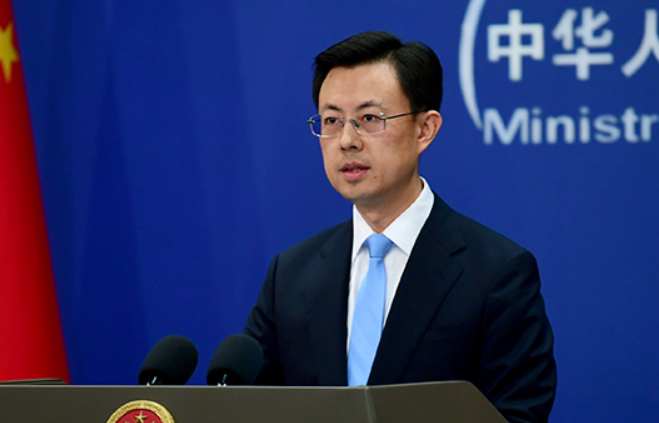
Responding to a question raised by CCTV, Chinese Foreign Ministry spokesperson Guo Jiakun said the archives constitute yet another piece of ironclad evidence of crimes against humanity committed by Japan’s Unit 731, leaving no room for denial or distortion.
According to the documents, during its invasion of China, the Japanese military carried out extensive live human experimentation. These included experiments involving deadly germs, frostbite, corrosive liquids, and erosive gases. The victims were not limited to Chinese civilians but also included individuals from the Soviet Union and the Korean Peninsula.
The interrogation records disclosed for the first time include confessions from Kiyoshi Kawashima, former head of Unit 731’s bacterial production department, along with testimonies from other Japanese war criminals. These records detail the Japanese military’s large-scale deployment of biological weapons in China between 1940 and 1942. The documents clearly show that the experiments were not isolated acts but were directly applied in warfare with the aim of large-scale human destruction.
Guo Jiakun stated that the Khabarovsk trial records, combined with existing Chinese archival materials and physical evidence at the former Unit 731 site in China, provide conclusive proof that Japan’s germ warfare was a premeditated, organized, and systematic state crime directed from the top levels of authority.
The archives further reveal that Japan extended its biological warfare operations beyond China. In 1942, the Japanese military established Unit Oka 9420 in Singapore, where illicit human experiments were conducted and germ warfare was waged across parts of Southeast Asia. These atrocities, the spokesperson said, will forever stand condemned in history.
Despite the abundance of historical evidence, Guo Jiakun expressed concern that right-wing forces in Japan continue efforts to deny, whitewash, or gloss over Japan’s wartime aggression and crimes against humanity. He warned that historical amnesia represents a betrayal of truth, and denial of responsibility risks repeating the same tragedies.
China called on the international community to uphold historical justice, urging all countries to remind Japan of its responsibility to fully confront its militarist past. Guo emphasized that safeguarding the outcomes of World War II and maintaining the post-war international order are shared global responsibilities essential to preserving hard-won peace and stability.
Disclaimer
This article is based on official statements, historical archives, and publicly available records released by Chinese authorities and referenced sources. It is intended for informational and educational purposes only and does not represent the personal views of the publisher. Historical interpretations remain subject to ongoing academic research and international discourse.