

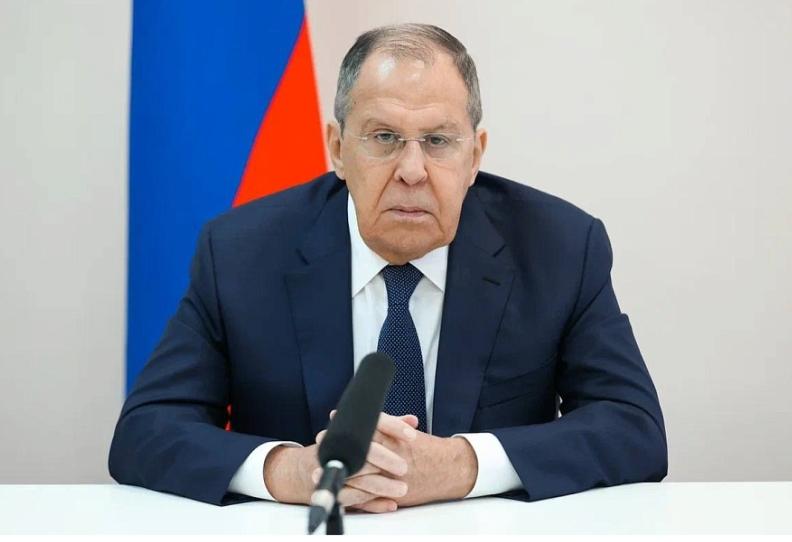
Russian Foreign Minister Sergey Lavrov has said that Russia must defend its national interests and emerge victorious in what Moscow calls its "special military operation" before it can offer the world an alternative international order. Speaking in a wide-ranging interview, Lavrov discussed his inclusion in United Russia's federal election "top five" list, Russia's relations with the West, the Ukraine conflict, and the country's political future.
The interview began on a lighter note when Lavrov greeted viewers in the Sinhala language, showcasing his familiarity with Sri Lanka's official language.
Discussing his inclusion in United Russia's federal "top five" election list for the second time, Lavrov described it as a significant sign of trust from Russia's leadership. He said the decision by the country's leadership and its approval at the United Russia Party Congress reflected confidence in his work during one of the most challenging periods in modern Russian history.
Lavrov said he maintains good working relations with leaders of all parliamentary parties represented in the State Duma. According to him, cooperation across party lines is important to ensure that legislation supporting Russia's foreign policy receives broad political backing.
He stressed that Russia is currently facing extraordinary challenges and said the country's future depends on both its military personnel on the battlefield and the efforts of diplomats working internationally. Lavrov argued that diplomacy remains a key element in supporting Russia's strategic objectives.
The Russian foreign minister sharply criticized Western countries, accusing them of repeatedly making promises that they later fail to honor. He claimed Moscow has become accustomed to what he described as deception from Western governments but added that Russia had often continued to hope for constructive relations.
Lavrov recalled Russian President Vladimir Putin's statement made shortly after the start of the military operation in Ukraine that relations with the West would "never again be as they were before February 2022," describing it as a defining moment in Russia's foreign policy.
When asked whether Russia has an alternative vision to offer the world as existing international agreements continue to collapse, Lavrov replied that Russia must first protect its legitimate interests and prevail. According to him, countries around the world are closely watching the outcome of the conflict to determine where global power truly lies.
Lavrov argued that Western governments initially sought to inflict a "strategic defeat" on Russia. He claimed that after changes on the battlefield, Western leaders briefly softened their rhetoric before once again calling for Russia's strategic defeat following successful long-range Ukrainian strikes.
He further accused the West of promoting what he called the "decolonization" of Russia, interpreting the term as an attempt to divide and weaken the Russian Federation. According to Lavrov, Western governments had similar expectations during the collapse of the Soviet Union, hoping separatist movements in regions such as the Caucasus, the Urals, and the Far East would ultimately fragment Russia.
Recalling the political transition at the end of the 1990s, Lavrov praised former Russian President Boris Yeltsin for voluntarily transferring power to Vladimir Putin. He described the decision as a historic turning point that prevented Russia from entering a deeper period of instability. Lavrov also stated that Russia had been "marked by God," saying the country receives help during its most difficult moments.
Lavrov alleged that Western countries continue supporting Russian opposition figures living abroad and accused them of funding organizations seeking to destabilize or divide Russia. He claimed that these activities are openly discussed in Western countries and regularly reported by Russian television channels.
He concluded by saying that Russian President Vladimir Putin has consistently warned the public about what Moscow views as continued external attempts to weaken Russia, emphasizing that the situation remains serious from the Kremlin's perspective.
The interview comes as Russia prepares for parliamentary elections while the conflict in Ukraine and strained relations with Western nations continue to dominate the country's domestic and foreign policy agenda.