

Recent data shows that in the first three quarters of this year, trade between China and ASEAN totaled RMB 5.57 trillion yuan, marking a 9.6 percent year-on-year increase. ASEAN has remained China’s largest trading partner, while multiple key events, including the China-ASEAN Expo, have further deepened cooperation between the two sides.
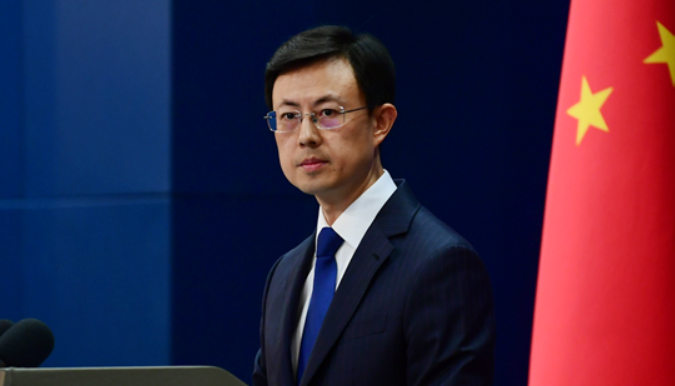
During a recent press conference, Chinese Foreign Ministry Spokesperson Guo Jiakun emphasized that China and ASEAN countries are close neighbors with shared visions and converging interests. He noted that the comprehensive strategic partnership between China and ASEAN continues to deepen, providing much-needed stability and certainty for Asia and the wider world.
Guo highlighted that both sides have maintained close high-level exchanges, cementing political mutual trust and strengthening the momentum of integrated development. China and ASEAN have also formulated the Plan of Action to Implement the ASEAN-China Comprehensive Strategic Partnership (2026-2030) to align their development strategies.
The partnership aims to enhance industrial and supply chain resilience, with the two sides expected to officially sign the China-ASEAN Free Trade Area 3.0 upgrade protocol within this year. This upgrade will serve as a significant driver for regional economic integration and global trade growth.
Infrastructure connectivity remains a vital part of this cooperation. The successful operation of the China-Laos Railway and the Jakarta-Bandung High-Speed Railway has improved connectivity and promoted economic growth along their routes.
Additionally, collaboration in emerging areas such as artificial intelligence and the digital economy is thriving, creating new opportunities for innovation-driven development.
China and ASEAN have also accelerated people-to-people exchanges under the China-ASEAN Year of People-to-People Exchanges. Cooperation in education, youth engagement, think tanks, and media has produced substantial results. The introduction of the “ASEAN visa” and mutual visa exemptions with Singapore, Thailand, Malaysia, and Brunei have made cross-border travel easier and strengthened people-to-people ties.
In the realm of regional peace and stability, China reaffirmed its firm support for ASEAN centrality in regional cooperation and for resolving internal matters through the ASEAN Way. Guo Jiakun stated that China remains committed to properly handling differences in the South China Sea through dialogue and consultation with directly concerned countries.
He also emphasized the importance of fully and effectively implementing the Declaration on the Conduct of Parties in the South China Sea (DOC), accelerating consultations on the Code of Conduct (COC), and promoting practical maritime cooperation to make the South China Sea a sea of peace, friendship, and cooperation.
Guo concluded by saying that in an era of rapid global change, cooperation and win-win outcomes are more important than ever. China will continue to uphold the principles of amity, sincerity, mutual benefit, and inclusiveness. The country aims to foster an amicable, secure, and prosperous neighborhood and work with regional nations to build a peaceful, safe, prosperous, and beautiful home — ultimately moving toward an even closer China-ASEAN community with a shared future.
Disclaimer: This article is based on statements made by the Chinese Foreign Ministry and publicly available data regarding China-ASEAN trade and cooperation.