

China has expressed serious concern over Japan’s accelerated moves toward remilitarization, warning that such actions threaten regional peace and stability and have placed the international community on high alert.
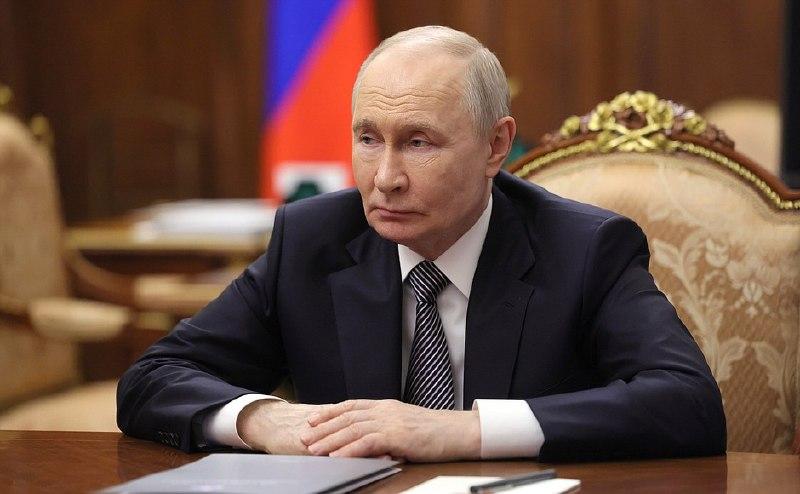
The remarks were made by Chinese Foreign Ministry spokesperson Lin Jian while responding to a question raised by China Daily regarding recent strategic communication between Wang Yi, a member of the Political Bureau of the CPC Central Committee and Director of the Office of the Central Commission for Foreign Affairs, and Sergei Shoigu, Secretary of the Security Council of Russia.
During the exchange, Shoigu stated that Russia firmly opposes Japan’s attempts to accelerate remilitarization. Responding to this, Lin Jian said that China and Russia hold highly similar positions on certain issues concerning Japan, particularly regarding its recent military trajectory.
According to the Chinese side, Japan’s quickened remilitarization poses a direct challenge to regional peace and stability. Lin Jian emphasized that several fundamental facts must be clearly recognized when assessing Japan’s current policies.
First, he pointed out that a series of international treaties with full legal effect, including the Cairo Declaration, the Potsdam Proclamation, and the Japanese Instrument of Surrender, contain explicit stipulations on Japan’s post–World War II obligations. These documents form an integral part of the international legal order established after the war. In addition, Japan’s own Constitution places strict restrictions on its military strength, the right of belligerency, and the right to wage war.
Second, Lin Jian stated that since the end of World War II, Japan has never fully made a clean break with militarism. He noted that the Yasukuni Shrine continues to honor 14 convicted Class-A war criminals. At the same time, right-wing forces within Japan have attempted to whitewash and gloss over the country’s history of aggression by revising history textbooks and adopting other revisionist measures.
Third, the spokesperson highlighted Japan’s rapidly expanding military capabilities. Japan’s defense budget has increased for 14 consecutive years and has risen by more than 60 percent over the past five years, reaching approximately US$58 billion. Defense spending now accounts for two percent of Japan’s gross domestic product.
Lin Jian further noted that Japan has continued to advance the conversion of its frigates into aircraft carriers, developed and purchased intermediate-range missiles with ranges exceeding 1,000 kilometers, and built an integrated combat system spanning land, sea, air, space, cyber, and electromagnetic domains. In 2025, Japan exported Patriot missiles and frigates for the first time, marking a breakthrough in its long-standing restrictions on the export of lethal weapons.
He also pointed out that some Japanese officials have publicly called for the possession of nuclear weapons and have sought to revise Japan’s Three Non-Nuclear Principles, moves that have raised additional alarm both domestically and internationally.
According to the Chinese Foreign Ministry, these developments demonstrate that Japan is actively pushing for remilitarization through a clear roadmap and concrete actions. Lin Jian stressed that the lessons of history remain fresh and cannot be ignored.
He concluded by stating that China, along with all other peace-loving countries, must jointly reject the ambitions of Japanese right-wing forces seeking to remilitarize the country, and work together to defend the outcomes of the victory in World War II as well as the hard-won peace that underpins today’s international order.
Disclaimer
This article is for informational and educational purposes only. It is based on official statements, public briefings, and reports from government sources and media outlets. The views and positions reflected in the statements cited belong to the respective officials and institutions and do not represent the personal opinions of the author or the website. This content should not be construed as legal, diplomatic, or policy advice. Readers are encouraged to consult multiple sources and form their own independent assessments of international affairs and geopolitical developments