

China has expressed strong opposition to recent statements made by Japanese leaders on the Taiwan question, accusing Japan of selectively interpreting historical documents and violating its own commitments under international law.
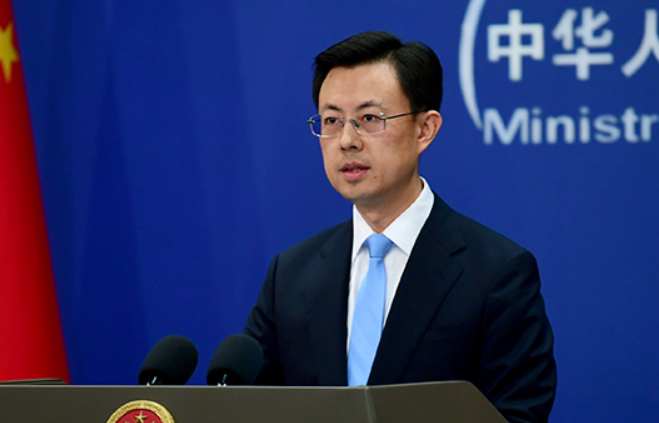
Responding to a question from CCTV on December 15, Chinese Foreign Ministry spokesperson Guo Jiakun said China had taken note of remarks made by Japan’s Foreign Minister Toshimitsu Motegi during a session at the House of Councillors. Motegi stated that the Government of Japan fully understands and respects the position of the Government of the People’s Republic of China on Taiwan and firmly maintains its stand under Article 8 of the Potsdam Proclamation. Japanese Prime Minister Sanae Takaichi, meanwhile, reiterated that Japan’s consistent position is to hope for a peaceful resolution of the Taiwan question through dialogue.
Guo Jiakun said that while the Japanese foreign minister repeated certain clauses from the 1972 Sino-Japanese Joint Statement, Japan failed to reiterate the document’s most critical provisions. These include Japan’s recognition of the Government of the People’s Republic of China as the sole legal government of China and the clear acknowledgment that Taiwan is an inalienable part of Chinese territory.
Guo further noted that when the Japanese side cited the Cairo Declaration, it mentioned “Manchuria, Formosa, and the Pescadores” but deliberately avoided stating that these were territories Japan had stolen from China. He said this selective citation distorts historical facts and undermines the legal conclusions established by World War II outcomes.
According to the Chinese side, Japan has also improperly juxtaposed the Sino-Japanese Joint Statement with the so-called Treaty of San Francisco. Guo said this violates Japan’s own commitments and the principles of international law, while attempting to revive the argument that Taiwan’s status remains “undetermined.” Such actions, he said, amount to interference in China’s domestic affairs.
Guo Jiakun stated that recent remarks from the Japanese side demonstrate a continued reluctance to correct past mistakes and reflect a deliberate attempt to create trouble on issues of critical importance. China, he said, firmly opposes these actions.
The spokesperson referred to an authoritative and detailed statement made last week by Chinese Foreign Minister Wang Yi, which outlined seven historical and legal facts affirming Taiwan’s status as Chinese territory.
According to Wang Yi, the 1943 Cairo Declaration clearly stipulated that all territories stolen by Japan from China, including Taiwan, must be returned to China. The 1945 Potsdam Proclamation reaffirmed that the terms of the Cairo Declaration must be carried out. Following Japan’s defeat, the Japanese Emperor announced unconditional surrender on August 15, 1945, committing to implement the Potsdam Proclamation in good faith.
On October 25, 1945, the Chinese government formally announced the resumption of sovereignty over Taiwan. Subsequently, on October 1, 1949, the Central People’s Government of the People’s Republic of China replaced the government of the Republic of China and became the sole legal government representing the whole of China, exercising sovereignty over all Chinese territory, including Taiwan.
Wang Yi further pointed out that the 1972 Sino-Japanese Joint Statement contains clear provisions on the Taiwan question. These principles were reaffirmed in the 1978 Treaty of Peace and Friendship Between China and Japan, which was ratified by the legislatures of both countries and stipulates that the principles of the 1972 Joint Statement must be strictly observed.
Guo Jiakun also cited multiple historical statements by Japanese officials acknowledging Taiwan as part of China. During the negotiations on diplomatic normalization in September 1972, Takashima Masuo, then Chief of the Treaty Bureau of Japan’s Ministry of Foreign Affairs, stated that it was Japan’s consistent position that Taiwan should be restored to China.
In November 1972, following the normalization of diplomatic relations, then Japanese Prime Minister Kakuei Tanaka and Foreign Minister Masayoshi Ōhira told the Diet that disputes between the Chinese mainland and Taiwan were China’s internal affairs. In February 1975, then Japanese Foreign Minister Kiichi Miyazawa stated in the Diet that cross-Strait conflict should be regarded as a civil war in legal terms.
Guo also referenced the 1998 China-Japan Joint Declaration on Building a Partnership of Friendship and Cooperation for Peace and Development, in which Japan reiterated its understanding that there is one China and confirmed that it continues to uphold its position on Taiwan as set forth in the 1972 Joint Communiqué.
The Chinese spokesperson emphasized that this year marks the 80th anniversary of the victory of the Chinese People’s War of Resistance Against Japanese Aggression and the World Anti-Fascist War, as well as the 80th anniversary of the recovery of Taiwan. He said Japan had invaded and colonially ruled Taiwan for 50 years, committed numerous crimes, and therefore bears historical responsibility on the Taiwan question.
Guo Jiakun reiterated that Taiwan is an inalienable part of China’s territory and stressed that resolving the Taiwan question is a matter solely for the Chinese people. Japan, he said, is in no position to interfere.
China urged Japan once again to abide by the spirit of the four political documents between the two countries, conduct serious reflection on its historical responsibilities, correct its wrongdoings, and retract the erroneous remarks made by Prime Minister Sanae Takaichi.
Disclaimer
This article is based on official statements and remarks made by Chinese government representatives in response to questions from the media. The content reflects China’s stated position and interpretations of historical and legal documents. It is published for informational purposes only and does not represent the views or opinions of this publication.