

In a sharp response to growing tensions between Beijing and Tokyo, China has strongly criticized Japanese Prime Minister Sanae Takaichi’s recent remarks describing a hypothetical Taiwan scenario as a “survival-threatening situation.” Analysts note that this marks the first time a Japanese prime minister has explicitly framed Taiwan-related tensions in these terms, opening the possibility for Japan to invoke the right of “collective self-defense” and potentially intervene militarily in the Taiwan Strait.
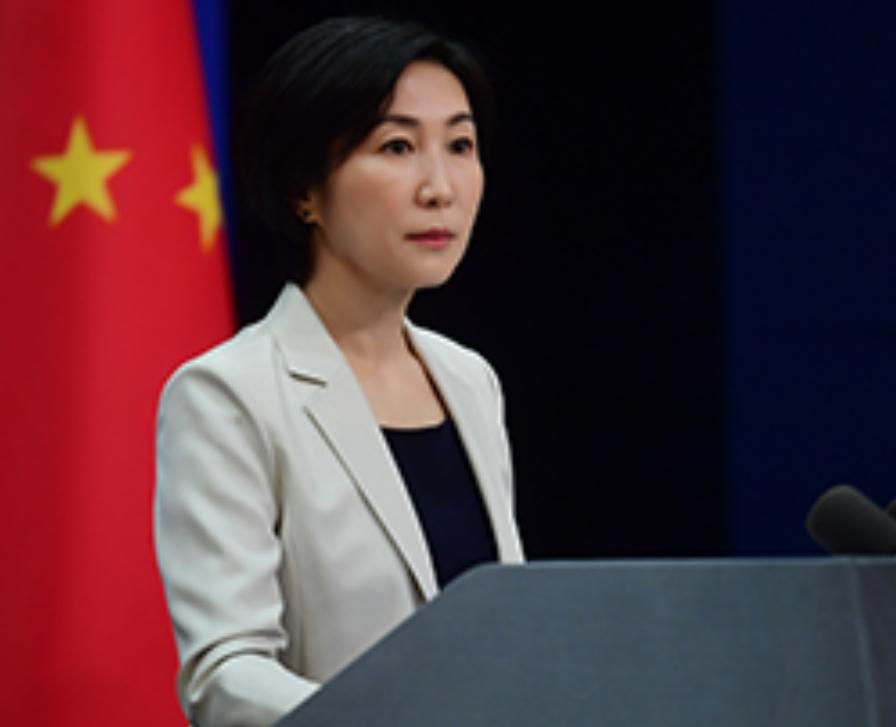
Addressing the issue at a regular press briefing, Chinese Foreign Ministry spokesperson Mao Ning rejected the notion that Japan could exercise collective self-defense in such a scenario. Mao argued that this right, as recognized in the UN Charter, was created to safeguard global security and prevent the resurgence of fascist forces, not to justify military expansion by countries with aggressive histories.
She emphasized that post-World War II arrangements limited Japan’s military capabilities for a reason. The Potsdam Proclamation explicitly stated that Japan should not re-arm, while Japan’s own Constitution pledged to forever renounce war and the threat or use of force. According to Mao, these commitments codify Japan’s obligations as a defeated nation and form the foundation of its exclusively defense-oriented security posture.
Mao also offered a historical interpretation, warning that Japan had repeatedly used similar pretexts in the past to justify military offensives. She cited 1931, when Japan claimed that seizing “Manchuria” was essential for survival, leading to the September 18th Incident and the subsequent occupation of Northeast China. She added that the defense of the so-called Greater East Asia Co-Prosperity Sphere was also presented as an existential battle, expanding Japanese aggression across Asia. Even the decision to attack Pearl Harbor, she noted, was framed as a survival issue, igniting the Pacific War.
According to Mao, these historical patterns underscore the need for vigilance. She said the alarm has been sounded and urged the international community to prevent any attempt at reviving militarism. As the world marks the 80th anniversary of the victory in the Chinese People’s War of Resistance Against Japanese Aggression and the broader World Anti-Fascist War, Mao stressed that it is essential to jointly uphold the post-WWII international order and safeguard global peace.
China’s forceful stance reflects growing concern over Japan’s evolving security posture, especially as discussions within Tokyo increasingly focus on military normalization, alliance coordination, and stronger involvement in regional flashpoints. Beijing views any move by Japan to intervene in the Taiwan Strait as a violation of its red line, amplifying tensions at a time when strategic mistrust is already running high.
Disclaimer
This article is based on publicly available statements and official remarks from government spokespeople. The views quoted belong to the respective officials and do not represent the editorial stance of this website. Readers are advised to verify information independently before drawing conclusions.