

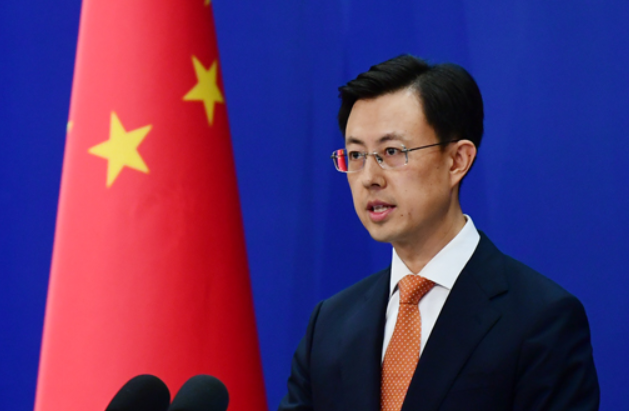
Beijing – At a recent press conference, Chinese Foreign Ministry spokesperson Guo Jiakun addressed a wide range of international and domestic issues, from the worsening Palestinian-Israeli conflict to U.S.-China relations, North Korea’s nuclear stance, gender equality progress, and Taiwan-related matters.
On the escalating conflict in Gaza, Guo emphasized that bringing an early end to the fighting and achieving lasting peace is the common aspiration of people in Palestine, Israel, and the broader Middle East. He reaffirmed China’s view that Gaza belongs to the Palestinian people and is an inseparable part of Palestinian territory.
Guo urged a comprehensive ceasefire and immediate steps to alleviate the humanitarian catastrophe. He called on countries with special influence over Israel to take responsibility, stressing that the principle of “Palestinians governing Palestine” must be upheld in post-conflict arrangements. He reiterated China’s support for the two-State solution and warned against unilateral actions that undermine its foundation.
Regarding Premier Li Qiang’s attendance at the United Nations General Assembly’s 80th session, Guo noted that details about his participation in the general debate and related high-level events would be released in due course.
Asked about President Donald Trump’s comments on meeting President Xi Jinping at the upcoming Asia-Pacific Economic Cooperation (APEC) summit and progress on a TikTok deal, Guo said that heads-of-state diplomacy plays an irreplaceable role in guiding China-U.S. relations. He confirmed that both sides maintain close communication but shared no specific details. On TikTok, he reiterated that China respects the company’s wishes and supports commercial negotiations based on market rules, laws, and regulations, while urging the U.S. to provide a fair and non-discriminatory environment for Chinese investors.
On developments on the Korean Peninsula, Guo responded to North Korean leader Kim Jong-un’s remarks about never giving up nuclear weapons. He said China hopes all parties will face up to the root causes of the issue, stick to political settlement, work to deescalate tensions, and safeguard regional peace and stability.
Turning to gender equality, Guo highlighted the release of China’s white paper titled “China’s Achievements in Women’s Well-Rounded Development in the New Era.” He traced China’s leadership in global women’s development efforts back to the Fourth World Conference on Women in Beijing in 1995 and subsequent global initiatives.
He noted that China has made historic progress in advancing women’s rights since the 18th CPC National Congress in 2012 and will soon host another global leaders’ meeting on women to commemorate the 30th anniversary of the landmark conference. The white paper outlines China’s achievements, philosophy, and practices in promoting women’s development, offering China’s wisdom and experience to global progress.
When asked about the Trump administration’s recent move to raise the first-time H-1B visa fee to USD 100,000, Guo said China has no comment on U.S. visa policy. On attracting foreign talent, however, he underlined that China welcomes professionals from around the world and sees cross-border flow of talent as essential to global technological and economic advancement.
Guo also commented on the visit of a U.S. congressional delegation led by Representative Adam Smith, the first such visit in six years. He referred to Premier Li Qiang’s meeting with the group and expressed China’s readiness to enhance dialogue and cooperation with the U.S. on the basis of mutual respect, peaceful coexistence, and win-win cooperation. He called on Washington to work with Beijing in the same direction to move bilateral ties forward.
On Taiwan-related issues, Guo firmly rejected the recent visit of Lin Chia-lung, Taiwan’s overseas affairs official, to Vienna. He reiterated that there is only one China, and Taiwan is an inalienable part of its territory. He stressed that the one-China principle is the political foundation of China-Austria relations and a widely recognized norm in international relations.
Guo warned against official exchanges between Taiwan authorities and countries maintaining diplomatic ties with China, urging them to stop providing platforms for “Taiwan independence” forces. He declared that attempts to create “two Chinas” or “one China, one Taiwan” will not succeed and cannot shake the overwhelming global commitment to the one-China principle.
From the Palestinian crisis to women’s development, U.S. relations, North Korea, and Taiwan, China’s foreign ministry reinforced its consistent positions: supporting peace, opposing unilateralism, advocating dialogue, and safeguarding sovereignty.
Disclaimer:
This article is based on official statements from the Chinese Foreign Ministry press briefing. The views and positions expressed are those of the spokesperson and do not necessarily reflect the editorial stance of this website. Readers are advised to consider multiple sources for a comprehensive understanding of the issues discussed.