

India’s Defense Revolution: How the S-400 and Operation Sindoor Proved That India Is Now a Global Military Power
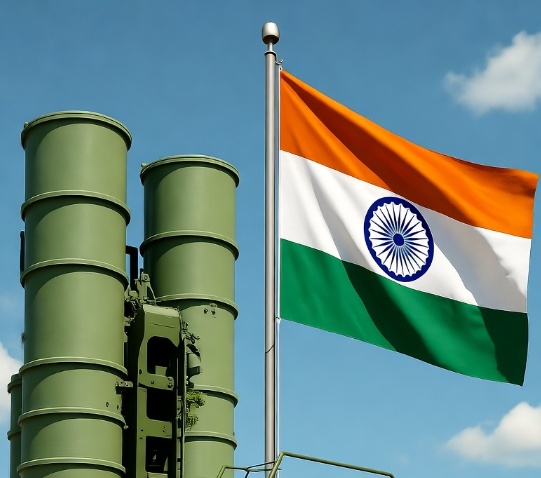
In a move that has sent shockwaves across the world, India has officially stepped beyond border defense and moved firmly toward becoming a true global superpower. The development centers around the arrival of five new S-400 air defense systems from Russia, the same weapon that played a decisive role during Operation Sindoor, when Pakistan’s aerial ambitions were crushed in a matter of minutes.
Operation Sindoor: The Day Pakistan’s Sky Fell Silent
It all began on May 7, 2025, when Pakistan made the grave mistake of testing India’s air defense strength. Armed with its Chinese-made JF-17 and American F-16 fighter jets, Islamabad attempted to provoke India. But what followed changed South Asia’s air combat history forever.
The S-400 Triumf, stationed at Adampur and Bhuj Air Bases, locked on to multiple Pakistani targets. When a Pakistani ELINT aircraft tried to infiltrate Indian airspace from over 314 km away, the S-400’s radar network detected, tracked, and destroyed it mid-air.
As the Pakistani F-16s and JF-17s approached closer, the S-400 fired again — neutralizing targets before they could even cross the Line of Control. From May 7 to May 10, no Pakistani aircraft dared to take off. The message was loud and clear:
“Anyone who dares to look at India’s skies with hostility will vanish in the air.”
During the operation, an AWACS (Airborne Warning and Control System) aircraft — a major surveillance asset of the Pakistan Air Force — was shot down from a distance of nearly 350 km. This event was later confirmed by Air Marshal A.P. Singh, who called it “the largest kill in modern air warfare history,” a testament to the Indian Air Force’s precision and the S-400’s unmatched power.
What Exactly Is the S-400?
The S-400 Triumf, developed by Russia, is the world’s most advanced long-range surface-to-air missile system. It is not just a missile launcher — it’s a floating fortress in the sky.
Can track up to 300 targets simultaneously
Has a strike range of up to 400 km
Can destroy fighter jets, cruise missiles, drones, and ballistic missiles
In 2018, India signed a $5.43 billion deal with Russia for five S-400 systems. Four of them have already been deployed at key strategic bases along India’s northern and western borders. Now, India is preparing to acquire five more S-400 units — three to be imported and two to be manufactured in India under Transfer of Technology (ToT) agreements.
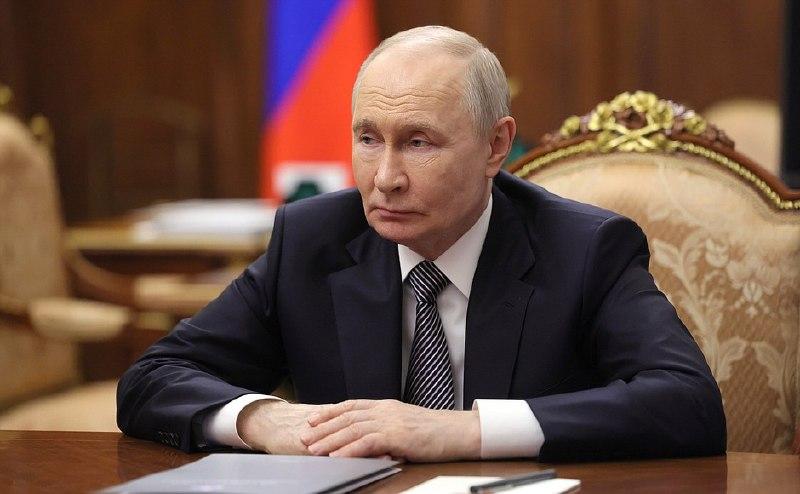
This upcoming India-Russia deal, expected to be finalized before the December 2025 summit between Prime Minister Narendra Modi and President Vladimir Putin, will mark a new chapter in India’s defense independence and bilateral cooperation.
Why This New S-400 Deal Matters
With these new systems, India’s entire 7,000 km coastline and its northern command will be fully protected under the S-400’s aerial shield. This means that both Pakistan and China will have to think twice before testing India’s airspace ever again.
But it’s not just about defense — it’s about a strategic revolution.
For the first time, India will also handle repair, maintenance, and overhaul of the S-400 systems domestically. No longer dependent on foreign technicians, Indian engineers will now safeguard India’s skies.
This is the true spirit of “Atmanirbhar Bharat” (Self-Reliant India) — a transformation from defense importer to defense superpower.
India’s Air Dominance: The RVV-BD Missiles
The S-400 deal is just one part of India’s new air supremacy plan. The Indian Air Force is also set to procure RVV-BD (Beyond-Visual-Range) air-to-air missiles from Russia.
Range: Over 200 km
Compatible with: Su-30MKI and future Rafale-M aircraft
Once integrated, Indian fighters will hold a decisive edge over Pakistan’s PL-15 missile systems, making India the uncontested power in the skies of South Asia.
The Future: India Eyes the S-500 System
Reports from The Print, citing sources in the Ministry of Defence, confirm that India is now studying the potential acquisition of Russia’s S-500 Prometey — an even more advanced system.
Range: 600–700 km
Can intercept hypersonic ballistic missiles and stealth aircraft
Can engage up to 10 targets simultaneously
Effective at altitudes up to 200 km
If this deal materializes, India will become the first foreign country to operate both S-400 and S-500 systems, putting it in the same league as Russia itself.
What About the U.S. CAATSA Sanctions Threat?
The U.S. may attempt to pressure India using its CAATSA (Countering America’s Adversaries Through Sanctions Act), as it has done before. But India’s stance is now clear:
New Delhi will act in its own national interest, not under any foreign pressure.
India has shown that it can deal strategically with Russia, France, and the U.S. simultaneously — maintaining partnerships while preserving its sovereign decision-making.
India’s Rise as a Defense Superpower
Between five new S-400s, domestic maintenance facilities, RVV-BD missiles, and successful missions like Operation Sindoor, one truth stands firm:
The 21st century belongs to India.
India’s borders are now not just secure on land, but also in the skies and the seas.
India is writing a new defense doctrine — one of confidence, capability, and self-reliance.
Conclusion
From Operation Sindoor’s historic victory to the upcoming S-400 and S-500 acquisitions, India has declared that it will neither bow nor stop.
This is not just defense modernization — this is a military renaissance.
The India-Russia bond has evolved into a strategic alliance built on trust, technology, and strength.
And now, as India steps into the era of defense self-sufficiency, the world watches a new chapter unfold —
the rise of India as a global defense superpower.
Disclaimer:
This article is based on publicly available reports, defense analysis, and media sources. It is intended solely for informational and educational purposes. The details regarding military operations, defense systems, and international deals may include interpretations or projections based on current events and should not be considered official government statements. The publication does not claim or confirm any classified or undisclosed defense information.