

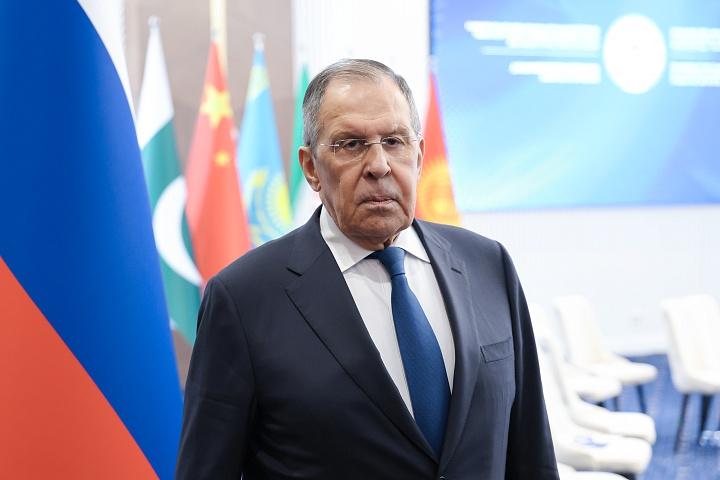
Russian Foreign Minister Sergey Lavrov has accused Ukraine and its Western backers of derailing what he described as the "Anchorage agreements," insisting that Moscow had accepted a compromise proposal put forward by the United States but that Kyiv ultimately refused to follow through.
Speaking after his meeting with US Secretary of State Marco Rubio, Lavrov rejected suggestions that the understandings reached in Anchorage had failed because of Russia. Instead, he argued that Moscow had agreed to a US-backed proposal endorsed by President Donald Trump with the expectation that it would halt hostilities and create conditions for broader political negotiations.
According to Lavrov, Russia accepted the proposal despite its compromise nature, saying that agreements of this kind inevitably require concessions from all parties. He recalled that Russian President Vladimir Putin had previously acknowledged Moscow initially had reservations but later approved the proposal after careful consideration.
Lavrov claimed that President Trump had publicly described the Anchorage discussions as laying a strong foundation for a future settlement and had suggested that Ukrainian President Volodymyr Zelensky would accept the proposed framework. However, Lavrov alleged that Ukraine ultimately declined to move forward, preventing the implementation of the understandings.
The Russian foreign minister said he had provided Secretary Rubio with transcripts of President Trump's earlier remarks about the Anchorage talks, arguing that Washington had previously viewed the discussions positively before later suggesting the agreements had collapsed.
Questioning the reasons behind the breakdown, Lavrov said it remained unclear whether the proposal failed because of Ukraine's refusal, pressure from European allies, or a broader shift in the US position following consultations with European leaders.
Lavrov also criticized the Group of Seven (G7), accusing Western governments of continuing to support Ukraine while, in his view, ignoring the interests of residents in territories claimed by Russia, including Crimea, Donbass, and what Moscow refers to as Novorossiya. He argued that continued Western backing allows Kyiv to pursue policies that Russia considers unacceptable.
The Russian minister further pointed to statements by French President Emmanuel Macron and Ukraine's acting foreign minister, Andrey Sibiga, which he said indicated that the Anchorage understandings had effectively been abandoned. Lavrov suggested that if Washington now shares that assessment, Moscow has little choice but to continue pursuing its own course.
Despite his criticism, Lavrov reiterated that Russia remains open to a political and diplomatic settlement. However, he stressed that Moscow would achieve the objectives outlined by President Vladimir Putin regardless of developments on the diplomatic front.
Lavrov also accused Western countries, particularly the United States, of enabling Ukraine's military operations through continued weapons deliveries, intelligence sharing, reconnaissance support, Starlink communications, and advanced military technologies. He argued that these capabilities have strengthened Ukraine's ability to carry out attacks against Russian territory and civilian infrastructure.
Concluding his remarks, Lavrov maintained that Russia had honored its commitments and remained prepared to negotiate if acceptable conditions emerged. Nevertheless, he suggested that recent comments by Secretary Rubio indicate that Washington's position may have changed.
He reaffirmed that Russia remains committed to achieving the objectives announced by President Vladimir Putin in June 2024, regardless of whether diplomatic negotiations ultimately resume.
The statements reflect Moscow's latest assessment of the stalled diplomatic process and underscore the significant differences that continue to separate Russia, Ukraine, and their Western partners over the prospects for a negotiated settlement.