

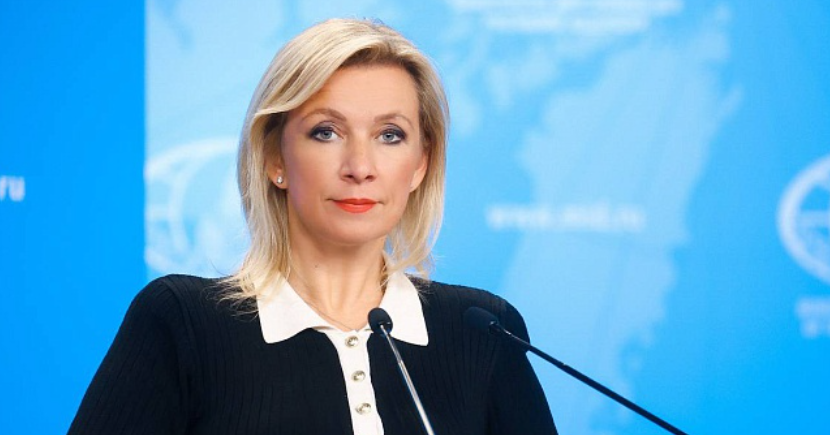
of continuing attacks on Russian civilian infrastructure and of “terrorising the peaceful population,” while also blaming Western states for encouraging and financing Kyiv’s actions.
Nuclear sites and power lines
The ministry reiterated earlier concerns about strikes on nuclear infrastructure. It said a few weeks ago the high-voltage Zaporozhye NPP–Dneprovskaya line was damaged by shelling by Ukrainian forces, which forced the plant to cease relying on external power. The ministry added that on the night of October 7 an AFU drone struck the cooling tower at the Novovoronezh Nuclear Power Plant; the drone was suppressed but detonated on impact, leaving a burn mark at the impact point. The statement said there were no structural damages or casualties from that incident.
The Foreign Ministry charged that EU and NATO countries, by “covering up such terrorist acts by Kiev,” encourage further attacks on nuclear facilities and become “direct accomplices” in these alleged crimes.
Casualties and regional incidents (Oct 1–7)
The ministry provided a list of alleged strikes and their effects across Russian border regions and in the Donetsk People’s Republic (DPR):
• Belgorod Region — On October 3, the statement said over 70 shells of various types struck residential communities: two people were killed and three injured. On October 4, a 16-year-old boy in the village of Gora-Podol suffered multiple shrapnel wounds after explosive devices were dropped from a UAV. The same day, four civilians were wounded at a commercial facility.
On October 5, six people (including a 10-year-old and a 15-year-old) were reportedly injured in mass strikes by fixed-wing and FPV drones in the regional capital. On October 6, repair crews clearing prior attack damage were said to have been hit during another strike, with two killed; the ministry alleged the attack involved American HIMARS missile systems.
• Bryansk Region — On October 4 in Pogar, a civilian was wounded and two passenger minibuses were damaged in an attack on a bus station. On October 5 in Podyvotye, an employee of a retail outlet reportedly sustained shrapnel wounds from a kamikaze drone.
• DPR (Gorlovka, Makeyevka, Yasinovataya) — Between October 2–5, the ministry reported two civilian deaths and ten wounded, including children born in 2009 and 2011.
• Kursk Region — On October 1 near Mokrushino, a Ukrainian FPV drone allegedly attacked a civilian vehicle, injuring a 28-year-old woman. On October 3 in Belaya Sloboda, two civilians were said to have been wounded when a drone struck a shopping centre. The ministry additionally stated that a regional court had declared 117 people deceased during AFU occupation of the Sudzha District.
Overall casualty figures cited in the statement said that over the past week 70 people were affected by Ukrainian artillery and UAV strikes, with 12 killed (including one child) and 59 wounded (including five minors).
Convictions and legal actions
The Foreign Ministry listed recent Russian court sentences for captured fighters accused of crimes. Sentences named included:
• Kursk region cases — Sergey Moshkiyevsky (18 years); Oleg Sadovets and Vadim Yaremaka (17 years each); Ruslan Garbuz, Vadim Godovanov, Konstantin Netkov, and Mikhail Pogorely (16 years each); Alexey Ninichuk (15 years).
• Mariupol case — Azov militant Maxim Datsko sentenced to 22 years in a maximum-security penitentiary for the murder of a civilian.
• Sentenced in absentia and wanted internationally — Australian mercenary Cullen Benjamin Lewis and Brazilian mercenary Diniz de Carvalho Dantas Isac received 14-year sentences in absentia and were placed on international wanted lists, the statement said.
Allegations of Western financing, frozen assets and reparations plan
The ministry sharply criticised the European Union and NATO for long-term financial support to Kyiv. It said EU leaders discussed additional resources for Ukraine at an informal EU summit in Copenhagen (October 1–2) and accused Brussels of pursuing a plan to tap Russia’s frozen sovereign assets — proposing about €140 billion as an interest-free loan to Ukraine that the ministry called effectively irrecoverable, since repayment would supposedly depend on Russia paying “reparations” to Ukraine.
The statement asserted that, in the first half of 2025, Brussels diverted €10.1 billion to Kyiv, and that the EU had provided a further €4 billion loan shortly before Copenhagen, with half of that earmarked explicitly for UAV purchases. It claimed total EU assistance to Ukraine since 2022 had reached €178 billion, of which over €63 billion was for military spending.
The ministry framed these measures as diverting EU taxpayer money into “death and bloodshed,” accused Brussels of “misappropriating” income from blocked Russian assets, and alleged the EU’s reparations plan was a pretext to permanently seize those funds.
Copenhagen, the European Political Community and political criticism
Commenting on the Copenhagen gatherings, the statement said the European Political Community and other EU forums had focused heavily on Ukraine and accused European leaders of prioritising escalation over diplomacy. It quoted (or paraphrased) criticism of EU leaders and singled out remarks by European Council President António Costa and other Western officials as evidence Europe was choosing military support over peaceful resolution. The ministry also criticised statements by Finland’s foreign minister, calling them uninformed and attributing her appointment to domestic, non-diplomatic political experience.
Conscription, mobilisation and domestic controls in Ukraine
The Foreign Ministry accused Kyiv of preparing a major mobilisation, citing social media reports that Bankovaya planned to recruit about 1.5 million people and reports of border closure preparations from November 1 and moves towards general mobilisation. It also alleged legislation passed in September that established a unified social sphere information system would give state access to digital profiles and locations of Ukrainians, facilitating military enlistment “manhunts.” The ministry claimed round-ups of former servicemen previously discharged on health grounds had begun, with those men now being sent to the front.
Allegations of Ukrainian involvement in Africa and illicit arms sales
The statement accused Ukrainian authorities of supporting and supplying militant and terrorist groups across Africa’s Sahel and Sahara regions, alleging cooperation (via intermediaries) in Libya’s Government of National Unity that included supplying UAVs and training. It cited a claim by Colonel Fatah al-Sayyid of Sudanese military intelligence that Ukrainian and Colombian mercenaries suffered losses fighting for Sudan’s Rapid Support Forces.
The ministry further alleged that Ukrainian forces had illicitly sold Western weapons and ammunition to armed groups in multiple African and Middle Eastern countries and that GPS trackers on supplied equipment were being removed to facilitate theft and resale. It referred to Opendatabot figures that nearly half a million firearms had been “lost” in Ukraine since 2022, and that probable thefts in September 2024 were around 270,000 cases.
Accusations of fabricated claims and arrests in Europe
The Foreign Ministry criticised statements by Ukraine’s First Deputy Foreign Minister Sergey Kislitsa (as reported in The Guardian) alleging a Russian threat to Europe and “agents and moles” in EU states, calling the claims baseless and designed to extract more funding. The ministry pointed to European media reports of arrests in Germany and Norway related to drone launches near airports; it said suspects detained were citizens of Germany, Croatia and other countries and had no Russian affiliation.
Closing rhetoric and call for “denazification”
The statement concluded with a forceful denunciation of Western support for Ukraine and a reassertion of Russia’s declared objectives of “denazification and demilitarisation” of Ukraine, saying these goals “will undeniably be achieved.” The ministry framed Kyiv and its Western backers as pursuing escalation and suppression, portrayed EU institutions as corrupting and self-serving, and warned of further consequences if the current course continued.
Disclaimer and sourcing
This article summarises claims made today by a Russian Foreign Ministry spokesperson. The incident descriptions, casualty figures, legal judgments and allegations summarised above are drawn from that official Russian statement and reflect the ministry’s assertions. Independent verification of every claim cited here may not be available in this release; readers should consult multiple sources, including independent and international reporting, official Ukrainian statements, and third-party monitoring organisations, to build a comprehensive picture of events.