

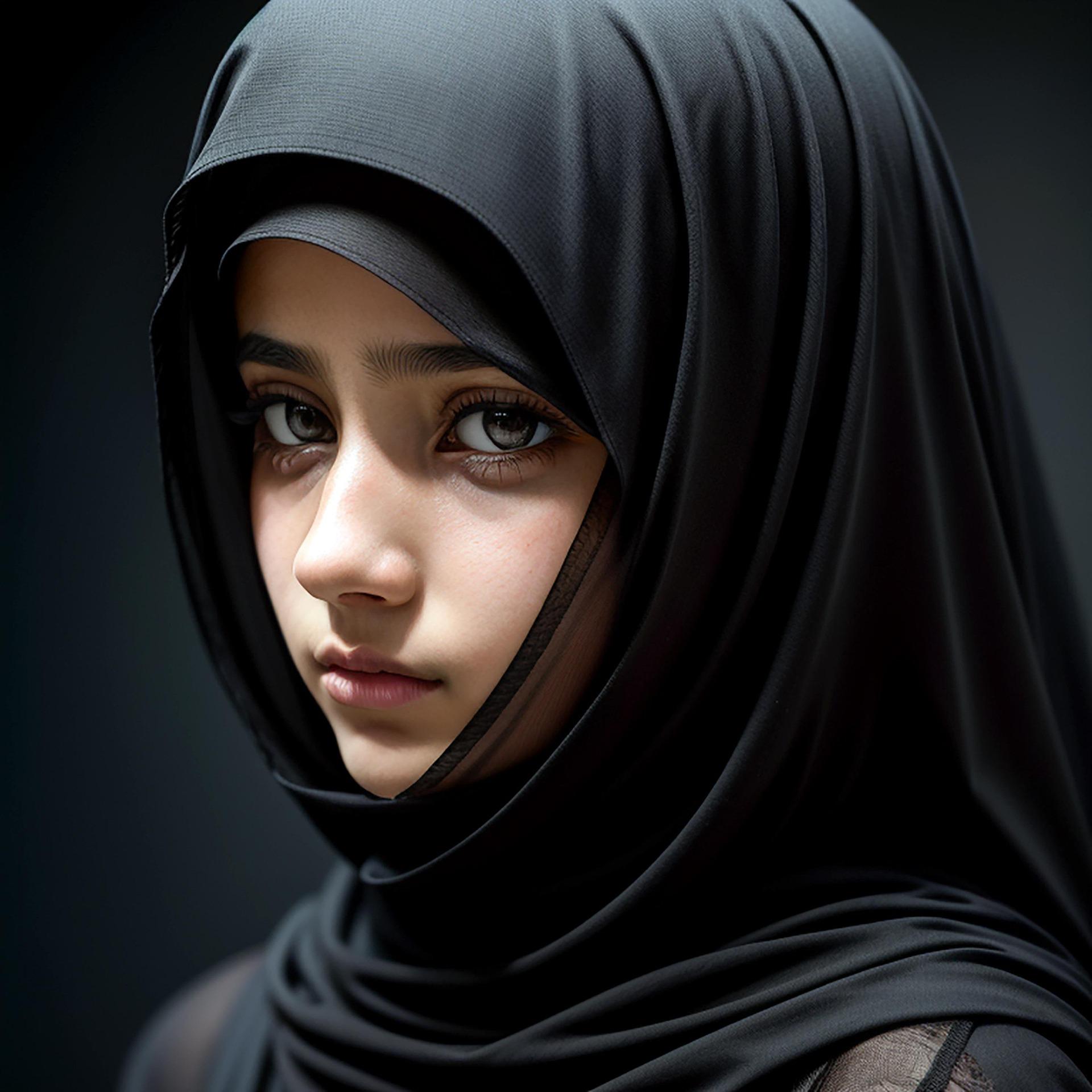
In a landmark enforcement of Switzerland's controversial face-covering ban, a Muslim woman in Zurich has become the center of a heated debate after contesting a modest fine for wearing a burqa. What began as a 100 Swiss franc penalty ($126 USD) has ballooned to 1,000 Swiss francs ($1,260 USD) following her appeal, which argued that the law embodies Islamophobia. This case marks the first public challenge to the ban since it took effect on January 1, 2025, highlighting the ongoing tensions between religious freedoms, public security, and cultural integration in the Alpine nation.
The incident began earlier this year when the woman, whose identity has not been disclosed due to Swiss privacy laws, was spotted wearing a burqa in a public space in Zurich. Swiss police issued her an immediate on-the-spot fine of 100 Swiss francs, the minimum penalty under the new federal law. Police spokesperson Michael Walker stated that the stop was routine and aligned with the law’s objective to ensure facial visibility in public areas.
Rather than pay the fine, the woman appealed to cantonal authorities, arguing that the law disproportionately targets Muslim women and infringes on her right to practice her faith freely. Her appeal echoed criticisms from Swiss Muslim organizations that view the law as a step backward for tolerance. In a swift ruling, the cantonal administration rejected her claim and imposed the maximum fine of 1,000 Swiss francs, setting a precedent for future challenges and underscoring the law’s no-tolerance stance on appeals.
Details about the woman remain sparse, though reports speculate she is part of Switzerland’s estimated 400,000-strong Muslim community, where only around 30 women nationwide regularly wear niqabs or burqas. The incident took place in Zurich, Switzerland’s largest city, known for its diverse immigrant population including communities from Turkey, Bosnia, and Kosovo.
The law, formally known as the Initiative for a Ban on Full-Face Coverings, was approved in a March 7, 2021, national referendum by a narrow margin of 51.2%, with voter turnout at 46%. Spearheaded by the right-wing Swiss People’s Party (SVP), the measure was framed as a defense against “political Islam” and a tool for promoting gender equality and social cohesion. Campaign posters depicted veiled women with slogans such as "Stop Extremism!" and "Stop Radical Islam," drawing accusations of fearmongering.
The ban prohibits covering the face in public spaces including streets, transport, shops, and government buildings, requiring eyes, nose, and mouth to remain visible. It applies broadly to burqas, niqabs, and other coverings such as balaclavas worn by protesters or sports fans. Exceptions include places of worship, health-related coverings, and indigenous customs. Fines range from 100 to 1,000 Swiss francs, with the higher penalty triggered by non-payment or appeals, as seen in this case. Implementation was delayed until 2025 after parliamentary debates softened initial proposals for up to 10,000-franc penalties. Prior to the federal law, cantons like Ticino and St. Gallen had introduced their own bans, sometimes imposing fines as high as 8,000 francs.
Switzerland’s move reflects a broader European trend of face-covering restrictions, often justified as security measures but criticized as discriminatory. France pioneered a burqa ban in 2010, followed by Austria, Belgium, Denmark, and others. In Switzerland, the law has already been applied 98 times in Zurich alone for protest masks, showing its wider utility beyond religious garments.
Supporters argue that the ban enhances security by preventing anonymity, promotes gender equality, and fosters social cohesion. Critics, however, describe it as Islamophobic and marginalizing, particularly given that Muslims make up only around 5% of the population. Swiss feminists are divided, with some viewing it as liberating women from patriarchal pressures, while others see it as state overreach.
The public reaction has been intense, with the story going viral on social media. On X (formerly Twitter), posts referencing the case garnered millions of views, with hashtags like #Hejab, #MuslimWomen, and #Islamophobia trending briefly. Responses ranged from critiques of religious liberty infringement to support for Switzerland’s strict enforcement, illustrating the polarized debate around the law.
This ruling may deter further challenges, signaling that appeals will not soften enforcement. Muslim advocacy groups could pursue appeals at the European Court of Human Rights, following similar actions in France. For now, it reinforces Switzerland’s approach to direct democracy, where the voters’ will prevails even on divisive issues. As Europe continues to navigate questions of migration, integration, and identity, the Zurich case serves as a microcosm of the broader debates. Whether it chills burqa use or sparks renewed activism remains to be seen.