

China has officially commissioned its most advanced aircraft carrier, the Fujian, marking a major milestone in President Xi Jinping’s drive to build a world-class navy. The ceremony, held on Hainan Island in southern China, was attended by President Xi himself, who also serves as the chairman of China’s Central Military Commission. More than 2,000 sailors participated in the event, which was broadcast on state television, highlighting the growing strength of the Chinese Navy — already the largest in the world in terms of the number of ships.
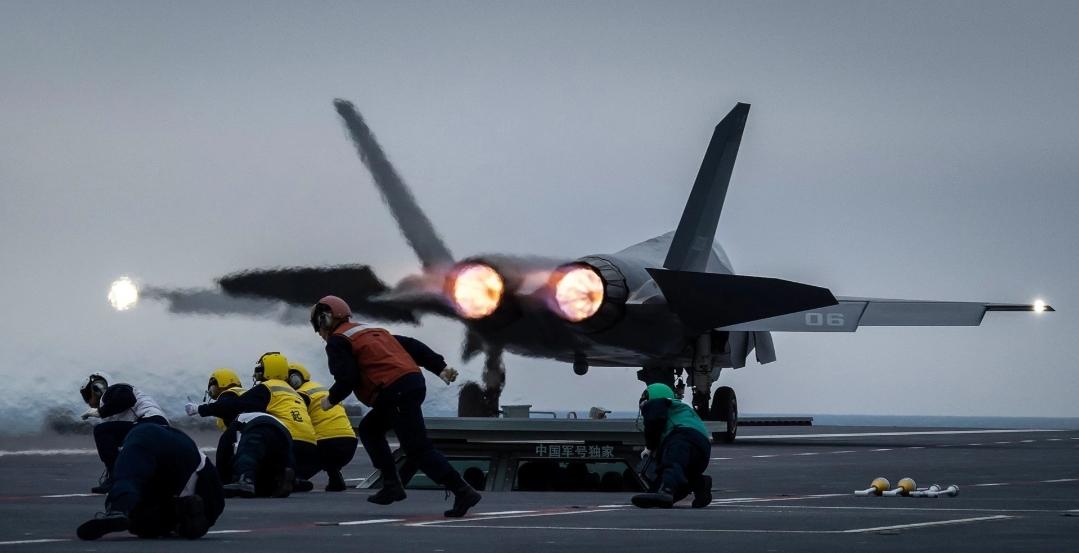
The Fujian, also known as Type 003, represents a significant leap in China’s naval capabilities. It is the country’s first fully domestically designed and built aircraft carrier, showcasing Beijing’s progress in developing advanced maritime technology. The ship is conventionally powered, relying on diesel rather than nuclear propulsion like the U.S. Navy’s carriers. Despite that, it features cutting-edge technology, including an electromagnetic catapult system that enables aircraft to take off with heavier weapon loads and more fuel, allowing them to fly greater distances.
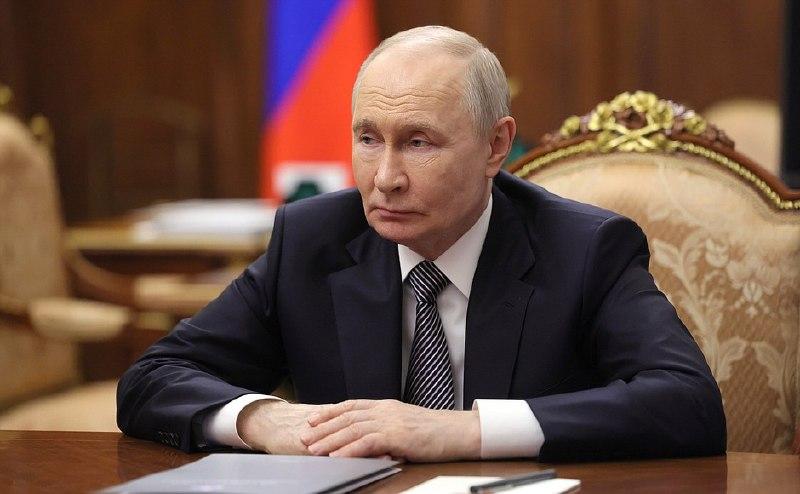
President Xi Jinping personally oversaw the ship’s development and commissioning. During the ceremony, he inspected the aircraft and addressed the pilots, praising their courage and dedication. “Even test flights demand tremendous courage. What you do is truly remarkable. You’re all heroes,” Xi told the assembled personnel. His remarks underscored the symbolic importance of the Fujian to China’s growing military ambitions.
Although the Fujian was unveiled in 2022, it has undergone several years of extensive testing before becoming proficient enough to enter official service. Experts note that the ship’s development signals China’s intent to challenge the U.S. Navy’s dominance in the Pacific and beyond. While China now has three aircraft carriers compared to the U.S. fleet of eleven, Beijing’s rapid expansion and modernization of its naval forces reflect its goal of asserting control over contested waters such as the South China Sea and the Taiwan Strait.
News Reporter Rick Lowert, reported from Taipei, noted that China’s latest carrier is nearly as large as America’s biggest. “China and its president Xi Jinping are sending a message that China now has a navy to rival the U.S.,” he said. “The Fujian demonstrates that Xi is continuing to deliver on his goal of modernizing the People’s Liberation Army and creating a world-class military force.”
Although the Fujian has entered service, analysts believe it will take about a year before it becomes fully operational. Once fully deployed, it could significantly enhance China’s power projection capabilities across the Indo-Pacific region.
In Taiwan, the commissioning of the Fujian has been met with growing unease. Taipei has been closely monitoring China’s rapidly expanding navy, which frequently operates near Taiwanese waters. In the last 24 hours alone, Taiwan reported more than 30 Chinese military aircraft sorties and 11 naval vessels near its territory. Taiwanese officials have previously said that China’s aircraft carriers are being used to project power and reinforce its territorial claims over democratic Taiwan.
When China deployed two carriers into the Pacific earlier this year, Taipei described the move as an indication of Beijing’s expansionist ambitions. Military analysts warn that China’s increasing number of carriers could allow it to position one in each of its key maritime theaters, such as the Taiwan Strait and the South China Sea. This would enable more frequent and complex military drills — and, potentially, increase the risk of confrontation.
Experts fear that these operations in contested regions could heighten the chances of accidental clashes or miscalculations between Chinese forces and other regional militaries, including those of the United States and its allies. Such incidents could easily escalate, raising the risk of a larger military conflict.
The commissioning of the Fujian underscores Beijing’s commitment to expanding its naval power and solidifying its influence in the Indo-Pacific. As the U.S. and its allies continue to strengthen their defense ties in response, the region may be entering a new and more volatile era of maritime competition.
Disclaimer:
This article is based on information from DW News and other publicly available sources. It is intended for informational purposes only and does not represent any political stance or endorsement.