

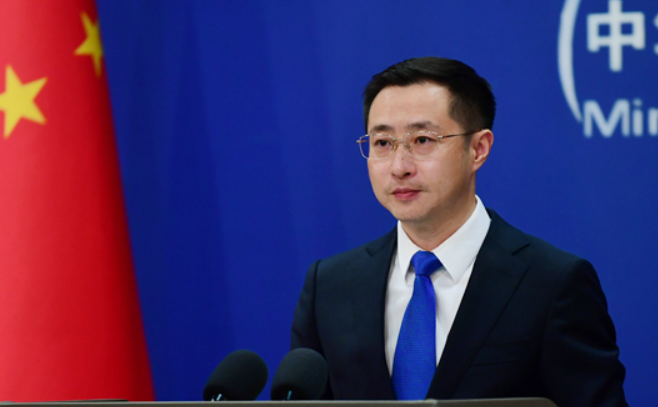
In a strongly worded statement, China has sharply criticized Japan’s recent letter to the UN Secretary-General, calling it “full of erroneous views and lies,” and accusing Tokyo of challenging the post-World War II international order. The remarks came after Shenzhen TV raised questions at the Chinese Foreign Ministry’s regular press briefing, following Japan’s November 24 letter defending its position on Taiwan and its national defense policy.
Chinese Foreign Ministry spokesperson Lin Jian rejected Japan’s claims point by point, warning that Tokyo must “earnestly do soul-searching” and stop reversing history.
Japan’s UN Letter Sparks Strong Pushback
Japan’s Permanent Representative to the UN argued in the letter that China had misinterpreted Japan’s security stance. He insisted that:
- Japan follows a “posture of passive defense strategy,”
- Its policy is “exclusively defense-oriented,”
- And Prime Minister Sanae Takaichi’s earlier remarks on Taiwan were consistent with Japan’s long-standing principles.
Japan further suggested that the world should oppose any “coercive measures” against a nation’s stated policies — a reference widely interpreted as criticism of China’s diplomatic pressure.
But Beijing responded by saying Japan is hiding behind vague terminology while avoiding direct answers.
China: Japan Must Explain Its ‘Consistent Position’ on Taiwan
Lin Jian stressed that Tokyo has repeatedly dodged a fundamental question: What exactly is Japan’s “consistent position” on the Taiwan issue as outlined in the four political documents signed between China and Japan?
“The Japanese side has continued to evade the question and has yet to give China a direct answer,” Lin said.
“Can the Japanese government provide the international community a complete and accurate explanation?”
Beijing maintains that Taiwan is Chinese territory and that the Taiwan question is an internal matter that must not be subject to foreign intervention.
China Calls Takaichi’s Remarks a Violation of UN Charter
Earlier, Japanese Prime Minister Sanae Takaichi linked Japan’s national security to a potential “Taiwan contingency,” implying possible use of force in such a scenario. The Chinese side argues that such comments blatantly contradict Japan’s claim of a purely defensive posture.
Quoting Article 2(4) of the UN Charter — which prohibits the threat or use of force — Lin sharply criticized Takaichi’s stance:
“As a sitting leader of a defeated country in WWII, Takaichi threatened a victorious country with the use of force. How could the Japanese side claim it adheres to international law?”
According to China, Tokyo’s rhetoric amounts to provocation and violates the basic norms governing international relations.
Beijing Accuses Japan of Rewriting History and Expanding Military Power
China’s rebuttal went further, accusing Japan of:
- Increasing its defense budget for 13 consecutive years,
- Removing the ban on collective self-defense,
- Relaxing arms export rules,
- Developing long-range strike capabilities,
- Attempting changes to its non-nuclear principles,
- And hollowing out commitments made in the Cairo Declaration and Potsdam Proclamation.
Beijing views these changes as evidence that Japanese right-wing forces are attempting to whitewash wartime aggression while expanding military capabilities under the guise of “self-defense.”
Lin said it is Japan — not China — that is changing the status quo and taking coercive actions in the region.
China Sends Another Letter to the UN
In response to Japan’s document, China’s Permanent Mission to the UN submitted a new letter reiterating its stern position. The timing, Beijing noted, is significant — 2025 marks the 80th anniversary of the victory in the Chinese People’s War of Resistance Against Japanese Aggression and the global war against fascism.
China warned that Japan must:
- Recognize and respect post-war arrangements,
- Stop challenging established historical verdicts,
- And refrain from actions that mirror past militarism.
“We urge the Japanese side to rectify its wrongdoings, fulfill its obligations as a defeated country, and stop reneging on its words,” Lin emphasized.
Regional Impact: A New Flashpoint in China-Japan Relations
This latest confrontation adds fresh tension to an already strained relationship between Asia’s two largest powers. Japan’s increasing military partnerships, its alignment with the U.S. Indo-Pacific strategy, and the Taiwan question remain key pressure points in bilateral ties.
China’s public condemnation at the UN level elevates the dispute beyond routine diplomatic disagreements — signalling that Beijing sees Japan’s Taiwan remarks as a red line issue with direct implications for regional peace.
Analysts say the messaging is aimed not only at Tokyo, but also at Washington and other Indo-Pacific partners observing Japan’s expanding security role.
Conclusion
The exchange of formal letters at the UN reflects deepening mistrust between China and Japan, especially over Taiwan, military strategy, and interpretations of wartime history. As both nations mark significant historical anniversaries, their competing narratives are resurfacing old political fault lines in East Asia.
For now, China’s message is unmistakably firm:
Japan must stop challenging the post-war order, clarify its Taiwan policy, and avoid actions that could inflame security tensions in the region.