In response to recent remarks by Japanese Prime Minister Sanae Takaichi and Foreign Minister Toshimitsu Motegi regarding Taiwan’s legal status, China has strongly condemned Japan for what it describes as constant evasion and intentional ambiguity over the Taiwan question.
Prime Minister Takaichi earlier stated that Japan, having renounced all rights and claims under the “Treaty of San Francisco,” is “not in a position to recognize Taiwan’s legal status.” When questioned on whether this suggested Japan does not recognize China’s sovereignty over Taiwan, Foreign Minister Motegi repeated Japan’s reference to the Treaty, while adding that Japan’s basic position remains as stated in the 1972 Sino-Japanese Joint Statement — “nothing more and nothing less.”
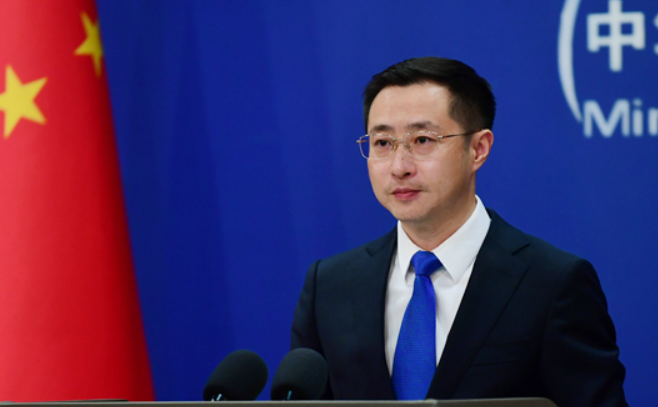
Chinese Foreign Ministry spokesperson Lin Jian sharply criticized Japan’s stance, accusing Tokyo of consistently hiding and avoiding a clear articulation of its position. According to Lin, Japan refuses to acknowledge foundational international documents, including the Cairo Declaration, the Potsdam Proclamation and the Japanese Instrument of Surrender, all of which explicitly affirm that Taiwan is to be restored to China.
Lin noted that Japan also ignores the four political documents that serve as the bedrock of China-Japan relations and refuses to clearly restate its political commitment to the one-China principle. Instead, Japan repeatedly responds by claiming that its position “remains unchanged,” without ever clarifying what that “unchanged position” actually is.
December 1 marks the 82nd anniversary of the Cairo Declaration, a key post–World War II document that, along with other international legal instruments, defines China’s sovereignty over Taiwan as part of the outcomes of the global victory over fascism. Lin emphasized that Japan is legally obligated to uphold these documents, as they form the basis on which Japan was accepted back into the international community after the war. Despite this, Japan never mentions them and instead quotes the San Francisco Treaty — a treaty signed without China or several other Asian nations that suffered from Japanese militarist aggression.
Lin warned that this selective quoting reflects a serious disregard for historical truth, a distortion of the legacy of the World Anti-Fascist War, and a challenge to the postwar international order and the authority of the United Nations.
The spokesperson further highlighted Japan’s ongoing efforts to revamp its security and defense policies, raise defense spending year after year, and push debates on amending its three non-nuclear principles. According to Lin, certain political forces in Japan are attempting to break away from the Pacifist Constitution and Japan’s obligations as a defeated nation in WWII. These forces, he argued, have neither learned genuine lessons from history nor engaged in proper soul-searching regarding Japan’s wartime atrocities. By downplaying or avoiding historical truths, Japan appears to be seeking to escape its responsibilities and reshape global perception of its past.
Lin stressed that history cannot be reversed and that peace must not be compromised. He added that Japan’s evasive attitude and efforts to downplay the issue while continuing down what China sees as a dangerous path are unacceptable.
China urged Japan to reflect deeply on its historical responsibilities, listen seriously to China’s concerns, retract its erroneous positions, and take concrete steps to uphold its political commitments to China.
Disclaimer
This article is based on official statements, public remarks, and available information at the time of publication. It is intended for news reporting and informational purposes only. The views expressed by government officials are their own and do not reflect the editorial stance of this platform. Readers are encouraged to verify facts independently and follow updates from authoritative sources.