

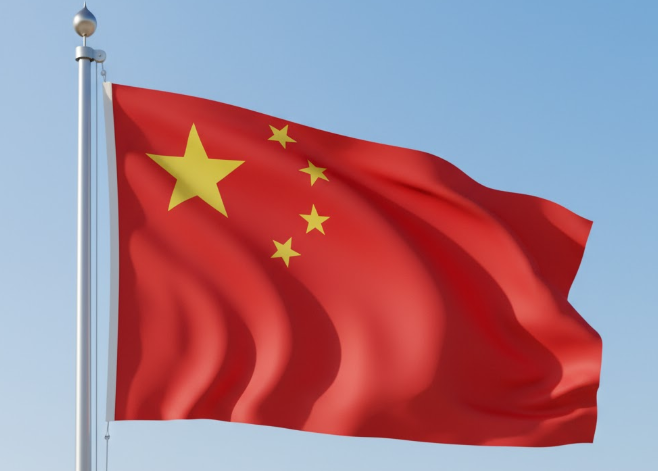
Beijing – The Chinese Foreign Ministry on Monday responded to remarks made by U.S. Treasury Secretary Scott Bessent, who said that Washington could consider raising tariffs on China if Beijing continues to block exports of rare earth materials. The statement from the U.S. official comes amid rising tensions between the two nations over trade, technology, and access to critical minerals essential for global manufacturing and defense industries.
Responding to a question from AFP, Chinese Foreign Ministry Spokesperson Mao Ning reaffirmed Beijing’s stance on rare earth export policies, saying that China’s competent authorities have already clarified their position on multiple occasions. Mao emphasized that China’s approach to rare earth exports is consistent with domestic laws and international trade rules, and that external threats or pressure will not help resolve ongoing trade differences.
“On China’s policy of rare earth export control, competent authorities have made clear our position more than once,” Mao Ning stated. She further highlighted that the outcomes of the recent China-U.S. economic and trade consultations held in Kuala Lumpur demonstrated that “dialogue and cooperation is the right way forward, and threatening and pressuring does not solve any issue.”
The Kuala Lumpur consultations, which marked the latest round of economic talks between the two major economies, were aimed at reducing friction following months of escalating rhetoric and policy disputes. The discussions focused heavily on supply chain resilience, high-tech trade barriers, and the regulation of critical minerals such as rare earth elements—materials vital for electric vehicles, renewable energy technologies, and advanced military equipment.
Mao Ning also called on both countries to implement the “important common understandings” reached by Presidents Donald Trump and Xi Jinping during their meeting in Busan earlier this year. “The two sides need to earnestly deliver on the important common understandings reached by the two presidents in Busan and inject more certainty and stability into China-U.S. trade and economic cooperation and the world economy,” Mao said.
Analysts view the exchange as another sign that U.S.-China trade relations remain fragile despite recent attempts at stabilization. Washington has been pressing Beijing to lift restrictions on the export of rare earth elements, which are critical for the production of semiconductors, smartphones, and defense systems. Meanwhile, China argues that its export controls are aimed at ensuring sustainable resource management and national security protection, rather than being politically motivated.
The United States has also been working with allies, including Australia and Canada, to diversify global rare earth supply chains and reduce dependence on China, which currently dominates over 60% of global rare earth processing capacity.
As tensions continue to mount, both nations face increasing pressure from the global business community to maintain stability and avoid further escalation that could disrupt key industries. The Chinese Foreign Ministry’s latest statement underscores Beijing’s preference for negotiation and mutual respect over unilateral actions or threats.
Disclaimer: This article is based on official statements and reports from the Chinese Foreign Ministry and public remarks by U.S. Treasury Secretary Scott Bessent. It is intended for informational purposes only and does not represent investment or policy advice.