

In a recent interview, retired four-star General and strategic analyst Jack Keane discussed President Donald Trump’s latest statements regarding potential U.S. nuclear weapons testing and broader geopolitical developments. The remarks came after Russia responded to Trump’s comments about ensuring parity in nuclear capabilities among global powers, signaling heightened tensions but also opportunities for strategic recalibration.
Russia’s response was cautious but firm. Officials stated that all nations are developing their defense systems and that Russia’s recent activities do not amount to nuclear testing. However, Moscow warned that if any country abandons the moratorium on nuclear testing, Russia will “act accordingly.” The statement was widely seen as a direct message to Washington, following President Trump’s declaration that the U.S. must be “on equal footing” with other nuclear-armed states that are allegedly continuing secret weapons tests.
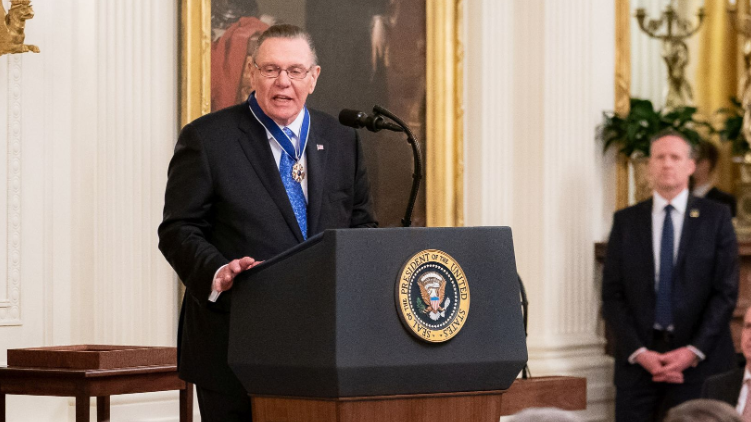
General Jack Keane, Chairman of the Institute for the Study of War, provided a detailed assessment of the situation. He noted that for years there has been speculation that Russia and China have been secretly conducting nuclear warhead tests, though such claims remain unverified. Keane emphasized that President Trump, with access to classified intelligence, may have acted based on credible information about such activities.
However, Keane clarified that the most recent Russian testing likely involved delivery systems — such as cruise missiles and underwater drones — rather than actual nuclear warheads. He suggested that Trump’s comments could have been a reaction to these developments rather than a call for immediate nuclear escalation.
According to Keane, President Trump’s overarching goal remains de-escalation and reduction of nuclear stockpiles, not expansion. “He wants to see a reduction in nuclear weapons and is not looking for any escalation whatsoever,” Keane said. He added that the U.S. president has attempted to involve both Russia and China in nuclear disarmament efforts, but while Moscow continues to expand its tactical nuclear arsenal, Beijing has shown little interest in participating.
The conversation then shifted to Trump’s recent international tour, which included high-level meetings with Asian allies and China’s President Xi Jinping. When asked by host Brian Kilmeade to rate the success of the trip, General Keane gave it “pretty high marks,” calling it a major diplomatic success. Keane described President Trump’s meeting with Xi as a pivotal moment where Trump appeared as the “undisputed world’s global leader,” a position that China has long sought to challenge.
Keane pointed out that China’s major strategic partners — including Iran and Russia — are facing setbacks. He cited Iran’s diminished capabilities due to joint U.S.-Israeli actions, Russia’s faltering progress in Ukraine, and the increasing impact of Western sanctions. “Russia is in its fourth year of war, has not taken a major city since 2022, and its economy is suffering under sanctions,” Keane noted. He also mentioned that Trump’s decision to increase military aid to Ukraine further strengthens America’s position against Moscow.
Discussing China, Keane expressed caution about Xi Jinping’s promises. He recalled past agreements, such as Xi’s 2019 commitment to purchase $500 billion worth of American goods — a deal in which China ultimately fell short by over $200 billion. Similarly, Xi had promised to curb fentanyl exports to the U.S. seven years ago, yet the problem persists. “We have to see if he keeps his promises this time,” Keane warned, noting that the Trump administration is fully aware of China’s past shortcomings.
On the topic of Iran, Keane agreed with Trump’s tough stance on curbing China’s support for Iran’s missile program. Recent reports have indicated that Chinese firms are supplying key materials to Tehran, which Washington is closely monitoring. Keane emphasized that the U.S. has the capability to clamp down on such transfers if necessary.
The discussion also touched on developments in Venezuela, where the U.S. has been pressuring the Maduro regime through sanctions and demonstrations of military strength. Reports of American aircraft carriers being deployed near the region were described as a strategic show of force aimed at the elites supporting Nicolás Maduro. “The aircraft carrier is the ultimate symbol of American military power,” Keane explained, suggesting that its presence could encourage internal pressure against the regime.
However, Keane made it clear that there is no indication of a U.S.-led invasion or direct attempt at regime change. Instead, he said the goal appears to be to weaken Maduro’s internal support structure and encourage a peaceful transition. “The administration would accept the elites forcing Maduro out, leading to some kind of transition,” Keane said, noting that the CIA is reportedly engaged in efforts to undermine the regime from within.
Keane concluded by stressing that the Venezuelan issue goes beyond local corruption. The country has become a hub for narcotrafficking networks with ties to Iran, Russia, and China, posing a growing threat to regional stability. “Maduro’s government and the drug trade have become one and the same,” Keane warned, underscoring the importance of sustained U.S. pressure.
From nuclear strategy to geopolitical alliances and anti-narcotics operations, General Keane’s analysis offered a broad view of how the Trump administration is recalibrating U.S. foreign policy to counter multiple threats simultaneously. While Trump’s remarks on nuclear testing sparked international debate, Keane’s interpretation suggested that the president’s underlying goal is deterrence and global stability — not confrontation.
Disclaimer:This article is based on publicly available statements and commentary from media interviews. It reflects ongoing geopolitical discussions and does not represent official policy statements from any government.