

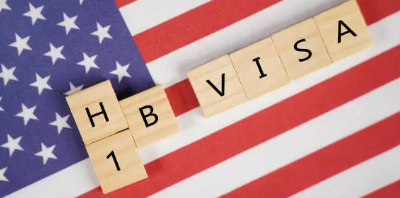
September 22, 2025 – The H-1B visa program has long been a cornerstone of India’s $283 billion technology services industry, offering access to the U.S. market for skilled professionals. Indian workers hold nearly 71 percent of all H-1B visas, with around 65 percent allocated to computer-related roles. However, recent developments have shaken this foundation. On September 19, 2025, U.S. President Donald Trump announced a $100,000 annual fee on new H-1B entries, effective September 21, 2025. The move marks a staggering 60-fold increase compared to previous fees of $2,000 to $5,000 and is positioned as a step against program “abuse,” aimed at prioritizing high-salary roles and curbing low-cost labor imports.
For Indian IT giants like Tata Consultancy Services (TCS), Infosys, Wipro, HCL Technologies, and Cognizant—who have historically been top sponsors of H-1B visas—this proclamation poses both immediate challenges and longer-term shifts. Over the past decade, these companies have already reduced their dependency on the program by 56 percent, with approvals falling from 15,100 in FY15 to 6,700 in FY23. In parallel, they have increased local hiring in the United States, with 50 to 80 percent of their U.S. workforce now sourced domestically. The steep new fee is expected to accelerate this transition, though it brings short-term costs and uncertainty.
According to USCIS data, Indian-origin firms secured approximately 13,870 H-1B approvals in FY25 (October 2024 to September 2025), about 13 percent of the total ~107,000 issued. This is a notable decline from their historical 20 percent share, reflecting a deliberate strategy to diversify. The breakdown shows TCS with 5,505 approvals (down 8 percent), Cognizant with 3,700 (up 5 percent), Infosys at 2,004 (down 20 percent), HCL Technologies with 1,728 (down 12 percent), and Wipro at 1,523 (down 15 percent). LTIMindtree emerged stronger with a 10 percent increase to 1,807, while Tech Mahindra saw a modest 5 percent dip to 951.
Despite being based in the U.S., Cognizant has an India-heavy workforce and remains highly dependent on H-1B visas. Amazon continued to lead overall approvals with 10,044. Analysts highlight that while U.S. tech majors dominate the program, Indian outsourcers remain crucial in fulfilling contract staffing and client project delivery.
Official responses from Indian IT firms have been measured. NASSCOM, the leading industry body representing over 3,000 Indian technology companies, has taken the lead in articulating concerns. It has warned that the policy could disrupt Indian IT operations and affect global job markets. Still, it noted that since the fee will only apply from 2026 onward, companies have time to expand local U.S. hiring and skilling programs. NASSCOM is pushing for exemptions while emphasizing the role of Indian IT in bolstering U.S. innovation.
TCS has not issued a statement after the proclamation, but its leadership earlier noted that with 46,000 associates across 32 U.S. locations, mostly locals, H-1B usage has already become a small fraction of its workforce. Infosys, which had led the pack in prior years, highlighted in its filings that it has built a robust recruiting pipeline in the U.S., with 50–60 percent of its workforce locally hired. Wipro has also stressed its 70 percent local staffing, calling H-1B “non-core” to its operations. HCL Technologies has pointed to its 80 percent local workforce and investment in American training academies. Cognizant, however, faces unique scrutiny after a 2024 discrimination case where it was accused of favoring Indian hires; its shares fell over 4 percent after the announcement.
The broader response from India’s government has been one of concern. The Ministry of External Affairs warned of humanitarian consequences such as disruptions for families and urged the U.S. to consider mutual benefits. Commerce Minister Piyush Goyal is already in Washington for trade talks amid $87.3 billion in bilateral trade. Meanwhile, U.S. Congressman Raja Krishnamoorthi criticized the policy as reckless, arguing it could hurt American innovation.
Public opinion is divided. On social media, some argue the policy could push India toward greater self-reliance in innovation and encourage use of L-1 intra-company transfer visas. Others fear reverse brain drain, job losses, and reduced opportunities for Indian professionals in the U.S. American groups such as USTechWorkers continue to accuse Indian firms of nepotism and offshoring jobs.
The financial implications are significant. Analysts estimate that the fee could cost Indian IT firms about $1.34 billion annually, equivalent to 10 percent of combined FY25 profits of companies like TCS and Infosys, squeezing margins by 2–5 percent. Markets reacted sharply, with shares of Infosys, Wipro, and Cognizant falling between 2 and 5 percent, while the Nifty IT index tested support around 35,500. In some cases, confusion around new travel advisories even left employees stranded abroad as companies like Microsoft and Amazon scrambled to adjust.
In the longer term, the industry is expected to adapt by turning to L-1 visas, increasing acquisitions of U.S. firms to access local talent, investing more heavily in automation and artificial intelligence, and expanding Global Capability Centers (GCCs) in India. While some, like Phil Fersht of HFS Research, see this as a direct attack on the Indian IT outsourcing model, others believe it could push companies toward higher-value services and more resilient global strategies.
There are wider ripple effects as well. Reduced H-1B inflows could mean lower remittances from the U.S. back to India, potentially cutting $10–15 billion annually. It may also discourage Indian STEM students from enrolling in American universities. Meanwhile, a 3.5 percent remittance tax proposal in the U.S. has added to the concerns.
The Trump administration’s fee hike underscores its “America First” agenda in employment. For Indian IT, the immediate impact may be painful, but the industry has shown adaptability in the face of past reforms. From its reliance on H-1B visas as a lifeline to a new phase of local hiring and global diversification, India’s technology sector is reinventing itself to withstand the shifting dynamics of global policy.