

A fresh wave of geopolitical tension is unfolding between the United States and Iran over the status of the Strait of Hormuz, a critical global oil transit route, as conflicting claims and ongoing negotiations create uncertainty in global energy markets.
Iran has stated that it has reopened the Strait of Hormuz, but with a strong condition — the United States must end its naval blockade for the waterway to remain fully operational. The strait had been effectively restricted for weeks, significantly disrupting global energy supplies.
US President Donald Trump has made it clear that the naval blockade targeting Iranian vessels and ports will remain in place until a comprehensive peace agreement is reached. Speaking recently, Trump hinted at positive developments, stating that there has been “some pretty good news” regarding Iran, although he declined to share details. He also warned that the current ceasefire may not be extended unless a deal is finalized within days.
At the same time, Iran’s position appears far more restrictive. Iranian parliament speaker Mohammad Bagher Ghalibaf stated that the US blockade effectively keeps the strait closed. According to him, ships can only pass through designated routes and only with authorization from Iran. He also criticized the United States, accusing President Trump of making false claims and asserting that control over the strait would be determined “on the ground, not on social media.”
The situation on the ground is complex. Iranian officials suggest that the strait is not entirely closed but is being used as a strategic leverage point in negotiations. Commercial vessels may be allowed passage under strict coordination with Iranian authorities, while military vessels, particularly those linked to the United States, are likely to be denied access.
Reports indicate that Iran has introduced controlled transit routes, possibly closer to its coastline, and requires prior coordination for ships passing through the region. There are also indications that the strait will remain partially open only during the remaining days of the current ceasefire, which is expected to last just a few more days.
Meanwhile, tensions are also rising over Iran’s nuclear program. The United States has suggested it may take control of Iran’s enriched uranium stockpile, reportedly exceeding 400 kilograms, but Tehran has firmly rejected this proposal.
Despite claims from Washington that a deal is close to completion, sources within Iran indicate that negotiations are still at a very early stage. The immediate focus is reportedly on agreeing to a framework for future talks rather than finalizing any agreement.
The potential next round of negotiations could take place within days, but both sides remain deeply divided. Unlike previous talks that focused primarily on Iran’s nuclear program, the current discussions involve a broader set of issues, including sanctions relief, security guarantees, ballistic missile programs, frozen assets, and regional influence.
Iran has emphasized that it is not interested in a temporary solution or a simple ceasefire extension. Instead, it is seeking a comprehensive agreement that ensures long-term stability and avoids a repeated cycle of conflict.
At the same time, there is a clear lack of trust between the two sides. Iranian officials remain cautious, neither fully optimistic nor entirely pessimistic, as past negotiations have failed to deliver lasting results.
Adding to the uncertainty, both sides continue to signal readiness for military escalation. While diplomatic talks are ongoing, military sources in Iran have stated that preparations are in place for renewed confrontation if negotiations collapse. Similarly, President Trump warned that failure to extend the ceasefire could lead to a return to active conflict.
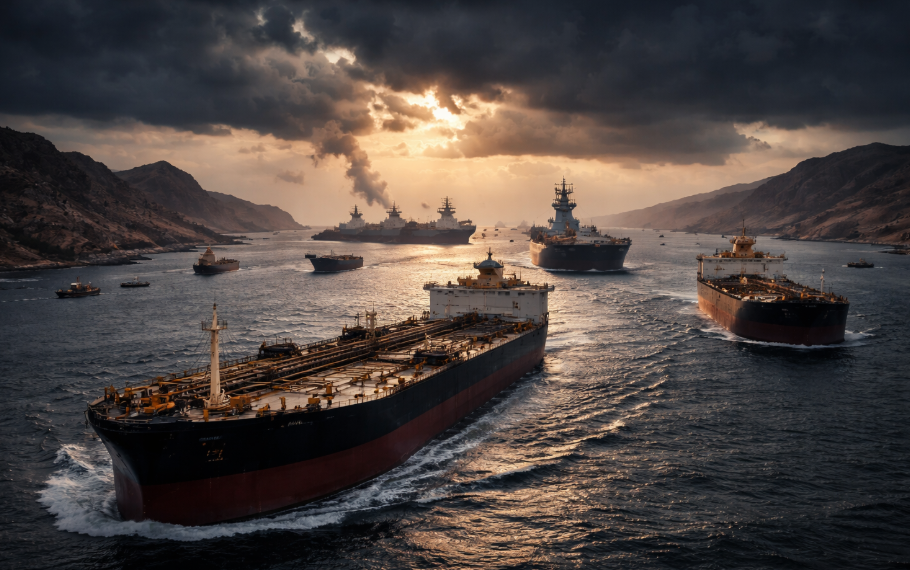
The Strait of Hormuz remains at the center of this geopolitical standoff. As one of the world’s most critical oil chokepoints, any disruption in its operations has immediate global consequences.
For now, the situation remains fluid — partially open routes, conditional access, and high-stakes diplomacy continue to define the region, with the world watching closely for whether negotiations will lead to peace or another escalation.