

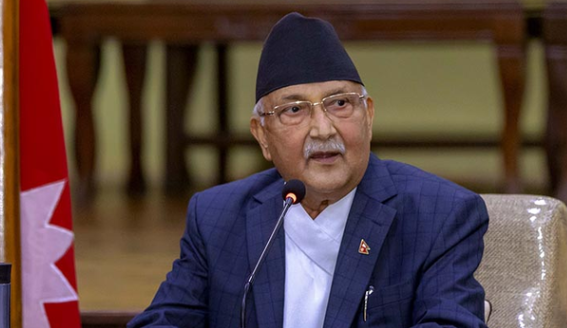
Kathmandu, September 19 – Former Prime Minister of Nepal and CPN-UML leader K P Sharma Oli marked Constitution Day with a strong message reflecting on Nepal’s democratic journey, past struggles, and challenges from neighbors, while also addressing the circumstances of his recent political downfall after widespread GenZ-led protests.
Speaking through a Facebook post, Oli described Constitution Day as a momentous occasion for the Nepali people. He said the constitution promulgated in 2015 was the outcome of seventy years of sacrifice and relentless struggle of the people, and it established Nepal as a federal democratic republic with guaranteed rights for its citizens. He underlined that the day was not just about a legal document but about the victory of the people in writing their own destiny through their elected representatives.
Oli recounted the turbulent backdrop in which the constitution was declared. He reminded his followers that Nepal had to face many obstacles both internally and externally. Without naming India directly at first, Oli pointed to the “blockade” imposed in 2015 by Nepal’s southern neighbor, which disrupted supplies and created shortages of essential goods. He claimed that certain forces wanted to weaken Nepal and make it dependent by severing crucial transport links and creating a situation of national crisis.
According to Oli, those difficult days had demonstrated the resilience of the Nepali people and the determination of the leadership to resist external pressures. He said Nepal’s decision to promulgate its constitution despite the blockade showed that the nation was capable of taking its own independent course without succumbing to interference. Oli highlighted that his government’s long-term aim was to make Nepal immune to any future blockade by diversifying trade routes and building connectivity both northward and southward, thereby reducing dependency on a single neighbor.
Turning to recent events, Oli addressed the GenZ-led protests that had swept across the country and eventually forced his government out of office. He alleged that the protests, while appearing spontaneous, had been infiltrated by external forces that sought to exploit the grievances of young people for their own political ends. He claimed that disinformation campaigns were run to mislead the public and to create widespread unrest in society.
Oli also defended his administration against accusations of heavy-handedness. He said clearly that during his government’s tenure, no official order was ever issued to open fire on protesters. He stressed that while the protests did lead to unfortunate clashes and loss of lives, his government never authorized security forces to use lethal force against its own citizens. He expressed grief at the tragic incidents, offered condolences to the families of those who died, and wished for the speedy recovery of the injured.
Reflecting on both the past and the present, Oli sought to portray himself as a leader who stood firm in defending Nepal’s sovereignty and ensuring that the mistakes of the past would not be repeated. He presented his legacy as one of resistance against external domination and of building a stronger, more self-reliant Nepal. Even though he is currently out of power, his message on Constitution Day was clearly intended to resonate with both his supporters and the wider population, reminding them of his role during one of the most challenging periods in modern Nepali history.
At the same time, his remarks once again underscored his critical view of India’s actions during the 2015 blockade and reflected his continuing distrust of external influence in Nepali politics. With the GenZ protests reshaping the country’s political dynamics, Oli’s reflections offered both a defense of his record and a critique of those he views as responsible for Nepal’s instability.