

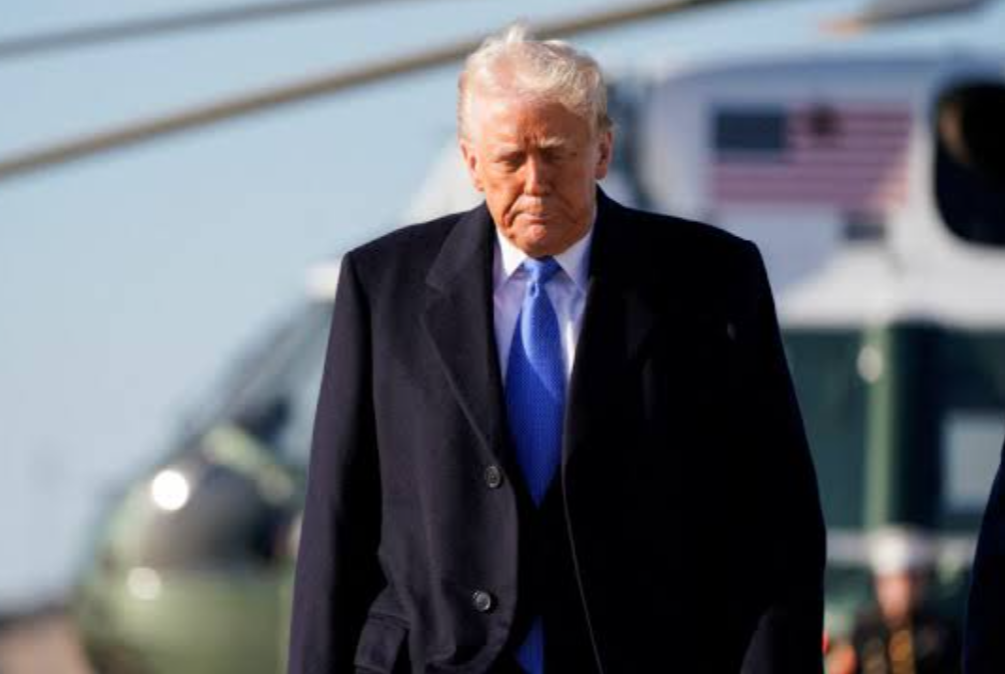
U.S. President Donald Trump has made a series of strong statements regarding global military coordination, NATO alliances, and the ongoing conflict with Iran, signaling a more aggressive and independent U.S. stance in global geopolitics.
During a press interaction, Trump revealed that multiple countries are already moving toward participation in a coalition effort, although he declined to name them. He stated that some nations are “very enthusiastic” while others are less willing, and a few may refuse entirely despite decades of U.S. military protection. Trump emphasized that the U.S. has spent tens of billions of dollars protecting allies and questioned why those nations are not stepping up in return.
He specifically raised concerns about NATO, reiterating his long-standing criticism that while the United States is committed to defending its allies, those same allies may not reciprocate in times of real need. Trump suggested he would present this issue before Congress, questioning the fairness of protecting countries that fail to support the U.S. in critical situations.
On the issue of reopening the strategically vital Strait of Hormuz, Trump confirmed he has spoken with French President Emmanuel Macron, rating France’s cooperation as “an eight out of ten.” While expressing cautious optimism that France would assist, Trump maintained that the U.S. does not necessarily need help but is using the situation to evaluate how allies respond under pressure.
He also expressed disappointment with the United Kingdom, claiming that British leadership initially hesitated to send naval support, including aircraft carriers, despite U.S. requests. According to Trump, the UK only offered assistance after the conflict had largely concluded, which he described as unacceptable timing.
Trump highlighted the global importance of the Strait of Hormuz, noting that countries like China and Japan depend heavily on oil shipments passing through the route, with China sourcing around 91% and Japan about 95% of their oil from the region. He criticized the longstanding U.S. role in protecting these energy routes without financial reimbursement, calling it an outdated habit that primarily benefits other nations rather than the U.S., which he claims is now energy independent.
Regarding military developments, Trump stated that U.S. forces have destroyed all Iranian mine-laying ships and are heavily targeting coastal regions linked to disruptions in the Strait. However, he acknowledged that reopening the passage depends not only on military control but also on the willingness of commercial ship operators, who may hesitate due to risks involving billion-dollar vessels.
Turning to Iran, Trump claimed that Tehran is seeking negotiations but questioned the credibility of its leadership, stating that multiple layers of Iranian leadership have been eliminated in recent strikes. He said the U.S. currently does not know who is in charge, describing a chaotic situation where successive leadership groups have been “knocked out.”
He also accused Iran of spreading large-scale disinformation using artificial intelligence, including fabricated images of U.S. assets like the USS Abraham Lincoln allegedly being destroyed, as well as false visuals of cities in Israel and Gulf nations being attacked.
Trump described Iran as a country built on disinformation and warned that its use of AI-generated propaganda represents a dangerous new phase in warfare. Despite this, he confirmed that communication channels remain open, stating that he is willing to talk to anyone if it leads to a positive outcome.
On internal Iranian dynamics, Trump expressed skepticism about the possibility of a popular uprising, citing brutal crackdowns on protests. He described instances where security forces allegedly used snipers to suppress demonstrations, warning that such tactics make organized opposition extremely difficult.
Addressing global oil markets, Trump acknowledged rising prices but predicted a sharp decline once the conflict stabilizes. He argued that preventing Iran from acquiring nuclear weapons is far more important than short-term economic concerns, warning that a nuclear-armed Iran would destabilize the entire Middle East and pose a direct threat to both Israel and the United States.
He further claimed that Iran had launched attacks across multiple countries in the region, including Qatar, Saudi Arabia, the UAE, Bahrain, and Kuwait, actions he described as unexpected and indicative of the country’s aggressive capabilities. Trump stated that U.S. and Israeli operations have already eliminated a significant portion of Iran’s missile and drone infrastructure.
On the topic of Israel, Trump dismissed concerns about potential nuclear escalation, stating that Israel would not resort to nuclear weapons. However, he acknowledged ongoing military actions against Hezbollah and noted that the group remains a persistent threat in regions like southern Lebanon.
Finally, Trump addressed broader strategic concerns, questioning whether the United States is once again becoming the “world’s policeman.” While he indicated reluctance for deep global involvement, he reiterated his demand that allied nations must contribute more actively, both militarily and financially, if they expect continued U.S. protection.
Overall, Trump’s remarks reflect a significant shift toward a more transactional and assertive U.S. foreign policy, emphasizing national strength, reduced dependence on allies, and increased pressure on both adversaries and partners in a rapidly evolving geopolitical landscape.
Disclaimer
This article is based on publicly available statements and media transcripts. The information reflects ongoing geopolitical developments that may change rapidly. Readers are advised to follow official government sources and verified news platforms for the latest updates. This content is for informational purposes only and does not constitute political, financial, or investment advice.