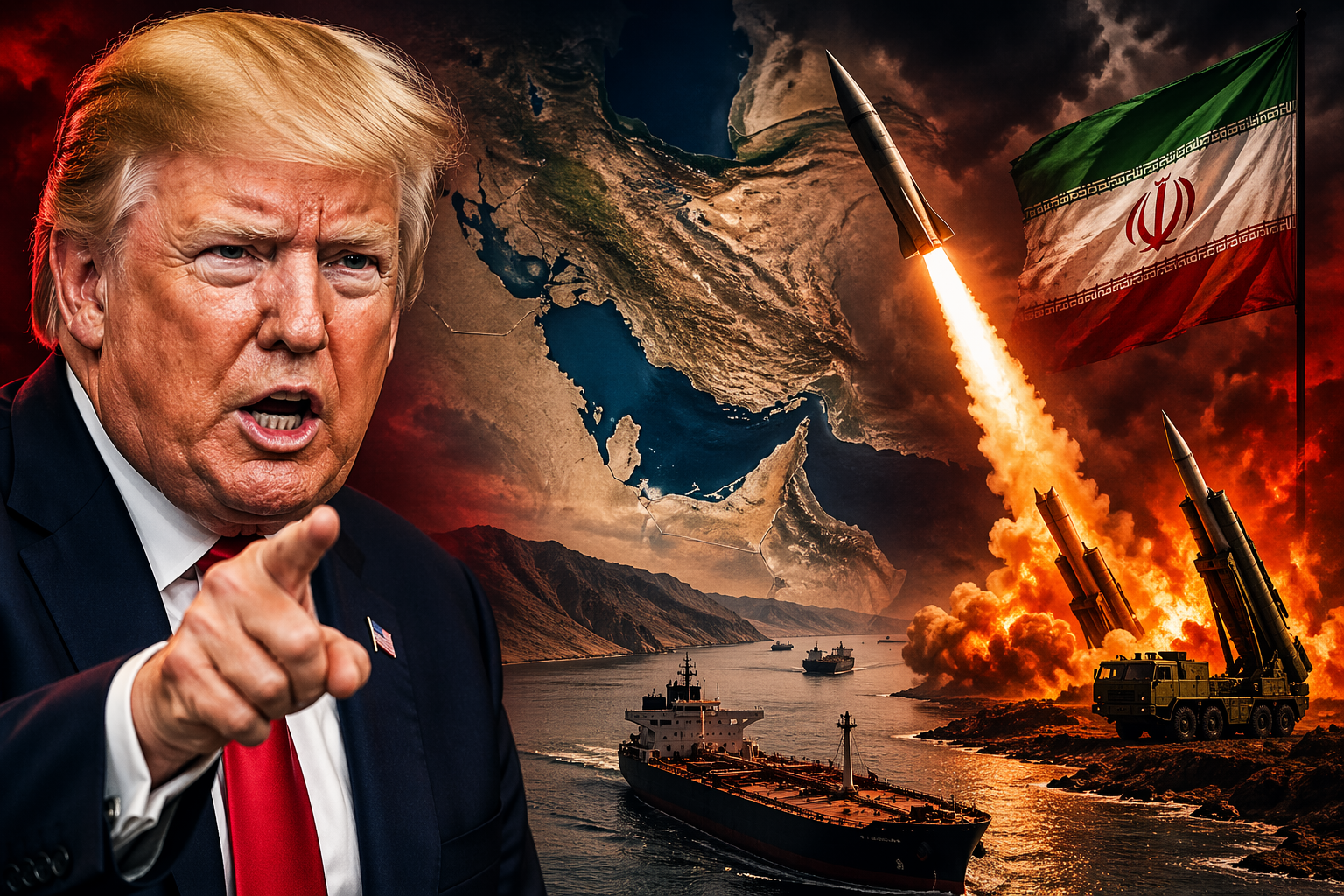
Tensions between the United States and Iran are once again escalating after U.S. President Donald Trump warned that fresh military strikes against Iran remain possible if Tehran fails to meet American demands.
Speaking amid ongoing geopolitical uncertainty in the Middle East, President Trump said his administration intends to “finish the conflict properly” to ensure the United States does not face the same threats again in the future. His comments come as negotiations surrounding the reopening of the Strait of Hormuz, Iran’s nuclear program, and broader regional conflicts remain unresolved.
According to reports discussed during the broadcast, Trump expressed serious doubts that the latest proposal submitted by Iran would be acceptable to Washington. The president stated that Iran has “not yet paid a big enough price” for what he described as decades of destabilizing actions affecting humanity and the global community over the past 47 years.
The remarks indicate that the White House is continuing to maintain strong pressure on Tehran while leaving military options on the table.
Reports suggest that Iran’s proposal includes a one-month deadline for negotiations aimed at reopening the Strait of Hormuz and ending the ongoing U.S. naval blockade. The plan reportedly also seeks a permanent end to the war involving Iran and Lebanon.
Under the proposal, discussions regarding Iran’s nuclear program would only begin after an initial agreement is reached on maritime access and regional conflict issues. Another month of negotiations would reportedly follow in an attempt to secure a broader nuclear agreement.
However, the Trump administration appears unconvinced that the proposal goes far enough.
President Trump emphasized that the United States has already caused significant damage to Iran’s military capabilities and suggested Iran would require decades to recover if the current military pressure continues.
“If we left right now, it would take them 20 years to rebuild,” Trump said during remarks referenced in the broadcast. He added that the U.S. wants to ensure that future administrations do not have to return to military conflict within the next few years.
When questioned about the possibility of additional military action, Trump refused to rule out further strikes. He stated that if Iran “misbehaves” or takes aggressive actions, further attacks remain “certainly” possible.
The latest developments also highlight growing military coordination inside the U.S. administration. Sources told Fox News that the head of U.S. Central Command (CENTCOM), Admiral Brad Cooper, met with President Trump last week to brief him on the ongoing blockade operations and the broader regional military situation.
Meanwhile, the White House is reportedly informing Congress that the War Powers Act deadline does not currently apply because the administration argues that active fighting, which began earlier this year, has paused for the moment.
The situation remains highly sensitive as global markets closely monitor developments in the Middle East. The Strait of Hormuz is considered one of the world’s most important oil shipping routes, and any disruption in the region could impact global crude oil prices, shipping costs, and overall market stability.
Investors are also watching for any changes in U.S. military posture or signs of renewed escalation between Washington and Tehran, as geopolitical tensions in the region continue to influence energy markets and international diplomacy.
While negotiations remain technically open, President Trump’s latest comments suggest the administration is prepared to intensify pressure if talks fail to produce results acceptable to the United States.