

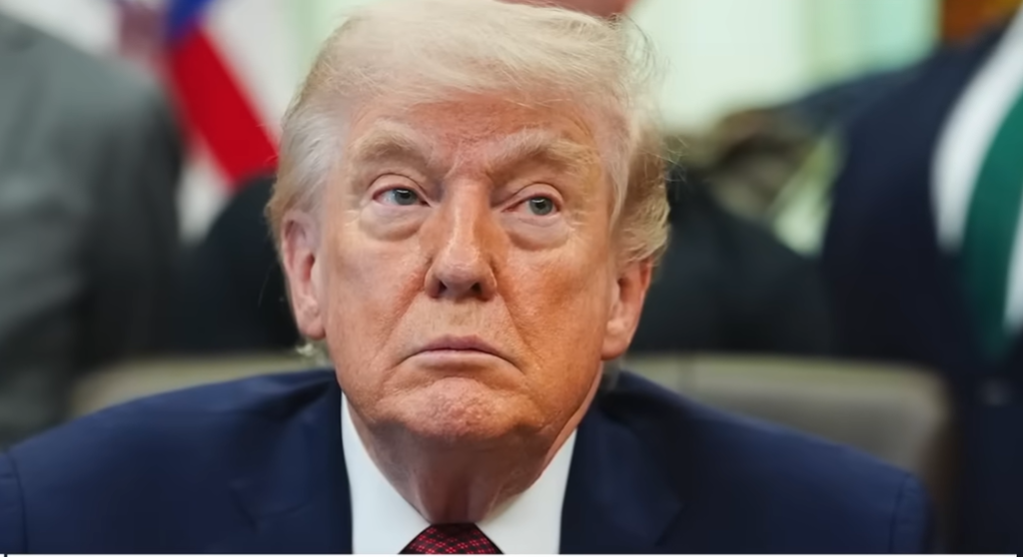
The United States’ ongoing naval blockade against Iran is continuing to escalate tensions in the Middle East, with President Donald Trump claiming the operation is severely damaging Iran’s economy while raising fresh legal and political questions in Washington.
Speaking during an interview, Trump defended “Operation Epic Fury,” saying the naval blockade has successfully cut Iran off from critical oil revenues.
“Can’t let Iran have a nuclear weapon,” Trump said, adding that Iran’s economy is “crashing” because “they are not getting any money from oil.”
Trump compared the strategy to previous U.S. pressure campaigns against Venezuela but described the current operation against Iran as much larger and more powerful.
The blockade, which has now reportedly been active for nearly two weeks, has become one of the biggest military pressure campaigns in the region in recent years. According to U.S. Central Command (CENTCOM), dozens of vessels have been turned away as American naval forces continue enforcing restrictions on ships linked to Iranian ports.
CENTCOM officials stated that 44 vessels have already been redirected or forced to turn back during blockade operations. Several other ships reportedly remain stranded near ports as uncertainty grows over maritime access near the Strait of Hormuz.
The Trump administration argues that the blockade is necessary to pressure Tehran and stop Iran from advancing its nuclear ambitions. Trump claimed the operation is proving more effective economically than direct military strikes.
Meanwhile, the legal debate surrounding the operation is becoming increasingly intense in Washington.
Defense Secretary Pete Hegseth argued that the current ceasefire between the United States and Iran effectively pauses the 60-day War Powers Resolution clock established under the War Powers Resolution of 1973. The law generally requires a U.S. president to notify Congress within 48 hours of introducing forces into hostilities and withdraw forces after 60 days unless Congress authorizes continued military action.
Hegseth stated that because the U.S. and Iran are currently in a ceasefire period, the countdown toward congressional authorization requirements has effectively stopped.
However, critics and legal experts dispute that interpretation, arguing the War Powers Resolution does not specifically allow the clock to pause during a ceasefire. Congressional Democrats have challenged the administration’s legal position and warned that the White House may be bypassing constitutional oversight.
Treasury Secretary Scott Bessent also weighed in on the crisis through social media posts, claiming Iran’s economy is collapsing under what administration officials are calling “Economic Fury.”
Bessent argued that the Iranian people deserve a “new era” and accused the Iranian regime of failing to provide economic stability and security. He claimed living conditions inside Iran are deteriorating rapidly as the pressure campaign continues.
At the same time, reports suggest internal divisions may be emerging within Iran’s leadership structure. U.S. officials and political figures have pointed toward signs of disagreement between Iran’s foreign ministry and commanders within the Islamic Revolutionary Guard Corps (IRGC), which many analysts believe continues to exert major influence over military decision-making inside the country.
The White House also confirmed that Trump has been briefed on additional military options by CENTCOM commander Admiral Brad Cooper. Officials say the president retains the authority to terminate the ceasefire if he chooses to escalate operations further.
Despite the ceasefire remaining technically in place, tensions across the region remain extremely high. The Strait of Hormuz continues to be a major geopolitical flashpoint because of its importance to global oil transportation. Analysts warn that any renewed conflict could heavily impact energy markets and international shipping routes.
Congress remains divided over the future of U.S. involvement. Recent Senate efforts to restrict or formally authorize military action against Iran failed to pass, reflecting deep political disagreements over the administration’s handling of the conflict.
For now, Operation Epic Fury continues, with the Trump administration insisting the blockade is weakening Iran economically while critics warn the crisis could still spiral into a larger regional confrontation.
Disclaimer:
This article is based on publicly available reports, television broadcasts, statements from U.S. officials, and media sources at the time of publication. The situation involving Iran, the United States, and regional military operations is rapidly evolving, and some claims made by officials have not been independently verified. Readers are advised to follow official government statements and trusted international news sources for the latest developments.