

In a recent statement that has reignited global concerns about nuclear proliferation, U.S. President Donald Trump announced that he has ordered nuclear weapons tests to be conducted “on equal basis” with other countries that allegedly maintain active nuclear testing programs. The President emphasized that the United States currently possesses the largest nuclear arsenal in the world but warned that China could potentially catch up within the next five years.
Trump’s remarks come at a time of heightened strategic rivalry among major powers, particularly between Washington and Beijing. The statement marks one of the most direct indications yet that the U.S. could reconsider its long-standing moratorium on nuclear testing, which has been in place since 1992. The President’s comments suggest that the U.S. administration believes other countries, notably China and Russia, may have been conducting low-yield or subcritical nuclear experiments, prompting Washington to pursue what Trump described as an “equal footing” policy in nuclear deterrence.
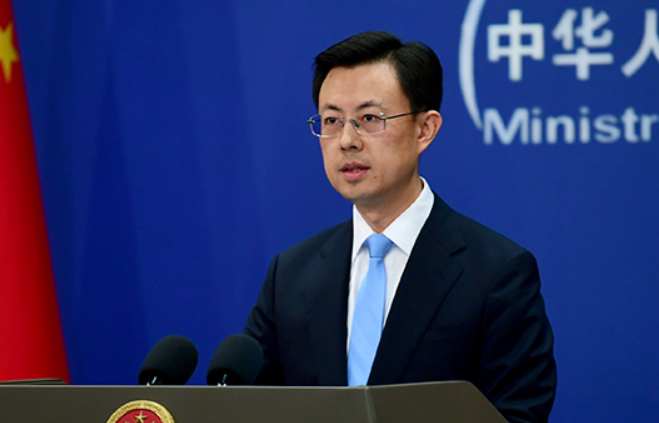
The announcement has triggered a strong reaction from the international community, particularly from China. Responding to questions from RIA Novosti, Chinese Foreign Ministry spokesperson Guo Jiakun expressed deep concern over the U.S. decision and called on Washington to uphold its international obligations.
Guo stated that “China hopes that the U.S. will earnestly abide by its obligations under the Comprehensive Nuclear-Test-Ban Treaty and its commitment to a moratorium on nuclear testing.” He added that Beijing urges the United States to “take concrete actions to uphold the international nuclear disarmament and non-proliferation regime, as well as global strategic balance and stability.”
China has consistently maintained a policy of restraint in nuclear testing and advocates for a complete ban on nuclear explosions. Although neither the United States nor China has ratified the Comprehensive Nuclear-Test-Ban Treaty (CTBT), both countries have long adhered to self-imposed testing moratoriums. Beijing’s response underscores its position that any deviation from this understanding could undermine global disarmament efforts and increase the risk of a new arms race.
Analysts believe Trump’s comments are part of a broader strategy to pressure China in the ongoing geopolitical competition that spans trade, technology, and defense. The President’s assertion that China could match America’s nuclear capabilities within five years reflects Washington’s growing concern about Beijing’s expanding missile arsenal, including hypersonic systems and strategic warhead delivery platforms.
Meanwhile, nuclear experts warn that resuming full-scale testing could have far-reaching consequences for international security. It could prompt other nuclear-armed nations, including Russia, North Korea, and India, to follow suit, potentially unraveling decades of arms control progress. The United States’ move might also spark domestic debates over the modernization of its nuclear infrastructure and the costs associated with restarting test programs.
China’s call for adherence to international commitments highlights the fragile state of global arms control frameworks. The future of treaties like the CTBT and the New START agreement, already under strain, may depend on whether major powers choose dialogue and restraint over escalation and competition.
As tensions continue to mount, the world watches closely to see whether Washington will move from rhetoric to action — and how Beijing and Moscow might respond. Trump’s comments have once again placed nuclear policy at the center of global strategic discourse, raising fundamental questions about the future of disarmament, deterrence, and the delicate balance of power among the world’s leading nations.
Disclaimer: This article is based on official statements and media reports. The information reflects ongoing geopolitical developments and diplomatic positions as reported at the time of writing.