

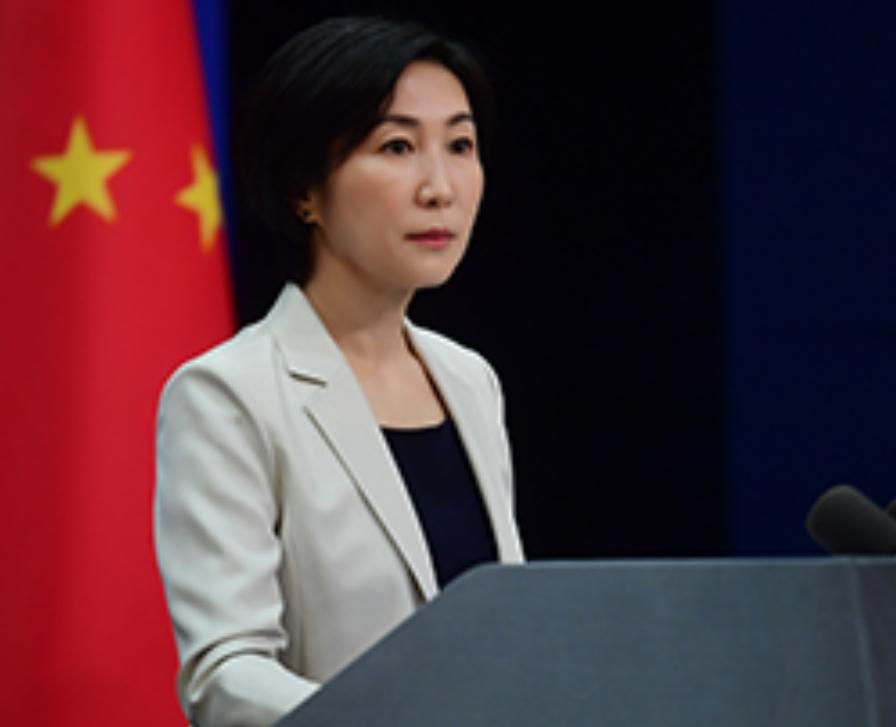
In a pointed response to a question raised by Bloomberg, the Chinese Foreign Ministry rejected the notion that China had ever accepted the terms of the 1951 Treaty of San Francisco, reiterating its long-standing position on Taiwan and the historical basis of China-Japan relations.
When asked whether China’s signing of a 1978 peace treaty with Japan implied acceptance of the San Francisco Treaty—signed years earlier between Japan and several Western countries—Foreign Ministry spokesperson Mao Ning firmly denied the suggestion. Mao stressed that China was not a signatory to the Treaty of San Francisco and has never recognized any of its provisions, particularly those concerning the sovereignty of Taiwan and the disposal of territories belonging to China.
Mao underscored that China’s stance on the matter has remained consistent for decades. She emphasized that the 1972 Sino-Japanese Joint Statement forms a core component of the political foundation of China-Japan relations. The statement clearly established mutual understandings between the two countries on the Taiwan question and China’s sovereignty.
According to the 1972 document, Japan formally recognized the Government of the People’s Republic of China as the sole legal government of China. It also acknowledged China’s assertion that Taiwan is an inalienable part of its territory. Mao noted that Japan explicitly stated that it “fully understands and respects” China’s position and that Japan “firmly maintains its stand under Article 8 of the Potsdam Proclamation,” which required Japan to return all territories it had taken from China.
Mao highlighted that the four key political documents between China and Japan—the 1972 Joint Statement, the 1978 Treaty of Peace and Friendship, the 1998 Joint Declaration, and the 2008 Joint Statement—collectively serve as the bedrock of bilateral ties. These documents clearly outline both countries’ positions on the Taiwan issue and other critical matters of sovereignty.
Reiterating China’s unwavering position, Mao Ning stated that Beijing has never accepted the San Francisco Treaty and continues to base its position on internationally recognized wartime agreements such as the Cairo Declaration and the Potsdam Proclamation, which required Japan to return Taiwan to China.
The exchange highlights ongoing tensions over historical interpretations, sovereignty issues, and the broader strategic environment in East Asia, where both China and Japan continue to navigate a complex diplomatic relationship shaped by history and contemporary geopolitical dynamics.
Disclaimer:
This article is based on official statements from the Chinese Foreign Ministry and media questions raised during a press briefing. The content reflects the positions expressed by the spokesperson and is presented for informational and news reporting purposes.