


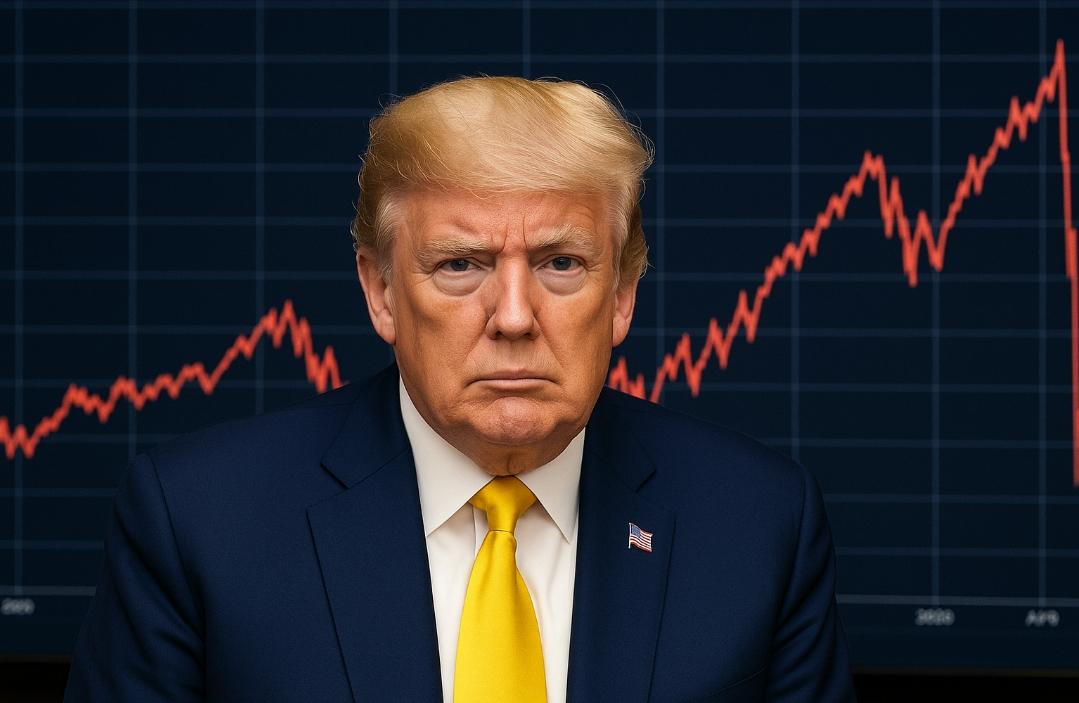
The White House is signaling one of its boldest economic proposals yet: a fundamental rewrite of the U.S. tax code that could eliminate income taxes for many Americans. President Donald Trump has hinted repeatedly that tariff-generated revenue could replace significant portions of federal income tax collections, creating what he calls a “big, beautiful tax refund” system designed to put more money directly into voters’ pockets.
During a recent discussion, Fox Business anchor Dagen McDowell emphasized that the president is not merely promising tax relief but proposing a structural overhaul of how America funds its government. According to Trump, trillions of dollars in tariff revenue could generate such massive refunds that many Americans “won’t be paying income tax,” allowing workers to keep more of their earnings without facing the burdens of complex annual filing.
Economists and commentators remain split on whether the math can realistically support such a transformation. McDowell’s panel noted that the federal government collected approximately $5 trillion in fiscal revenue, with $2.43 trillion of that coming from individual income taxes. Trump’s estimated $300 billion in annual tariff revenue falls far short of replacing that income. Still, supporters argue the proposal is directionally significant even if the numbers do not align perfectly.
Analyst Brian Brenberg pointed out that simply having a president advocate eliminating the income tax is historically notable. Previous administrations explored wealth taxes and other increases, but Trump is favoring a consumption-driven tax structure instead. Brenberg argued that consumption taxes — like tariffs or value-added taxes — encourage work and investment by removing penalties on income, though he conceded that the political and legal hurdles make complete income tax abolition unlikely.
The discussion also highlighted the administration’s expectation of a powerful economic surge in 2026. Advisors Kevin Hassett and Scott Bessent predict a “bonanza year” as Americans receive significant refunds tied to policies such as no tax on tips and overtime. These refunds, they argue, will reshape household budgets and stimulate economic growth.
Jackie DeAngelis emphasized that the administration’s goal is not simply relief but work incentives. By allowing workers to keep more of their earnings — including tip income and overtime wages — the White House aims to motivate Americans to rejoin or re-engage with the labor force. DeAngelis also highlighted that people do not want government entitlements; they want opportunities and dignified earnings that support mobility.
Taylor Riggs echoed this sentiment with a real-world example. A building employee asked her how no tax on overtime would appear in his paycheck. After she calculated the refunded amount he would receive during tax season, she noted his excitement and sense of empowerment. Riggs also argued that if Americans kept more of their income, charitable giving would increase, as individuals manage money more efficiently than government agencies.
However, panelists also raised concerns around the feasibility of moving toward a consumption-based model. Sales taxes already range around 8 percent in many states, and questions remain about how much more the public could absorb. A shift away from income taxes would require higher consumption taxes or tariff revenues, both of which could affect lower-income households.
Dagen McDowell reiterated that the current system penalizes work through income taxes, while a consumption system penalizes spending. She argued that Trump’s tariffs function similarly to a value-added tax — a mechanism widely used in Europe — but the United States has been reluctant to adopt such a structure despite expanding entitlement programs. She noted that half of federal taxpayers contribute only $63 billion annually, an amount equivalent to roughly two months of tariff revenue, raising questions about sustainability.
Thomas Hayes of Great Hill Capital suggested that Trump’s proposal also serves as a strategic signal to the Supreme Court. Hayes said that if tariffs remain in place, the administration could use the revenue to pay down the federal deficit. If tariffs are struck down, the administration could instead disperse the funds as dividends to the public. He noted that the post-COVID inflation spike resulted from supply chain disruptions and stimulus checks, but today’s environment — strengthened by stable energy prices and Saudi cooperation — is different.
Hayes argued that low oil prices and steady production allow the administration to “let the economy rip,” generating above-trend growth similar to the post–World War II boom that reduced debt-to-GDP largely through expansion. He believes the economic team led by Hassett and Bessent is preparing for exactly such an environment heading into 2026.
Despite criticisms that the numbers “don’t add up,” the panel agreed that the administration’s direction is pro-growth and politically powerful. Trump’s message promises dignity for workers, incentives for productivity, significant refunds for households, and a long-term restructuring of America’s tax system. Whether Congress or the courts allow such sweeping changes remains uncertain, but the political appeal — especially heading into 2026 — is undeniable.
Disclaimer:
This article is based on publicly available statements, media discussions, and a YouTube transcript. The views expressed by panelists, analysts, and commentators are their own and do not represent financial or legal advice. Readers should verify information independently and consult professional advisors before making financial or policy-related decisions.