

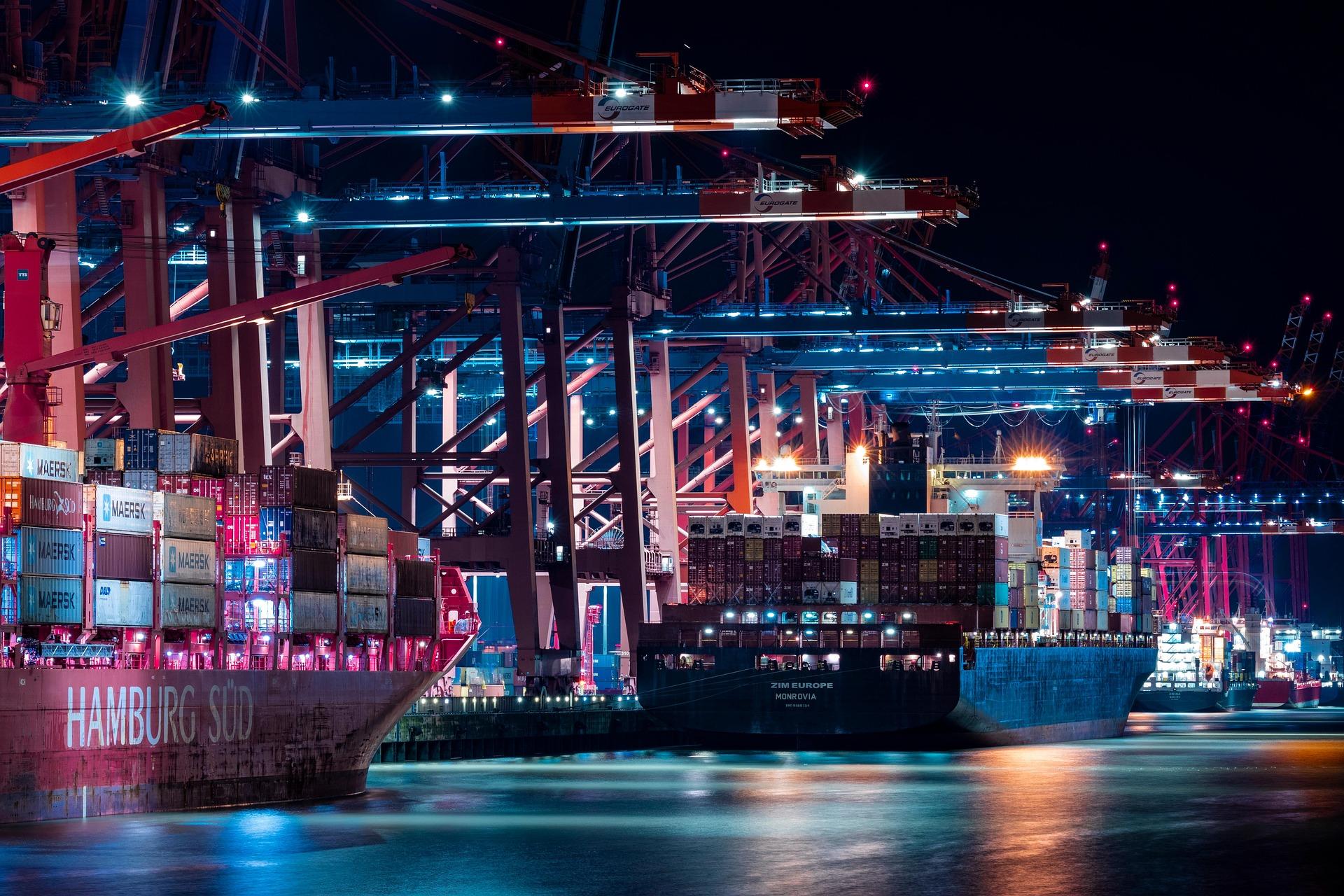
China’s economy continues to feel the mounting pressure from U.S. tariffs and trade restrictions, as new data reveals a sharp decline in exports and imports, signaling deep structural challenges for Beijing. According to recent reports, China’s global exports dropped by more than 1% in October compared to the same month last year — marking the first year-over-year decline in monthly exports since March. Total exports stood at $305 billion, while imports reached just over $215 billion, reflecting weak global demand and sluggish domestic consumption.
A particularly alarming figure for Beijing is the 25% year-over-year fall in shipments to the United States, underscoring China’s heavy reliance on the American market — a dependency that Washington is increasingly using as leverage.
Gordon Chang, Senior Fellow at the Gatestone Institute, said the situation is critical for Beijing. “Exports are the only hope for the Chinese economy,” Chang explained. “China’s factories produce far more than the domestic market can absorb. If they can’t sell to the world, the Chinese economy will fail — it’s as simple as that.”
Economic analyst Liz Peek echoed the sentiment, noting that China’s efforts to boost domestic demand have consistently fallen short. “They’ve tried for a decade to increase domestic purchasing and failed,” Peek said. She also raised concerns about the optics of a possible visit by President Donald Trump to Beijing following recent trade talks. “It would send the wrong message. It feeds into China’s narrative of dominance.”
Chang agreed, warning that such a visit would be a symbolic victory for Beijing. “The Chinese have always viewed visits from foreign leaders as recognition of their grandeur,” he said. “President Trump should not go to China, especially when China is deliberately killing Americans with fentanyl. There are too many unresolved issues.”
Maria Bartiromo, host of the segment, highlighted China’s attempts to weaponize its control over rare earth minerals — a key component in high-tech industries — as a means of pressuring the U.S. However, she noted that President Trump’s administration has accelerated efforts to establish domestic supply chains for rare earths and pharmaceuticals to reduce dependency on China.
Chang estimated that it could take about half a decade for the U.S. to achieve full independence from China in these sectors. “President Trump is moving at ‘Trump speed,’” he said. “He deserves credit for recognizing our dependency, especially in pharmaceuticals, which is even greater than our reliance on rare earths. Senator Rick Scott is working full-time on bringing pharmaceutical manufacturing back to American soil.”
As part of this broader national security push, the Trump administration has also taken a hard stance on restricting China’s access to advanced U.S. technology, including artificial intelligence (A.I.) chips. The White House recently blocked NVIDIA from selling its latest Blackwell chip to Chinese companies — a major blow to Beijing’s A.I. ambitions.
Chang praised the move, noting that Chinese A.I. developers like DeepSeek have been forced to delay product releases due to limited access to American chips. “China claims to be ahead on semiconductors, but it’s simply not true,” he said. “They’re desperate for U.S. technology. Selling them our chips only helps them bridge their period of dependency — we should be supporting our own A.I. companies instead.”
Meanwhile, NVIDIA CEO Jensen Huang confirmed that production of the company’s most advanced A.I. chip is now taking place in Arizona, thanks to cooperation with TSMC, Foxconn, Amcor, and Spill. “A.I. is the most important technology of our time,” Huang said. “President Trump wanted us to bring manufacturing back home, and we’ve done that. Within nine months, we built the world’s most advanced A.I. chip entirely in the United States.”
Chang commended Trump’s leadership on keeping the Blackwell chip out of China’s hands. “He deserves credit for not yielding to industry pressure,” he said. “Even selling legacy chips to China is a mistake. We must protect our technological edge.”
Adding to global concerns, China’s recent commissioning of its newest and most advanced aircraft carrier — featuring electromagnetic catapults and long-range strike capability — has raised alarms about Beijing’s growing military ambitions. Chang emphasized that the new carrier is not intended for a Taiwan invasion, as Chinese propaganda suggests, but rather to project power across Asia and beyond. “China has territorial claims on almost all of its neighbors,” he said. “This is about global projection. They won’t stop until they have more carriers than we do.”
With trade, technology, and military tensions escalating, the U.S.-China relationship remains at its most complex point in decades. As President Trump continues his strategy to strengthen American manufacturing, re-shore critical supply chains, and curtail Beijing’s access to advanced technologies, analysts say the next few years will determine whether China can adapt — or whether its export-reliant economy begins to unravel under sustained U.S. pressure.
Disclaimer:
This article is based on publicly available discussions and interviews from media sources. It is intended for informational and analytical purposes only and does not represent investment or policy advice.