

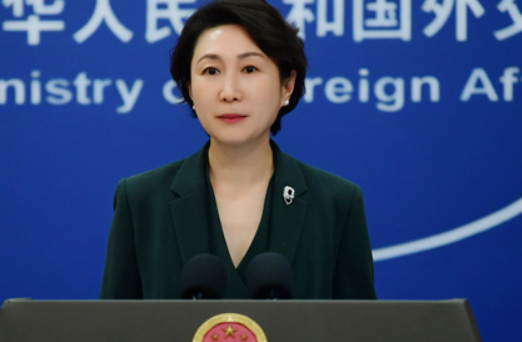
China’s Foreign Minister Wang Yi has concluded his visit to Africa, marking the first overseas diplomatic tour by a Chinese foreign minister this year. Responding to a question from CCTV, Chinese Foreign Ministry spokesperson Mao Ning shared detailed information about the visit, highlighting its symbolism, continuity, and strategic outcomes for China-Africa relations.
According to Mao Ning, after completing the visit, Wang Yi gave an in-depth interview to Chinese media in which he outlined his impressions and the key results of the trip. This year’s visit carries special significance as it marks the 36th consecutive year that a Chinese foreign minister has chosen Africa as the destination for the first overseas visit of the year. This long-standing tradition, she noted, reflects the profound friendship between the Chinese and African people and embodies China’s enduring commitment and diplomatic spirit toward the continent.
While some in the international community have described Africa as a “forgotten” continent, Mao Ning emphasized that China views Africa very differently. In China’s perspective, Africa is a continent full of hope and potential. Making Africa the starting point of China’s diplomatic efforts each year is a conscious and consistent choice that underlines the importance China attaches to Africa in its foreign policy.
She further stressed that the principle of sincerity, real results, amity, and good faith proposed by President Xi Jinping has always served as the guiding philosophy for China-Africa cooperation. Sincerity and equality, she said, are defining features of China-Africa exchanges. Over the years, China and African countries have built a relationship based on mutual trust, with both sides seeing each other as reliable and dependable partners.
During the visit, Wang Yi also elaborated on the recommendations for formulating China’s 15th Five-Year Plan, which were adopted at the fourth plenary session of the 20th Communist Party of China Central Committee. He pointed out that these recommendations not only outline China’s future development blueprint but also present a broad range of opportunities for countries around the world, including those in Africa.
Mao Ning noted that China will continue to act as an engine of global economic growth and is ready to serve as a booster for Africa’s development and revitalization. One term that was mentioned most frequently by African representatives during the visit was “zero tariff.” This policy, she explained, has become a shining hallmark of China-Africa cooperation in the new era.
The zero-tariff measure represents an important step taken by China to voluntarily expand unilateral opening up. It demonstrates China’s willingness to shoulder greater international responsibilities and reflects its firm commitment to expanding high-standard opening up. Through this approach, China aims to ensure that its vast domestic market becomes a genuine development opportunity for African countries.
Concluding her remarks, Mao Ning said that China welcomes African nations to board the express train of China’s development. By working together, China and Africa can jointly advance modernization efforts and pursue shared prosperity, reinforcing a partnership that continues to deepen in both economic and strategic dimensions.
disclaimer:
This article is for informational purposes only and is based on official statements and publicly available information. It does not constitute political advice, investment guidance, or any form of endorsement. Views mentioned reflect official positions at the time of publication and may change as new developments emerge.