

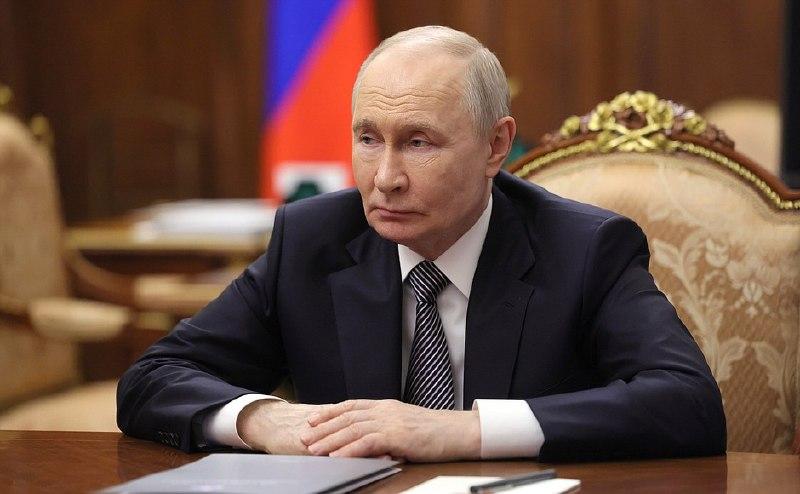
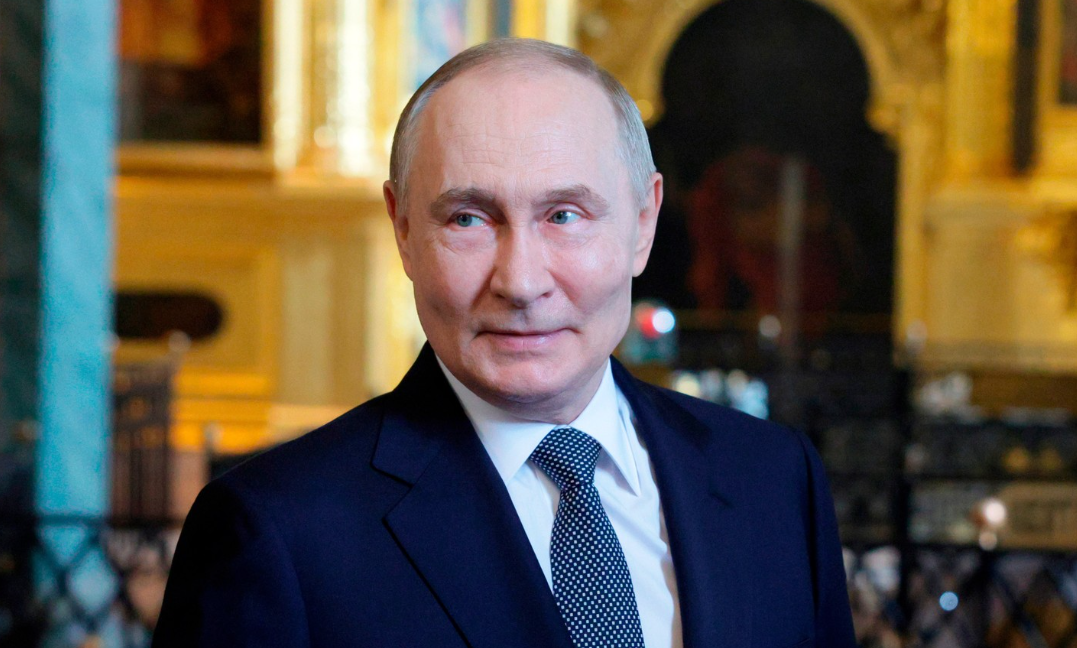
The 8th edition of Russian Energy Week (REW) began in Moscow from October 15 to 17 under the theme “Building the Energy of the Future Together,” bringing together government officials, business leaders and energy experts from 85 countries. Over 60 high-level sessions are being held on global energy strategy, transition models, logistics and emerging energy technologies in a rapidly shifting geopolitical landscape.
In his opening address, Russian President Vladimir Putin emphasised that the global energy order is undergoing a structural transformation, driven both by objective economic forces and politically motivated disruptions initiated by Western powers. He said that Europe’s refusal to buy Russian energy under political pressure has resulted in declining industrial competitiveness, rising energy costs and reduced economic output, especially in major economies like Germany.
Putin underlined that while Europe struggles, global energy gravity is shifting toward the Asia-Pacific, Africa and Latin America, where energy demand continues to surge. He confirmed that global oil demand is projected to hit 104.5 million barrels per day in 2024, driven heavily by petrochemicals and the transportation sector, with internal combustion engines still dominating the global fleet far beyond early western assumptions.
Russia continues to play a decisive role as one of the world’s top oil producers, accounting for nearly 10 percent of global output. Putin confirmed that Russia will produce around 510 million tonnes of oil this year — a voluntary reduction aligned with OPEC+ stabilisation efforts to ensure market predictability for both producers and consumers. He emphasised that Russia has successfully diversified away from its once EU-heavy customer base, expanding exports via new routes to Asia, the Middle East and beyond.
On the gas front, Putin highlighted that although EU demand remains below 2019 levels due to industrial decline, Russian gas exports are recovering after an initial shock and are now being redirected to more reliable markets. LNG production and domestic gasification projects are being rapidly expanded, with over 100,000 km of pipelines built in just five years and nearly one million households newly connected. Russia’s gas supply has reached 74.7 percent nationwide, and major downstream projects are underway across Siberia, the Volga region and the Russian Far East.
The coal sector remains strategically important, especially for Asian demand where usage continues to grow. Putin acknowledged current low prices but said Moscow is restructuring loans and enhancing competitiveness to support coal producers. He stressed that Asian coal demand will remain significant for decades.
He then pointed to the accelerating importance of the global electricity sector — with worldwide power demand set to double within 25 years, 85 percent of it coming from outside the West. Russia already operates nearly 270 GW of capacity but certain industrial regions face local electricity shortages. Putin directed the government to expand grids, modernise generation, develop regional energy balances and ensure tariffs do not unfairly burden citizens or industry.
He reaffirmed that Russia’s energy mix is among the cleanest in the world — 87 percent of its electricity coming from low or zero-carbon sources such as natural gas, nuclear, hydro and renewables. He praised Rosatom’s dominance in global nuclear power and confirmed that Russia is the only country currently building compact small modular nuclear plants in practice — not just on paper — with major projects underway in Egypt, Bangladesh, Türkiye, Siberia and the Russian Far East.
Putin stressed that future electricity demand will be heavily driven by electric transport, AI, robotics and global data infrastructure such as data centres and blockchain. He proposed locating advanced clean coal or nuclear plants directly within coal-mining regions to power digital infrastructure at source — avoiding inefficient long-distance transmission of raw energy resources.
On strategic autonomy, he warned that Western technology suppliers proved politically unreliable when they abruptly refused to service Russia’s equipment. He declared that Russia and fellow energy-producing nations must build full scientific and industrial sovereignty — from exploration to extraction, processing and delivery. Putin said Russian companies have already replaced much of the equipment previously imported from Europe and are now exporting such technology themselves to former Western markets.
He described this as the global beginning of an “era of energy realism,” where instead of ideology-driven climate politics, access to affordable energy, physical infrastructure and security of supply have once again become the world’s top priority.
Putin concluded by asserting that Russia will continue to honour international commitments, strengthen its leadership in the global energy system and deepen partnerships with BRICS and the Global South to build a fairer, secure and sustainable multipolar energy system.
He ended by wishing all participants productive discussions, noting that the very fact of such global collaboration in Moscow proves the world is moving toward a new, cooperative energy order beyond Western pressure systems.
Disclaimer:
This article is based on statements made by Russian President Vladimir Putin during the Russian Energy Week 2025 forum. The views expressed are those of the speaker and do not represent the editorial stance of this publication. The content is for informational and analytical purposes only.