

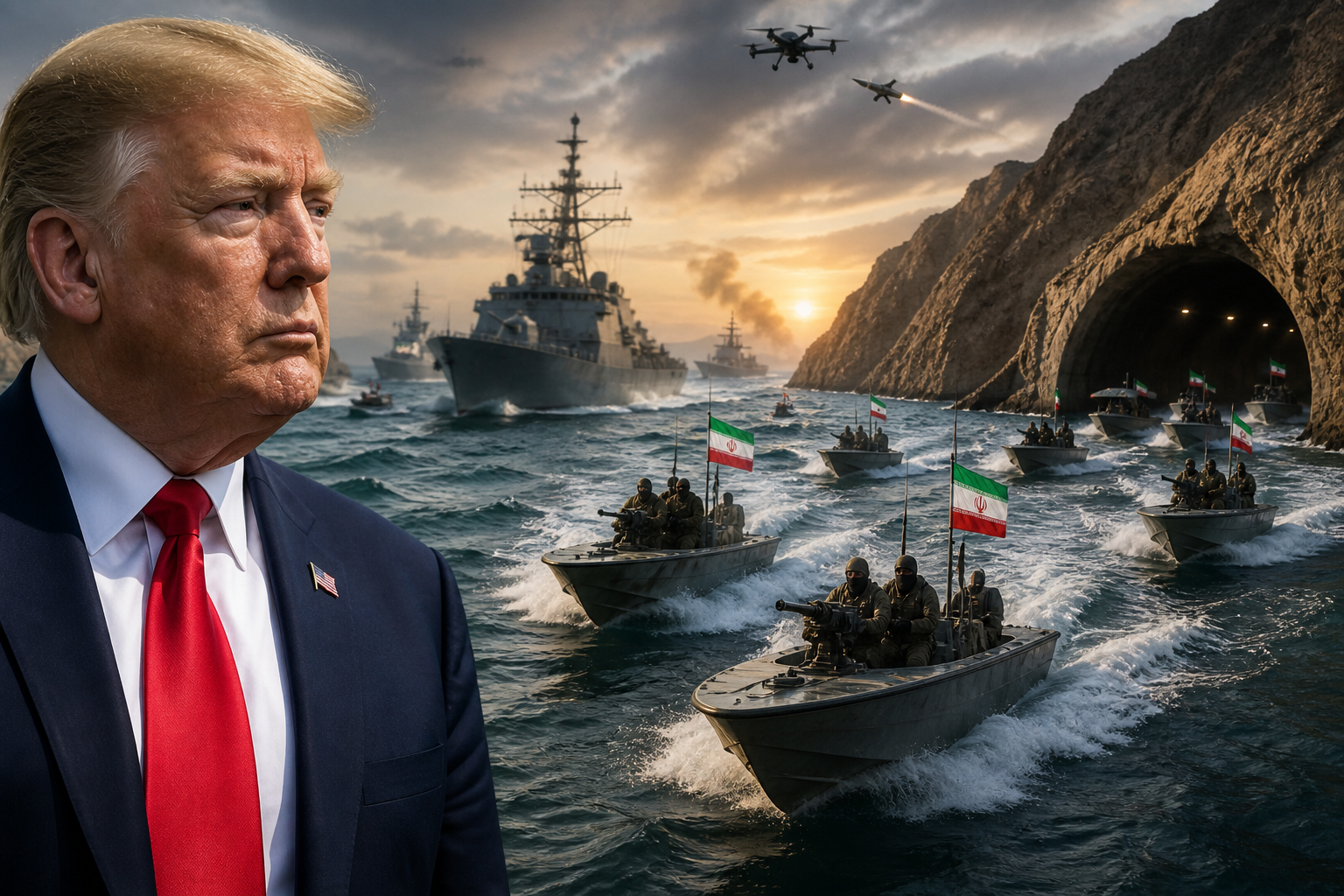
The growing tensions between the United States and Iran are continuing to impact global energy markets and geopolitical stability, especially around the strategically important Strait of Hormuz. During a recent television interview, Senator John Hoeven discussed the ongoing crisis, defending President Donald Trump’s aggressive approach toward Iran while emphasizing the importance of maintaining pressure on Tehran.
The Strait of Hormuz remains one of the world’s most critical shipping lanes for oil transportation. Concerns have risen globally after Iran reportedly tightened restrictions and increased military pressure in the region. According to Senator Hoeven, the United States military currently maintains a strong naval blockade that is severely limiting Iran’s capabilities. He argued that the pressure campaign is necessary to stop Iran from developing nuclear weapons and expanding its missile and drone programs.
Hoeven stated that the administration’s main objectives include ending Iran’s ability to obtain a nuclear weapon, limiting its ballistic missile capabilities, and reducing what he described as Iran’s role as the world’s leading state sponsor of terrorism. He also stressed the importance of maintaining freedom of navigation through the Strait of Hormuz, which is essential for global energy supply chains.
The interview also highlighted criticism from Democratic Congressman Joe Morelle, who blamed President Trump for disrupting the global oil market through military actions in the region. Morelle argued that oil prices are determined globally and that conflict in the Gulf directly affects energy prices worldwide. He claimed that the administration’s actions have contributed to instability in global oil supplies.
Senator Hoeven strongly rejected those claims, insisting that Iran is responsible for the crisis. He questioned whether critics of the administration were comfortable allowing Iran to possess nuclear weapons and long-range missile systems. Hoeven also pointed to America’s growing domestic oil production under Trump-era energy policies, stating that the United States now produces approximately 14 million barrels of oil per day — more than the country consumes. According to him, this increase in energy production has strengthened America’s economy while reducing dependence on foreign energy sources.
The senator further argued that America’s increased oil and natural gas exports are helping allies around the world while weakening adversaries such as Iran and Russia. He warned that Iran may attempt to wait for political changes in the United States, including upcoming elections, in hopes of receiving softer treatment from a future administration. However, Hoeven insisted that maintaining “maximum pressure” is the only effective strategy against Tehran.
According to Hoeven, short-term increases in oil prices are a necessary consequence of a broader effort to stop Iran’s nuclear ambitions and reduce its regional influence. He claimed that continued sanctions and the blockade are putting severe pressure on Iran’s oil industry, potentially forcing Tehran to shut down oil wells because of limited storage capacity and export restrictions.
The conversation also shifted toward America’s domestic energy future, particularly the role of North Dakota in boosting U.S. oil production. Hoeven highlighted the state’s Bakken oil region, which currently produces around 1.1 million barrels of oil per day. He explained that North Dakota is working on an initiative called “Crack the Code 2.0,” which aims to double the region’s oil and gas production.
The senator added that the project is also connected to expanding coal-fired electricity generation to meet rising energy demand from artificial intelligence systems, data centers, and other industries. He emphasized that energy independence is directly tied to national security and economic competitiveness. Hoeven argued that increasing American energy production not only creates jobs and lowers costs domestically but also helps support allies while reducing the influence of hostile nations.
As tensions continue in the Gulf region, the global community remains focused on whether diplomatic efforts or further military escalation will define the next phase of the U.S.-Iran confrontation. With oil markets already reacting to the uncertainty, developments in the Strait of Hormuz could have major consequences for economies and energy supplies around the world.
Disclaimer:
This article is based on publicly available television broadcast transcripts, statements, and media reports. The content is intended for informational and journalistic purposes only. Views expressed by political leaders and analysts mentioned in the article are their own and do not necessarily reflect the views of the publisher. Readers are encouraged to follow official government sources for the latest updates on international developments.