

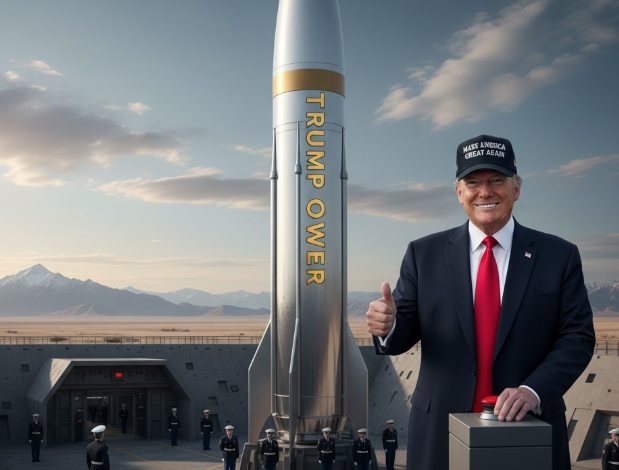
President Donald Trump has announced that the United States will resume nuclear weapons testing for the first time in more than three decades, marking a historic and controversial shift in American defense policy. The decision comes just hours before his high-stakes meeting with Chinese President Xi Jinping, where both leaders discussed trade, fentanyl control, and regional security.
Chief National Security Correspondent Jennifer Griffin reported that the president has instructed the Pentagon to “begin testing nuclear weapons immediately.” Trump emphasized that this move was necessary as other nations, including Russia and China, are allegedly conducting covert or subcritical nuclear tests. “We halted testing many years ago, but with others doing testing, I think it’s appropriate that we do also,” Trump said.
The United States last carried out a full-scale nuclear test in 1992. Since then, it has adhered to a voluntary moratorium under the global test ban, while maintaining an active missile testing program to ensure delivery systems remain operational. However, recent intelligence and satellite imagery suggest that Russia and China may be conducting low-yield or underground nuclear tests undetected by international monitors.
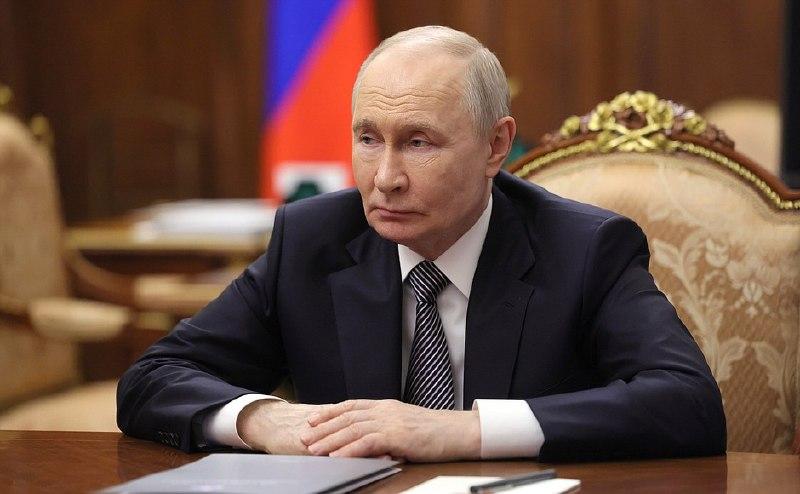
In recent months, Russia claimed to have tested a nuclear-powered underwater drone called “Poseidon,” designed to create massive radioactive tsunamis. President Vladimir Putin boasted that it was “150 times more powerful than the Hiroshima bomb.” Meanwhile, China has reportedly been constructing facilities that could be used for future underground tests. These developments have raised concerns within the Pentagon about the readiness and reliability of America’s own nuclear arsenal.
Following the announcement, Iran’s foreign minister condemned the U.S. move, calling it “regressive, irresponsible, and a blatant violation of international law.” He also mocked the Trump administration for renaming the Pentagon as the “Department of War.”
Despite the controversy, President Trump appeared upbeat after his return to the White House from Asia. He described his face-to-face meeting with President Xi as “an amazing meeting,” rating it “a 12 out of 10.” Trump said the talks led to several important agreements, including a one-year U.S.-China trade deal, a 10% tariff reduction in exchange for China’s promise to crack down on fentanyl exports, and new agricultural and energy deals.
According to the president, China also agreed to purchase billions of dollars’ worth of U.S. soybeans and farm products while easing restrictions on rare earth mineral exports. “These are big numbers—numbers no country has ever seen before,” Trump told reporters aboard Air Force One. “They’re all investing in the U.S. We’re the hottest country in the world right now.”
The president’s Asia tour also yielded diplomatic progress beyond China. He announced a peace agreement between Thailand and Cambodia and secured multiple investment and technology partnerships with Japan and South Korea.
Military experts and analysts have weighed in on the timing of Trump’s nuclear testing order. Retired U.S. Marine bomb technician Joey Jones described the decision as a calculated act of deterrence rather than aggression. “President Trump understands posture and deterrence,” Jones said. “In order to prevent war, you have to say and do the right things so you don’t have to do the difficult things.” He added that Trump’s public commitment to testing signals American strength at a time when adversaries are modernizing their arsenals.
Former military diplomat Brent Sadler also gave the U.S. side of the Xi meeting an “A grade,” calling it a “strategic success.” He said the announcement on nuclear testing sends a message that Washington will not lag behind Moscow or Beijing in strategic weapons development. “It’s long overdue,” Sadler remarked. “We’ve taken too long to rebuild our nuclear enterprise. This is a necessary signal to both Russia and China.”
Senator Tom Cotton, a member of the Senate Armed Services Committee, supported Trump’s decision, calling it “a necessary and welcome step.” Cotton explained that the planned tests would likely involve “small, controlled, underground detonations,” aimed at verifying the reliability of older weapons and testing new designs. He added that the move would help U.S. scientists maintain vital skills and send a strong message of deterrence to adversaries.
“The timing of this announcement is strategic,” Cotton said. “It shows to Russia and China that the United States will not sit idly by while they engage in testing. We will do what’s necessary to maintain our readiness.”
Experts also discussed the geopolitical ripple effects. Gordon Chang of the Gladstone Institute noted that Trump’s decision could push China and Russia toward future arms control talks. “Both Moscow and Beijing have given the cold shoulder to Trump’s proposals for trilateral arms discussions,” Chang said. “This announcement may be an opening gambit to bring them back to the table.”
However, Chang also warned that Beijing is likely to use the move for propaganda purposes, painting Trump as a “reckless warmonger.” He countered that narrative, arguing that Trump is merely responding to secretive testing already being carried out by the Chinese.
On trade and diplomacy, Heritage Foundation senior adviser Michael Pillsbury pointed out that the Xi meeting also marked a diplomatic reset. “The president has rejected the super-hawk view that China is our enemy,” he said. “He believes in personal diplomacy and wants direct control over China policy.” Pillsbury revealed that Melania and President Trump plan to visit China in April 2026, signaling further engagement.
The Xi-Trump meeting did not touch on Taiwan or TikTok, two contentious topics between the nations, as both sides prioritized economic stability and narcotics control.
In conclusion, President Trump’s resumption of nuclear testing marks a defining moment in modern U.S. defense strategy—one that combines deterrence, diplomacy, and renewed competition with China and Russia. While the decision faces global criticism, supporters argue it restores America’s strategic edge after decades of restraint.
As Trump put it, “I’d like to see denuclearization because we have so many, and Russia has some, and China’s third—but they’ll catch up in four or five years. We’re talking to Russia, and China could be added to that if we do something.”
Disclaimer:
This article is based on multiple reports, official statements, and televised interviews regarding President Donald Trump’s recent Asia visit, nuclear testing announcement, and U.S.-China relations. The information reflects ongoing political and strategic developments and may evolve as more official details emerge.