

China has strongly responded to the Japanese government’s latest statement regarding Prime Minister Sanae Takaichi’s remarks on Taiwan, describing Tokyo’s explanation as inadequate and evasive. The issue resurfaced after People’s Daily asked about Japan’s November 25 cabinet statement, which claimed that Japan’s policy on “existential threats” remains unchanged and that Takaichi’s comments do not alter Japan’s consistent position.
According to the Japanese government, the decision-making process on such matters would depend on all available information and an assessment of specific situations. The statement emphasized that Tokyo fully maintains its position and sees no need for a review or reconsideration. It also reiterated that peace and stability across the Taiwan Strait are essential for Japan’s national security and global stability, calling for a peaceful resolution through dialogue.
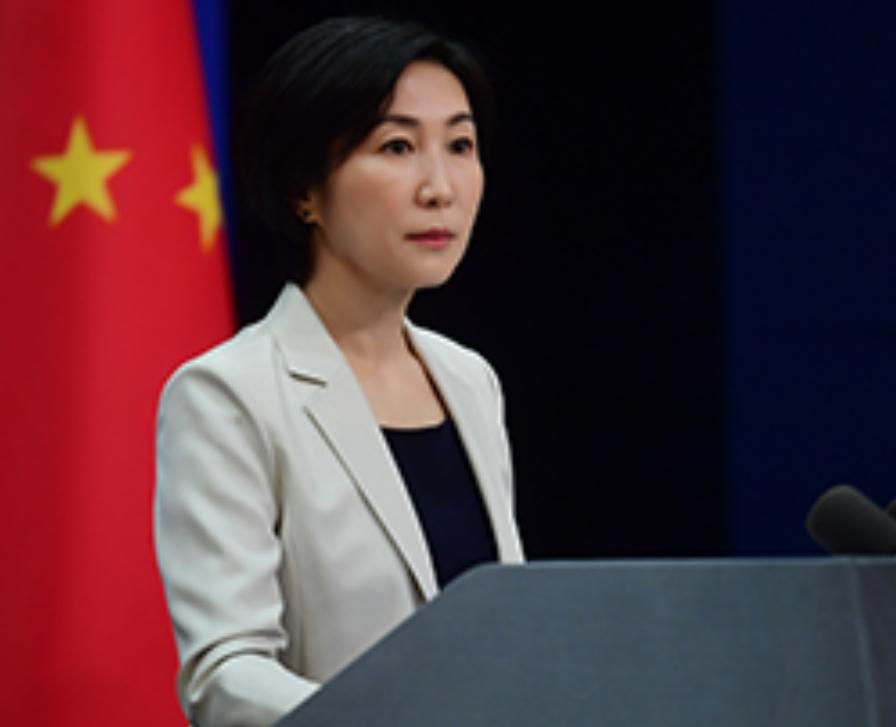
Responding to the statement, Chinese Foreign Ministry spokesperson Mao Ning reiterated China’s firm opposition to Takaichi’s earlier remarks, which Beijing considers erroneous and provocative. Mao stressed that such comments violate the spirit of the four political documents forming the basis of China-Japan relations, undermine the political foundation between the two countries, and challenge the post-war international order. She added that these remarks have not only drawn strong criticism from within Japan but have also been widely condemned by the international community.
Mao Ning criticized Japan’s repeated insistence that its policy remains “consistent” and “unchanged,” calling the explanation inadequate and lacking in substance. She questioned what Japan means by the term “consistent position” and whether Tokyo continues to adhere to the one-China principle. Mao urged Japan to clearly and fully articulate its stance instead of relying on vague language that avoids the core issue. She noted that soft-pedaling the matter, using ambiguous expressions, or hoping the controversy will fade on its own will not resolve the problem.
The Chinese spokesperson also condemned the Japanese government for making further irresponsible statements on the Taiwan question, accusing Japan of interfering in China’s internal affairs. Mao emphasized that Taiwan is China’s Taiwan and that resolving the Taiwan question and achieving national reunification are purely internal matters for China. She warned that Japan has no right to point fingers or involve itself in this issue.
Mao Ning urged Japan to take China’s concerns seriously, reflect on its actions, correct its mistakes, retract the erroneous remarks promptly, and take concrete steps to fulfill its commitments to China under the established bilateral political framework.