

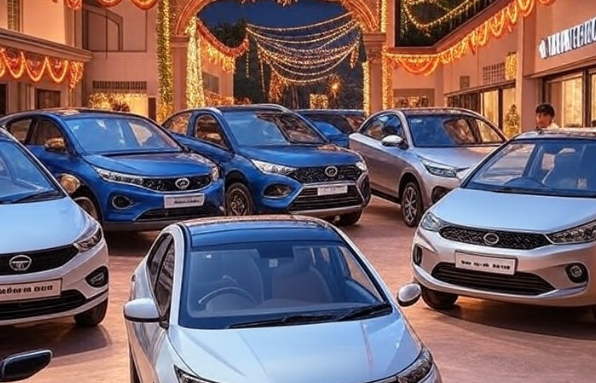
New Delhi, September 23, 2025 – The Indian passenger vehicle market roared to life this festive season as the twin impact of Shardiya Navratri and the implementation of GST 2.0 reforms created a historic demand surge. Automakers witnessed unprecedented levels of inquiries, bookings, and deliveries on the very first day of Navratri, setting the stage for one of the strongest festive seasons in recent years.
With price cuts of up to ₹2.5 lakh across models, customers thronged showrooms late into the night, creating a wave of enthusiasm rarely seen in the auto sector. Both small cars and SUVs emerged as clear winners, reflecting a perfect alignment of festive fervor and government-backed price relief.
The momentum comes directly after the GST rationalization announced on September 4, which slashed tax rates on a wide range of goods, including entry-level passenger vehicles, effective September 22. The reforms, popularly termed GST 2.0, are expected to restore the automobile industry’s annual growth rate to 7%, according to industry leaders. With Navratri running until October 2—extended by a day this year under the Drik Panchang calendar—analysts anticipate sustained demand, continuing into the Diwali season.
Key highlights from Day 1 illustrate just how extraordinary the start was for India’s three biggest automakers.
Hyundai Motor India set a new five-year record with around 11,000 dealer billings on the opening day of Navratri. Tarun Garg, Whole-Time Director and COO, credited the surge to the auspicious timing coupled with the GST 2.0 stimulus. Hyundai passed on the full tax benefits to customers, cutting prices across its entire lineup.
Popular SUVs like the Creta witnessed discounts up to ₹2.4 lakh, while entry-level hatchbacks such as the i10 Nios saw savings of more than ₹60,000. Dealers across Delhi and other metros reported queues of families arriving in large numbers, particularly for compact SUVs and hatchbacks. Hyundai’s earlier sales momentum in August, which saw an 11% year-on-year rise for models like the Venue, further strengthened the festive push.
Maruti Suzuki India, the country’s largest carmaker, recorded its highest-ever single-day sales performance in 35 years. Over 25,000 vehicles were delivered by late evening, with projections to cross 30,000 units by midnight as dealerships remained open late to handle the flood of customers. With 80,000 inquiries logged, the surge in demand was especially strong for small cars like the Swift and Alto K10, where bookings jumped 50% after additional price cuts were rolled out from September 18, with benefits of up to ₹95,000.
Both rural and urban dealerships saw footfalls double, signaling a balanced demand spread across markets. Company Chairman RC Bhargava emphasized that GST reforms will ensure 7% annual growth for the sector, directly aiding India’s economic expansion. Dealers also warned of possible stock shortages for high-demand models given the intensity of interest.
Tata Motors delivered approximately 10,000 vehicles while receiving more than 25,000 inquiries, reflecting strong interest in both SUVs and electric vehicles. Discounts combined with GST relief translated to benefits of up to ₹1.55 lakh on its top-selling Nexon, and nearly ₹2 lakh on larger models like the Harrier and Safari. First-time buyers of the Tiago enjoyed total savings of over ₹1.2 lakh. Tata also saw its EV portfolio gain traction, with models like the Nexon.ev drawing increased attention.
With Q1 FY26 EV sales already exceeding 16,000 units, the company believes this festive season will accelerate adoption further. Its strong safety record and technology-focused features added to its appeal among urban and environmentally conscious customers.
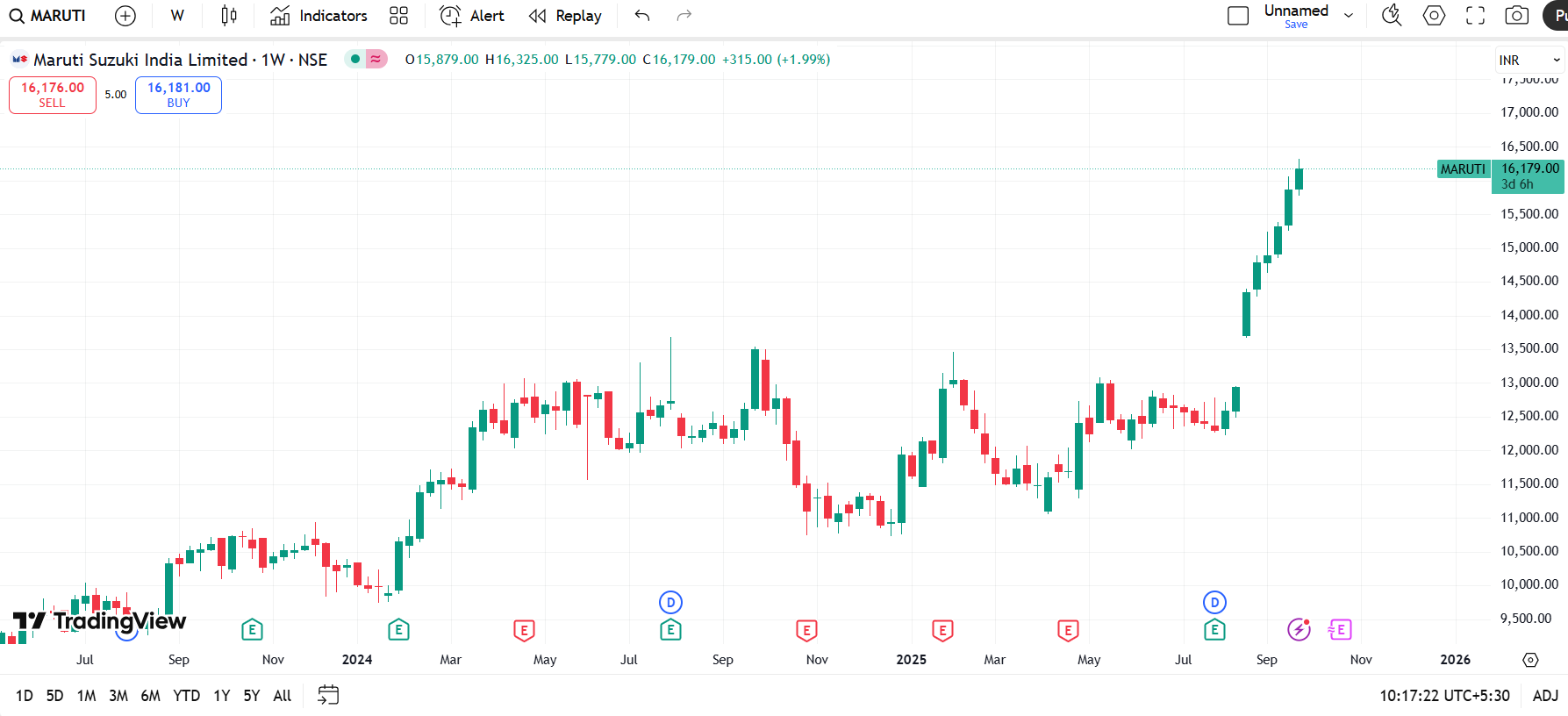
The broader industry impact of this Day 1 frenzy is evident in market sentiment. Collectively, more than 50,000 units were delivered by the three automakers in a single day, sparking optimism that India is entering a two-year consumption upswing. Auto stocks reflected this optimism, with Maruti Suzuki shares touching an all-time high in pre-market trading. Analysts cited pent-up post-pandemic demand, rural recovery, and younger urban consumers prioritizing affordable mobility as the key drivers behind the record-breaking numbers.
Despite the optimism, industry challenges remain. Automakers must ensure smooth supply chain management to avoid stock shortages, especially for high-demand models. Global uncertainties, including higher U.S. visa fees indirectly impacting R&D and talent costs, could also pose headwinds. For now, however, consumers are being urged to book early, with dealers predicting longer wait times for best-selling cars.
As Navratri progresses with daily celebrations honoring Goddess Durga’s nine forms, starting with Maa Shailputri, India’s auto sector is experiencing a revival unlike any seen in recent memory. With the engines of consumption revving higher, all eyes are now on whether this momentum can be carried through to Diwali, cementing 2025 as a landmark year for the Indian automobile industry.
Disclaimer:
This article is based on publicly available reports, industry updates, and market insights as of September 23, 2025. The information provided is for general news and educational purposes only and should not be considered financial, investment, or purchase advice. Readers are advised to verify details with official sources or authorized dealers before making any decisions.