

International support for America’s Operation Epic Fury is gaining momentum as Iran broadens its retaliatory strikes across the Middle East, targeting not only U.S. interests but also neighboring Gulf nations. The conflict has triggered diplomatic tensions, energy market volatility, and renewed debate over regional security alliances.
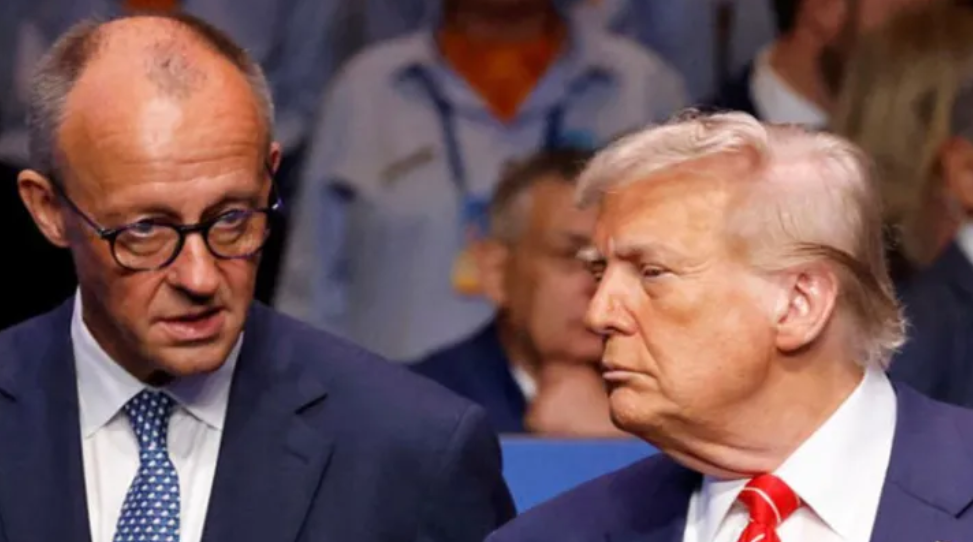
Today, U.S. President Donald Trump is set to host German Chancellor Friedrich Merz at the White House — marking the first visit by a European leader since the conflict escalated. The meeting comes at a critical moment, with European allies carefully balancing support for U.S. objectives while avoiding deeper military entanglement.
Germany Walks a Diplomatic Tightrope
Chancellor Merz has stopped short of openly endorsing Operation Epic Fury but has acknowledged shared concerns over Iran’s nuclear ambitions and regional aggression. In a recent statement, he said Germany “recognizes the dilemma” and shares many of Washington’s aims, including preventing Iran from acquiring nuclear weapons and curbing its destabilizing activities.
However, critics in Europe argue that any sustained military campaign requires clearer legal justification under international law. Alongside security discussions, the leaders are expected to address oil market disruptions, travel chaos resulting from airspace closures, tariff tensions, and Germany’s recent diplomatic outreach to China — a country President Trump is expected to visit in the coming weeks.
France and UK Respond Differently
French President Emmanuel Macron and British Prime Minister Keir Starmer have condemned Iran’s missile and drone strikes, particularly those targeting civilian areas in Gulf states.
While France has signaled readiness to cooperate with Washington in defending shared interests, the UK initially distanced itself from direct involvement. Prime Minister Starmer stated that Britain does not believe in “regime change from the skies” and initially declined to allow British bases to be used in the first wave of strikes.
However, the situation shifted dramatically when a UK base in Cyprus was targeted by Iranian drones, increasing pressure on London to reassess its defensive posture. President Trump later expressed disappointment over what he described as a cooling of U.S.-UK alignment during the early phase of the conflict.
Gulf States Pulled Into the Conflict
The six-member Gulf Cooperation Council now finds itself directly involved after Iranian strikes hit civilian and military infrastructure across the region.
Former CIA Director and General David Petraeus described the escalation as a significant strategic miscalculation by Tehran. According to Petraeus, intelligence-driven U.S. operations were facilitated by what he called Iranian overconfidence, enabling high-level leadership targets to be eliminated.
More critically, Petraeus argued that Iran’s decision to strike Gulf Arab nations — many of which had sought to remain neutral — has forced them into active defensive coordination with the United States. GCC air forces are now participating in regional defensive operations.
Qatar’s Perspective: A Region at a Crossroads
In an exclusive discussion, former Prime Minister of Qatar Hamad bin Jassim Al Thani expressed deep concern over Iran’s actions. While noting that Gulf countries had opposed military escalation and hoped for progress in nuclear negotiations in Geneva and Vienna, he said recent Iranian strikes against civilian facilities left them with no choice but to defend their territory.
He warned that Iran’s actions may permanently damage relations with its Gulf neighbors, even if the war ends. He cautioned that the day after the war will not be the same, highlighting growing public anger across the region.
On the issue of retaliation, he advocated restraint unless defensive strikes are required to neutralize missile launch sources. He emphasized that Gulf nations and Iran will remain neighbors indefinitely and must eventually find a sustainable framework for coexistence.
Energy Markets React: LNG and Oil Surge
The conflict has already shaken global energy markets. Iranian attacks forced Qatar to temporarily halt operations at major LNG facilities, triggering contractual force majeure clauses and pushing global gas prices to 12-month highs. Brent crude briefly touched $85 per barrel amid fears of disruptions in the Strait of Hormuz — a chokepoint critical to global oil shipments.
Qatari officials warned that prolonged instability could further disrupt energy markets, affecting both public and industrial sectors worldwide. While wealthy Gulf nations may manage short-term revenue shocks, long-term geopolitical fractures pose a far greater threat to regional stability.
The Abraham Accords Question
As tensions rise, U.S. lawmakers, including Senator Lindsey Graham, have renewed calls for accelerating normalization talks between Saudi Arabia and Israel under the Abraham Accords framework.
However, Gulf leaders remain cautious. Hamad bin Jassim stressed that normalization must be tied to tangible progress in Israeli-Palestinian peace efforts. He warned against conflating wartime alliances with long-term political realignment and pointed to ongoing ideological divisions between Israel and several Arab states.
Post-Khomeini Iran: Uncertain Future
When asked about the future of Iran following the death of Supreme Leader Ali Khamenei, Gulf leaders urged caution against external regime-change ambitions. They emphasized that Iran’s political future must be determined by its own people.
However, they expressed hope that clearer red lines established during the conflict — by the United States, Israel, Iran, and Gulf states — could form the foundation for a new regional security understanding.
A New Middle East Landscape
Operation Epic Fury has reshaped Middle Eastern geopolitics almost overnight. Iran’s decision to expand attacks beyond U.S. assets to Gulf civilian targets has drawn previously neutral states into active coordination with Washington.
At the same time, divisions among Western allies, volatility in energy markets, and unresolved tensions over Israel and Palestinian statehood suggest that even if military operations slow, the political aftershocks will continue.
As President Trump meets Chancellor Merz at the White House, the world watches closely. The outcome of this diplomatic engagement may signal whether the conflict escalates further — or whether renewed negotiations can prevent a prolonged regional war.