

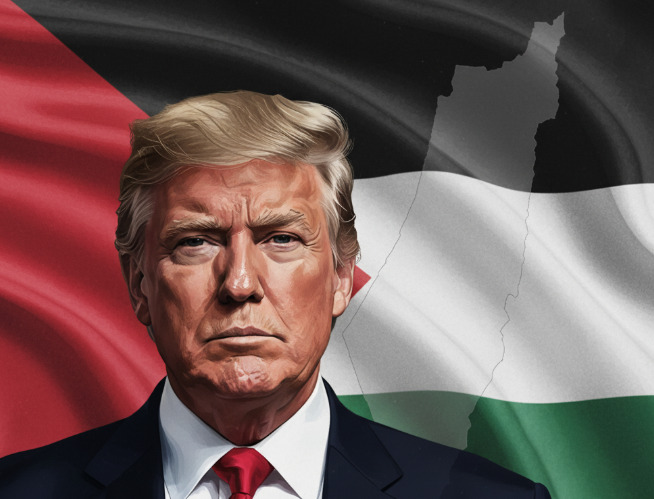
New York, NY – September 24, 2025 – In one of his most forceful foreign policy speeches since returning to the White House, U.S. President Donald Trump took the global stage at the United Nations General Assembly (UNGA) to denounce a wave of Western countries that recently recognized Palestinian statehood. Trump labeled the move a dangerous concession, warning that such recognition would “reward” Hamas for the atrocities of October 7, 2023, which killed 1,200 Israelis and led to more than 250 hostages being taken.
The address came as the Israel-Hamas war nears its second anniversary, with Gaza still embroiled in devastation and negotiations over remaining hostages stalled. Trump’s remarks underscored his unwavering alignment with Israel and highlighted a growing rift between Washington and several of its closest allies, who argue that recognition of Palestine is an essential step toward ending the bloodshed.
Trump’s Speech at UNGA
Trump’s speech, lasting just over 40 minutes, blended familiar themes of his “peace through strength” doctrine with sharp rebukes aimed at Hamas and its international sympathizers. He insisted he remains personally engaged in ceasefire efforts but warned that unilateral recognition of Palestine undermines those talks.
“As everyone knows, I have also been deeply engaged in seeking a ceasefire in Gaza. Have to get it done. Unfortunately, Hamas has repeatedly rejected reasonable offers to make peace. Now, as if to encourage continued conflict, some of this body is seeking to unilaterally recognize a Palestinian state. The rewards would be too great for Hamas terrorists, for their atrocities. Just release the hostages now,” Trump told the UN chamber.
The president emphasized that the immediate release of the estimated 20 surviving hostages in Gaza must precede any diplomatic progress. Israeli officials claim a total of 48 hostages remain, though not all are believed to be alive. Trump’s framing of recognition as a “reward” for terrorism received thunderous applause from Israeli delegates while drawing open jeers from others in the hall.
A Wave of Recognitions
The backdrop to Trump’s fiery intervention is a rapid shift in the diplomatic landscape. In the days leading up to UNGA, several U.S. allies broke ranks to formally recognize Palestinian statehood.
- Canada recognized Palestine on September 21, with Prime Minister Mark Carney declaring it “imperative” to sideline Hamas and keep statehood central to peace talks.
- The United Kingdom, also on September 21, announced recognition as part of a push for a two-state solution, with Prime Minister Keir Starmer calling for an end to settlement expansion.
- Australia followed suit the same day, aligning itself with ceasefire calls but insisting Hamas would play no role in governance.
- Portugal recognized Palestine symbolically, citing the humanitarian disaster in Gaza.
- France joined on September 22, with President Emmanuel Macron stating, “The time has come to deliver justice,” while co-chairing a UN conference with Saudi Arabia.
These moves mean more than 140 countries now formally recognize Palestine, deepening Washington’s sense of isolation. Israeli Prime Minister Benjamin Netanyahu quickly echoed Trump’s stance, insisting: “A Palestinian state will not be established west of the Jordan River.”
Hamas’s Position and the Deadlocked Talks
Hamas officials dismissed Trump’s rhetoric as “propaganda.” In a letter sent to the White House on September 22, Hamas proposed releasing half of the hostages in exchange for a 60-day ceasefire, but Trump rejected the idea as unacceptable. Talks mediated by Qatar and Egypt remain stuck, while Israel continues military operations aimed at destroying Hamas’s command structure.
The humanitarian crisis in Gaza worsens daily. According to the Palestinian health ministry, more than 41,000 people have been killed since the war began, and famine risks loom. European leaders cited these humanitarian concerns as central to their decision to recognize Palestinian statehood.
Implications for U.S. Diplomacy
Trump’s remarks signal a widening gap between Washington and its European allies. By standing firmly against recognition, the U.S. risks alienating partners like France and the UK while drawing closer to Israel’s right-wing leadership. NATO coordination on Gaza aid could also face strain as the divide grows.
Domestically, Trump’s speech exposed deep partisan divisions. Republicans praised his hard line, with Rep. Randy Feenstra (R-IA) calling it a necessary defense of hostages. Many Democrats, however, accused Trump of enabling “endless war” by refusing to embrace a two-state path. Recent polls show that while 60 percent of Americans still support a two-state solution in principle, support drops to 40 percent when Hamas’s role is factored in.
Social media reflected the polarization. Trump’s line about “rewards for terrorists” went viral, with hashtags like #StandWithIsrael trending alongside #FreePalestine. Influencers across the political spectrum weighed in, amplifying the clash of narratives.
What Comes Next?
Trump is scheduled to meet Netanyahu today in New York to discuss post-war governance of Gaza, with both leaders ruling out any Hamas role. A senior White House official hinted at the possibility of visa revocations for Palestinian delegates at the UN, signaling a potential escalation.
The president ended his speech with a stark warning: “All bets are off” if hostages are harmed. Whether this hardline stance will accelerate negotiations or entrench divisions remains uncertain, but what is clear is that the United States, under Trump, is steering a course that sets it apart from many of its traditional allies.
As the Israel-Hamas war drags on, Trump’s words have reshaped the debate over Palestinian recognition, injecting new tension into the global stage at a time when consensus is most elusive.