

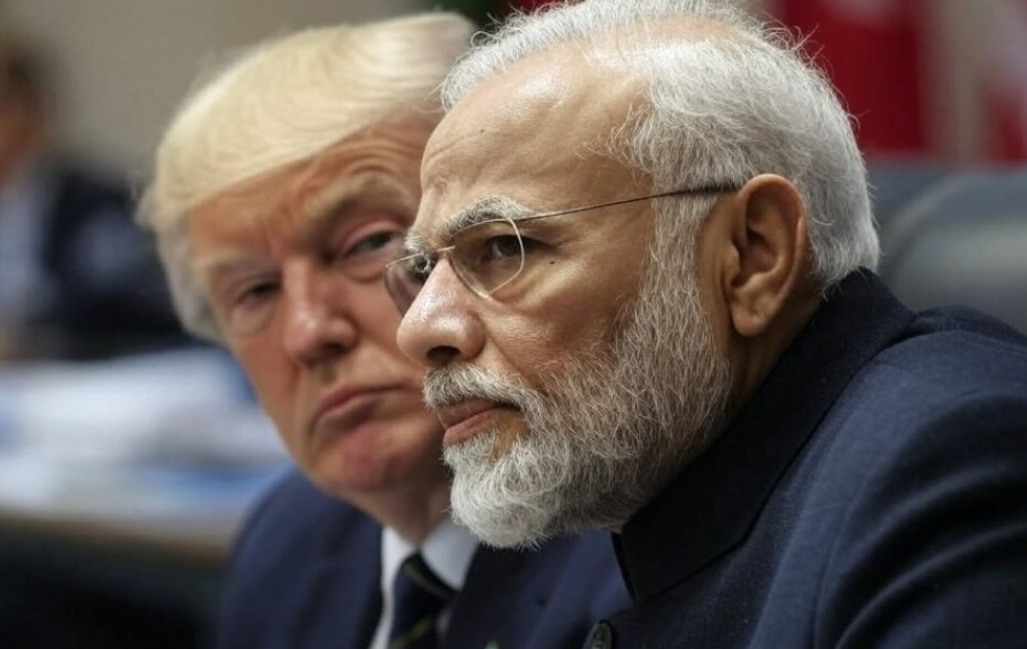
Prime Minister Narendra Modi has once again cancelled an international visit — this time skipping the ASEAN Summit in Kuala Lumpur, where several world leaders including U.S. President Donald Trump will be physically present. Modi will instead attend the October 26 summit virtually, while India will send External Affairs Minister S. Jaishankar to represent the country on ground.
This is the second time Prime Minister Modi has skipped an ASEAN meeting. He has previously attended almost all ASEAN summits in person, making this absence politically significant.
Malaysian Prime Minister Anwar Ibrahim posted that Modi informed him he will join virtually due to Diwali celebrations in India. However, questions are being raised back home regarding this explanation.
Diwali festivities end on October 26 with Labh Panchami, but on October 24 — just two days earlier — Prime Minister Modi is scheduled to travel to Bihar for election rallies, including two public meetings. This has triggered debate on whether Diwali is truly the reason for skipping ASEAN, or whether there is another strategic calculation behind the decision.
This is not the first time the Ministry of External Affairs has avoided stating a specific reason — its official statement this time also makes no mention of why PM Modi is not travelling.
The Congress has directly alleged that Modi is avoiding global platforms where Trump is present. Jairam Ramesh posted that Modi is missing another chance to take photos with world leaders and project himself as a “Vishwaguru”. According to him, Modi is unwilling to appear alongside Trump, who has recently made controversial claims about India and its policies.
President Trump has on multiple occasions publicly stated that he has intervened to stop conflicts such as the “Sindoor operation”, and even claimed India promised to stop buying Russian oil. He has repeated such statements nearly four times in the past week alone. Trump also previously said that India requested his help to halt war with Pakistan — a statement never officially acknowledged by India.
During a Diwali greeting call with Modi, Trump claimed that discussions covered trade deals, Russian oil imports, and regional stability. Modi’s official tweet, however, only mentioned Diwali greetings and cooperation against terrorism — omitting any reference to oil or Pakistan. Later, Indian officials, through unnamed “sources”, denied that Pakistan was discussed at all.
This pattern has raised questions. Why are India and the U.S. giving drastically different versions of the same conversations? If India is reducing Russian oil imports due to U.S. pressure — as a Reuters report quoting Reliance and other oil company sources suggests — then Trump may not be entirely wrong. Congress criticised this with the remark, “Modi proposes, Reliance disposes, Trump exposes.”
Prime Minister Modi’s absence from major summits has now become frequent — including the UN General Assembly in New York, the Gaza peace summit in Sharm El Sheikh, and earlier high-level global forums where Trump was present. In each case, India was represented by the External Affairs Minister or junior ministers in his place.
Political observers note that Modi’s foreign tours have long been a core part of his political branding, often used to overshadow domestic issues like unemployment and inflation. His powerful global-image narrative was seen as central to his political strategy. But now, back-to-back cancellations at high-stakes events — especially where Trump is present — risk sending a message that India is being overly cautious, even defensive.
If Trump publicly makes another unexpected claim in front of world leaders — as he did during the Diwali event in Washington, telling India’s ambassador “I just spoke to your Prime Minister about Pakistan” — would that place Modi in a diplomatically uncomfortable situation? Is this why India is avoiding a face-to-face encounter?
Critics argue that India must not appear hesitant on the global stage. Supporters say careful diplomatic handling is better than a public embarrassment.
For now, the question remains open — is this simply a scheduling decision due to Diwali, or a deliberate strategic move to avoid Trump?
Whatever the reason, the world is watching closely — and India’s silence is being noticed.
Disclaimer:
This article is based on publicly available reports, political statements, and media sources. It is intended for news analysis and informative purposes only. The views expressed are not intended to defame or favor any political leader, individual, or organization. Readers are encouraged to verify facts independently before forming opinions.