Home
/
Russia-Ukraine
/
Putin Meets Russia’s Top Military Graduates in Kremlin, Highlights National Security, Military Modernization and Global Challenges
Putin Meets Russia’s Top Military Graduates in Kremlin, Highlights National Security, Military Modernization and Global Challenges
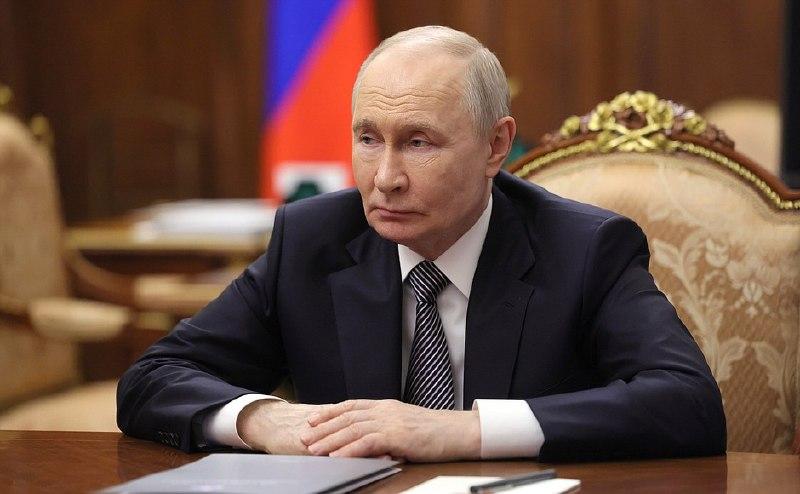
Moscow, Russia – Russian President Vladimir Putin met with the graduates of Russia’s leading military and security educational institutions in St George’s Hall of the Grand Kremlin Palace, congratulating them on successfully completing their studies and emphasizing their future role in safeguarding the nation’s security.
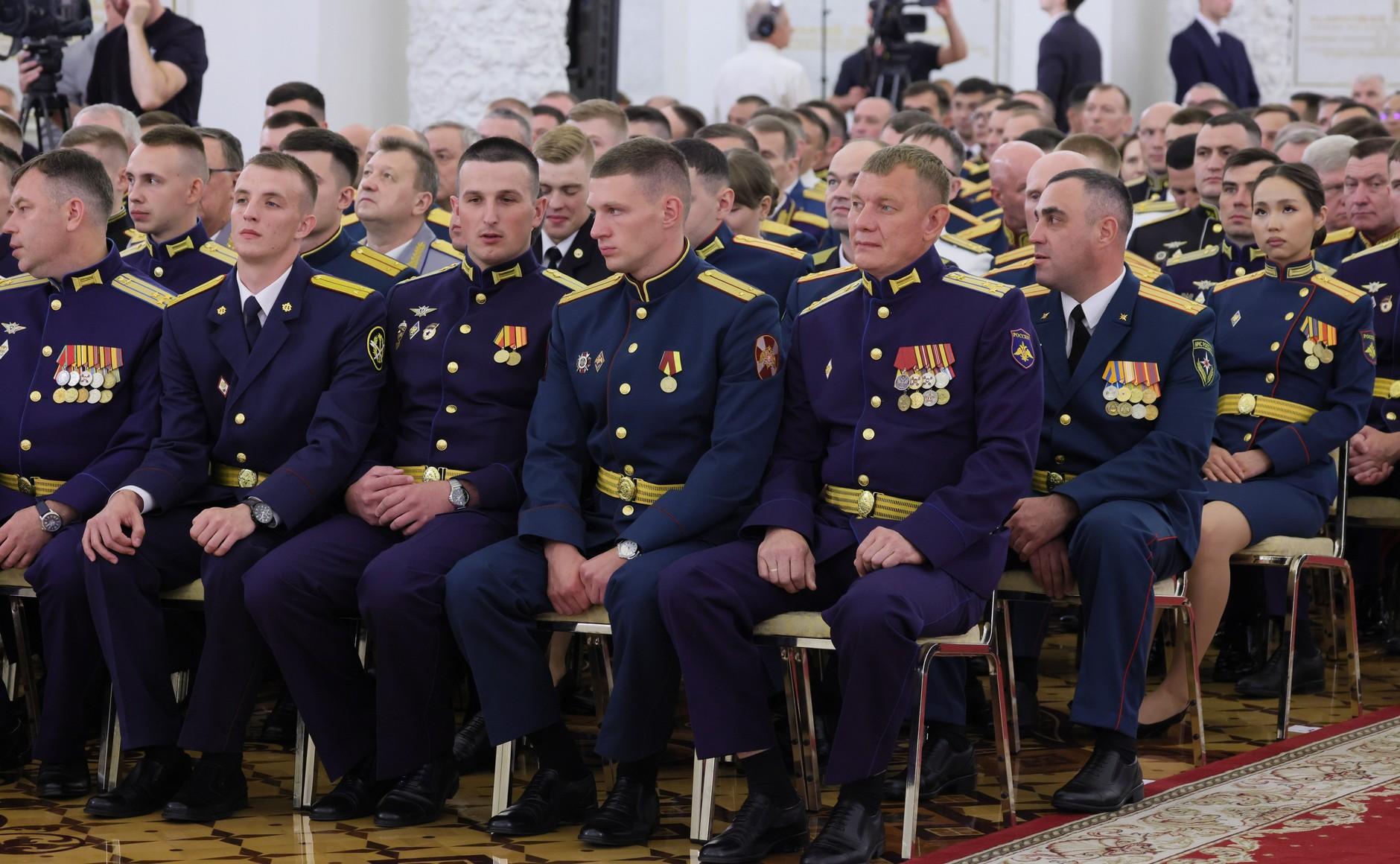
The ceremony brought together graduates from higher military educational institutions under the Russian Ministry of Defence, Ministry of Emergencies, Federal Security Service (FSB), Federal Guard Service (FSO), Russian National Guard, Ministry of the Interior, Investigative Committee, Military Prosecutor’s Office, and the Federal Penitentiary Service.
Addressing the graduates, President Putin praised their academic achievements and professional training, noting that they had completed their specialized programs with distinction and demonstrated exceptional combat and operational preparedness. He expressed confidence that the newly commissioned officers would strengthen Russia’s officer corps and make a significant contribution to national security.
Participants in the meeting with graduates of military academies.
Speaking from the historic St George’s Hall of the Kremlin, Putin reminded the graduates of Russia’s military heritage and the generations of soldiers who fought to defend the country’s sovereignty, freedom, and security. He stated that today’s Russian servicemen continue that tradition while participating in what Moscow describes as the special military operation.
The Russian leader emphasized the importance of continuous professional development, urging officers to study military science throughout their careers. Citing renowned Russian military theorist General Mikhail Dragomirov, Putin said that commanders must continue learning because victory is impossible without knowledge.
During his speech, Putin also addressed the international security environment, describing the current global situation as unstable. He pointed to ongoing military tensions in the Middle East and increasing conflict risks across several regions, including Eurasia.
The Russian President accused NATO members of expanding military spending and preparing for confrontation with Russia. According to Putin, Western governments continue to portray Russia as a military threat in order to justify increased defense budgets and military expansion. He argued that Russia has consistently advocated for equal and indivisible security for all nations and supports the development of a multipolar international system.
Putin reiterated Russia’s commitment to defending its national interests and responding to both external and internal threats. He highlighted ongoing efforts to modernize the country’s nuclear triad, Armed Forces, Aerospace Forces, and Navy under the State Armament Programme.
A major focus of the address was Russia’s military modernization effort. Putin revealed that more than 1,000 types of weapons and military equipment were tested in combat conditions during the previous year. These included advanced unmanned aerial vehicles (UAVs), loitering munitions, robotic systems, and other modern battlefield technologies.
He noted that Russia has established faster communication channels between frontline units and defense manufacturers, allowing military personnel to provide direct feedback on equipment performance. According to Putin, this process has accelerated improvements in weapons systems and increased battlefield effectiveness.
The President stressed that Russia’s military-technological advances are being achieved through domestic scientific and industrial capabilities. He credited Russian scientists, engineers, designers, and defense industry workers for developing advanced military technologies while maintaining stable production supported by what he described as a resilient Russian economy.
Despite advances in military technology, Putin stated that no weapon system can replace the courage, professionalism, and dedication of Russian servicemen. He described officers as the foundation of military success and quoted Russian Tsar Peter the Great, who compared officers to the soul of the human body.
Putin also addressed graduates who will serve in Russia’s security and law enforcement agencies, including the FSB, National Guard, Interior Ministry, Emergencies Ministry, Investigative Committee, and Federal Penitentiary Service. He called on them to continue combating terrorism, corruption, and crime while protecting public security, constitutional order, and the rights of Russian citizens.
The Russian President further emphasized the importance of supporting military personnel participating in ongoing operations and contributing to security and governance in territories that Russia considers its historical regions.
Concluding his remarks, Putin thanked commanders, instructors, and mentors for training the graduates and extended his congratulations to their families and loved ones. He expressed confidence that the graduating class of 2026 would uphold Russia’s military traditions and serve as a strong pillar of the state and society.
The ceremony underscored Moscow’s continued focus on military modernization, officer development, and national security amid ongoing geopolitical tensions and evolving global security challenges.
Disclaimer: This article is based on official statements delivered by Russian President Vladimir Putin during a meeting with graduates of Russia’s higher military educational institutions. The views and claims presented in the speech reflect the position of the Russian government and may be disputed by other countries and international organizations.