

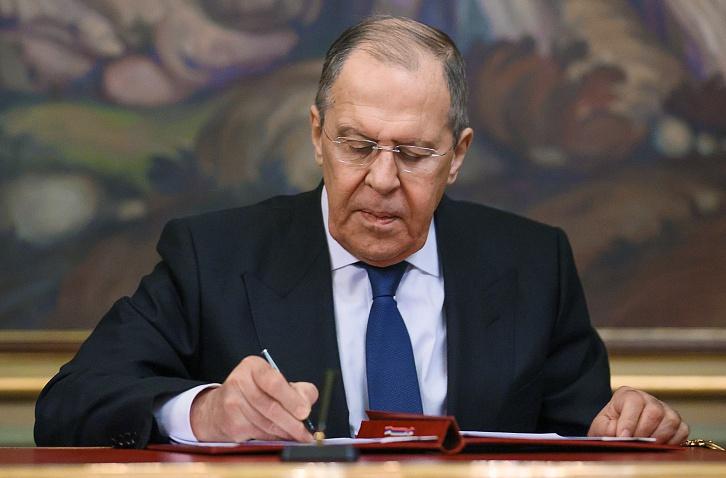
Russian Foreign Minister Sergey Lavrov has said that BRICS will not rush into another round of expansion, stressing that the association should first focus on strengthening cooperation among its recently expanded membership before accepting new full members.
Speaking about the future of BRICS, Lavrov noted that the grouping has grown significantly, with its membership increasing from five to ten countries. Unlike the earlier expansion when South Africa joined the original BRIC nations, the latest enlargement has brought several new members into the association at the same time. According to Lavrov, this requires a period of adjustment to allow all member states to build stronger working relationships and develop consensus on key issues.
Lavrov explained that the decision to temporarily pause further expansion was taken because the enlarged BRICS now includes countries with different political and economic priorities. He pointed to a recent meeting of BRICS foreign ministers held in India, where ministers had to navigate complex diplomatic discussions between Iran and the United Arab Emirates during one of the most tense periods of the Gulf crisis. Despite highly emotional exchanges, the member states eventually succeeded in agreeing on a joint document, demonstrating BRICS' ability to resolve differences through dialogue.
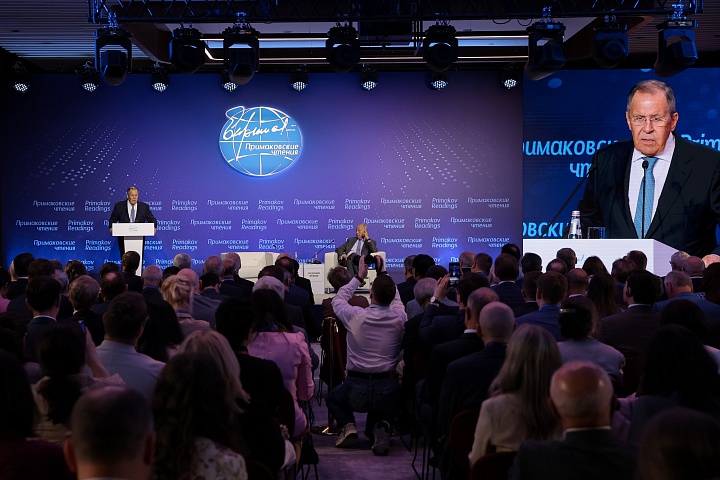
Beyond geopolitical issues, Lavrov also acknowledged that the expanded membership brings deeper economic challenges, with some countries holding competing economic interests. For this reason, BRICS leaders believe that consolidating the current group is more important than immediately admitting additional full members.
While full membership expansion has been placed on hold for the next few years, Lavrov emphasized that BRICS remains open to greater international engagement. Partner countries continue to participate in BRICS meetings and activities, helping the association expand its global influence without formal enlargement. This approach, he said, provides a more universal dimension to BRICS while allowing the current members to strengthen internal cooperation.
Addressing the future structure of BRICS, Lavrov stressed that the grouping is an association rather than a formal international organization. He described this flexible structure as one of BRICS' greatest strengths, arguing that creating a rigid institutional framework would be premature, especially for a global grouping representing diverse political and economic systems.
Lavrov added that Russia does not support turning BRICS into a formalized organization at this stage. He noted that the United Nations already exists as the world's primary international institution, while other global initiatives are also emerging. In this context, Russia believes BRICS should continue operating through consensus and voluntary cooperation rather than adopting a bureaucratic structure.
He also highlighted the role of the rotating BRICS presidency, explaining that each country holding the presidency sets the annual agenda while maintaining continuity with initiatives launched by previous chairing nations. As an example, Lavrov said India is actively implementing initiatives introduced by Russia during the Kazan BRICS Summit in 2024, demonstrating that successive presidencies work together to advance long-term objectives.
Despite the temporary pause in expansion, Lavrov acknowledged that interest in BRICS membership continues to grow rapidly. Many countries have expressed a desire to join either as full members or partner countries, reflecting the increasing global relevance of the association.
Looking ahead, Lavrov suggested that BRICS will continue exploring new forms of engagement with partner countries while strengthening cooperation among existing members. Once the current expansion has been fully integrated and the association has achieved greater internal cohesion, another round of enlargement could take place in the future.
His remarks indicate that BRICS is prioritizing stability, consensus-building, and effective cooperation over rapid expansion, as the grouping seeks to strengthen its role in shaping a more multipolar international order.
Disclaimer: This article is based on public remarks made by Russian Foreign Minister Sergey Lavrov. The views expressed are those of the speaker and are presented for informational and news reporting purposes only. Readers should consider multiple sources when evaluating international affairs and geopolitical developments.